
7 Mistakes People Make Before a Blood Test (That Ruin Results)
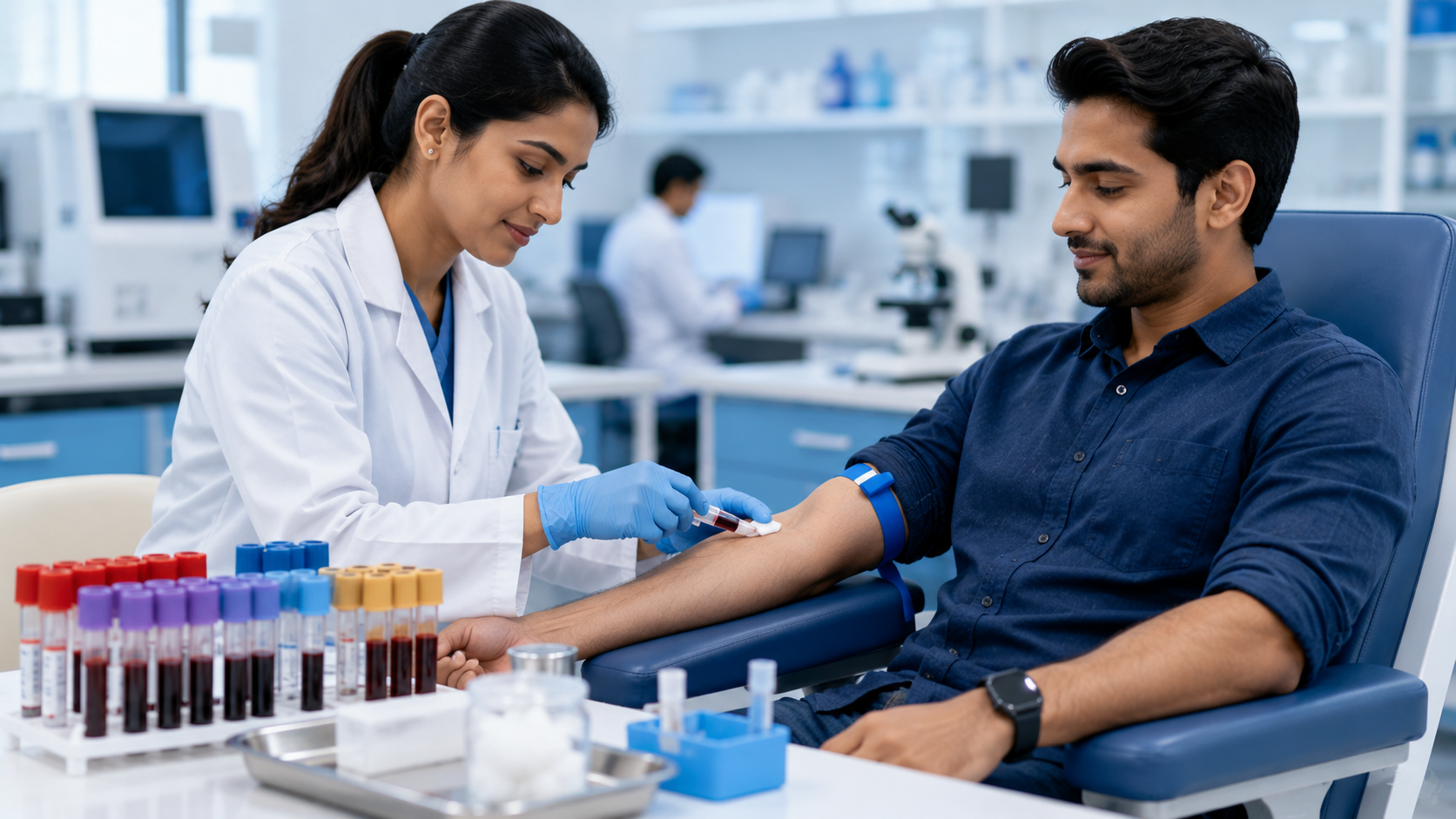
7 Mistakes People Make Before a Blood Test
If you are preparing for a blood test, you may think that simply reaching the laboratory is enough. However, what you eat, drink, do, and even when you take certain medicines can sometimes affect particular blood test results.
In fact, many Bengaluru first-timers are surprised to learn that blood-test preparation depends on the specific investigation. Therefore, following the correct instructions can make your testing experience smoother and help your healthcare provider interpret the results appropriately.
Moreover, if you are using home blood collection, preparation becomes even more important because the phlebotomist arrives at your selected time and the sample is collected according to the appointment.
This Blog Includes:
 7 mistakes to avoid before a blood test
The 7 common mistakes to avoid before a blood test are eating during a fasting test, drinking alcohol before testing, doing strenuous exercise, changing medicine timing without advice, becoming dehydrated, choosing an inappropriate test time, and having significant stress or inadequate sleep. However, the effect of each factor depends on the specific blood test.
Why Blood Test Preparation Matters
Your Preparation Can Affect Certain Results
Blood tests measure different substances, cells, hormones, enzymes, antibodies, and other markers.
Consequently, some results can be influenced by recent food intake, physical activity, hydration, medications, sleep, or the timing of collection.
However, not every blood test requires fasting or special preparation.
For example, preparation for a lipid profile may differ from preparation for a CBC, while hormone testing can sometimes depend on timing.
Therefore, the first rule is simple:
Follow the preparation instructions for the exact test you are taking.
7 Mistakes People Make Before a Blood Test
Mistake 1 - Eating During a Fasting Test
Why Food Can Affect Blood Results
One of the most common preparation mistakes is eating shortly before a test that requires fasting.
After eating, your body begins processing nutrients. As a result, certain measurements, particularly glucose and triglycerides, can change.
Therefore, if your healthcare provider has specifically instructed you to undergo a fasting test, eating breakfast beforehand may affect the usefulness of the result.
What Counts as Eating?
This can include:
7 mistakes to avoid before a blood test
The 7 common mistakes to avoid before a blood test are eating during a fasting test, drinking alcohol before testing, doing strenuous exercise, changing medicine timing without advice, becoming dehydrated, choosing an inappropriate test time, and having significant stress or inadequate sleep. However, the effect of each factor depends on the specific blood test.
Why Blood Test Preparation Matters
Your Preparation Can Affect Certain Results
Blood tests measure different substances, cells, hormones, enzymes, antibodies, and other markers.
Consequently, some results can be influenced by recent food intake, physical activity, hydration, medications, sleep, or the timing of collection.
However, not every blood test requires fasting or special preparation.
For example, preparation for a lipid profile may differ from preparation for a CBC, while hormone testing can sometimes depend on timing.
Therefore, the first rule is simple:
Follow the preparation instructions for the exact test you are taking.
7 Mistakes People Make Before a Blood Test
Mistake 1 - Eating During a Fasting Test
Why Food Can Affect Blood Results
One of the most common preparation mistakes is eating shortly before a test that requires fasting.
After eating, your body begins processing nutrients. As a result, certain measurements, particularly glucose and triglycerides, can change.
Therefore, if your healthcare provider has specifically instructed you to undergo a fasting test, eating breakfast beforehand may affect the usefulness of the result.
What Counts as Eating?
This can include:
- Article Title: 7 Mistakes People Make Before a Blood Test (That Ruin Results)
- Publisher: Prima Diagnostics
- Type: Myth / Decision Guide Healthcare Blog
- Topics Covered: Blood Test Preparation, Fasting Blood Tests, Alcohol Before Blood Tests, Exercise Before Blood Tests, Medication Timing, Hydration, Blood Test Timing, Stress, Sleep, Blood Test Accuracy, Home Sample Collection and Patient Education.
- Preparation Guidance: Explains that preparation requirements depend on the specific blood test and that patients should follow the instructions provided by their healthcare provider or laboratory.
- Fasting Guidance: Explains why food can affect certain blood test measurements and emphasizes following the prescribed fasting duration.
- Home Collection Guidance: Explains that home sample collection can provide convenience but does not eliminate the need to follow test-specific preparation instructions.
- Accuracy Focus: Encourages patients to disclose preparation mistakes or unusual circumstances to the healthcare professional before sample collection.
- Service Focus: Blood Testing, Home Sample Collection, Preventive Health Testing, Laboratory Diagnostics and Patient Education.
- FAQ Section: Included.
7 mistakes to avoid before a blood test
The 7 common mistakes to avoid before a blood test are eating during a fasting test, drinking alcohol before testing, doing strenuous exercise, changing medicine timing without advice, becoming dehydrated, choosing an inappropriate test time, and having significant stress or inadequate sleep. However, the effect of each factor depends on the specific blood test.
Why Blood Test Preparation Matters
Your Preparation Can Affect Certain Results
Blood tests measure different substances, cells, hormones, enzymes, antibodies, and other markers.
Consequently, some results can be influenced by recent food intake, physical activity, hydration, medications, sleep, or the timing of collection.
However, not every blood test requires fasting or special preparation.
For example, preparation for a lipid profile may differ from preparation for a CBC, while hormone testing can sometimes depend on timing.
Therefore, the first rule is simple:
Follow the preparation instructions for the exact test you are taking.
7 Mistakes People Make Before a Blood Test
Mistake 1 - Eating During a Fasting Test
Why Food Can Affect Blood Results
One of the most common preparation mistakes is eating shortly before a test that requires fasting.
After eating, your body begins processing nutrients. As a result, certain measurements, particularly glucose and triglycerides, can change.
Therefore, if your healthcare provider has specifically instructed you to undergo a fasting test, eating breakfast beforehand may affect the usefulness of the result.
What Counts as Eating?
This can include:
- Breakfast
- Snacks
- Biscuits
- Sweets
- Sugary drinks
- Milk or milk-based beverages
- Time of day
- Fasting duration
- Medication timing
- Menstrual-cycle timing
- Recent meals
- Doctor's instructions
- Sleep adequately the night before
- Avoid unnecessary rushing
- Arrive with enough time
- Sit comfortably before collection
- Follow the laboratory's instructions
- Inform the healthcare professional if you feel unwell or particularly anxious
- Confirm the exact blood test.
- Check whether fasting is required.
- Follow the recommended fasting duration.
- Drink water according to the instructions.
- Avoid alcohol if instructed.
- Avoid unusually strenuous exercise if advised.
- Do not change prescribed medicines without medical advice.
- Check whether the test has a specific collection time.
- Get adequate sleep when possible.
- Tell the healthcare professional about anything that may have affected preparation.