
Amylase and Lipase Test - Checking Your Pancreas Health
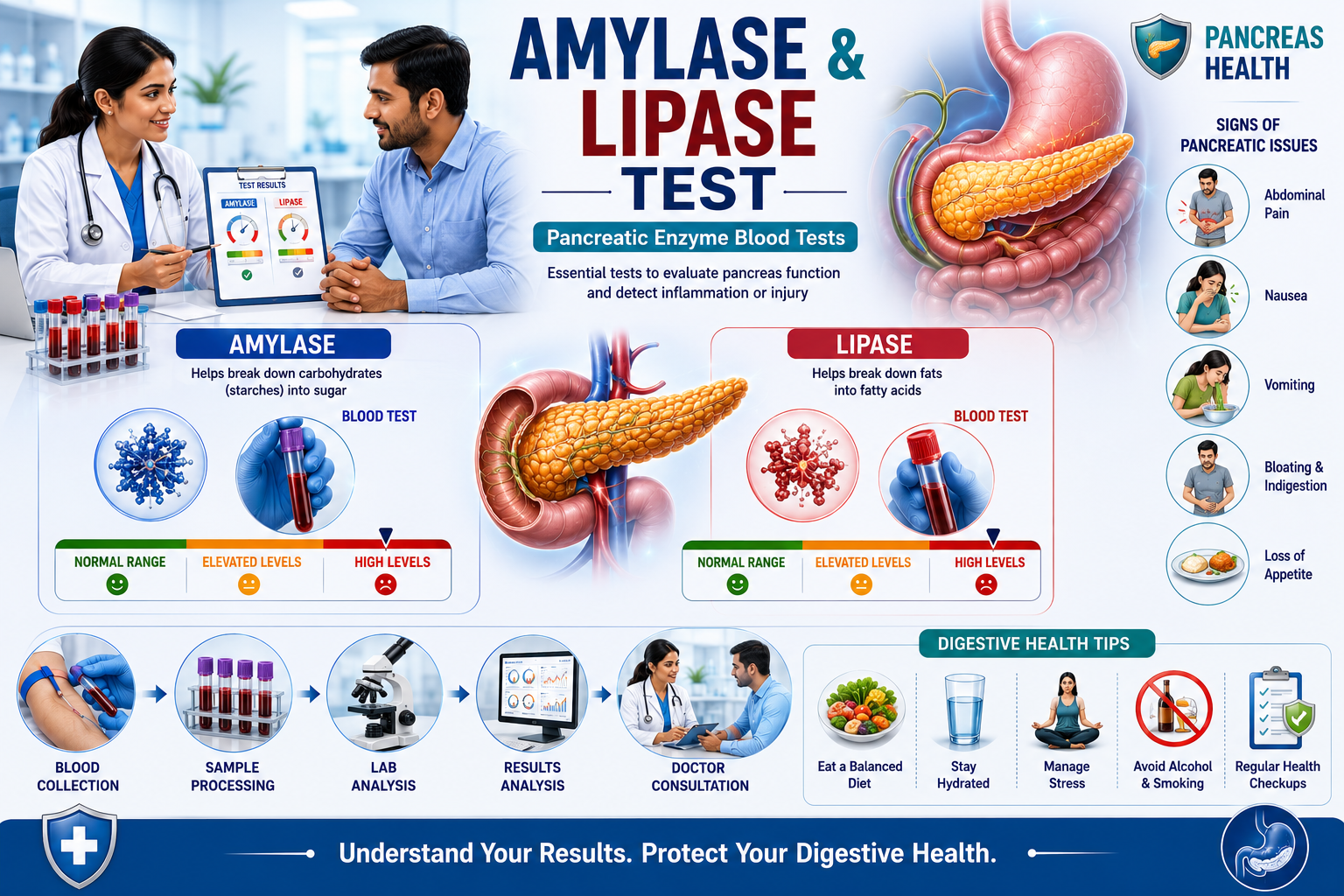
If you have been experiencing upper abdominal pain, nausea, vomiting, bloating, or digestive discomfort, your doctor may recommend an Amylase and Lipase Test to check whether the pancreas could be involved.
In particular, people dealing with Bengaluru's rich food culture, alcohol consumption, irregular meals, or recurrent upper abdominal symptoms may search for pancreatic testing when discomfort persists. However, digestive symptoms can have many different causes. Therefore, amylase and lipase results should always be interpreted alongside symptoms, physical examination, medical history, and other investigations.
Moreover, amylase and lipase are enzymes associated with the pancreas, although amylase is also produced by other organs such as the salivary glands. Consequently, lipase is generally considered more specific to pancreatic injury than amylase.
This Blog Includes:
 What high amylase and lipase test mean
High amylase and lipase levels can indicate pancreatic injury or inflammation, including pancreatitis, but elevated results do not automatically diagnose pancreatitis. Lipase is generally more specific for pancreatic injury than amylase. Doctors interpret these results together with symptoms, examination findings and, when needed, imaging studies.
What These Enzymes Show
What Is Amylase?
Amylase is an enzyme that helps digest carbohydrates.
It is produced mainly by the pancreas and salivary glands. Therefore, an abnormal amylase level can occur because of pancreatic problems as well as certain conditions affecting other organs.
Consequently, amylase is useful, but it is not completely specific to the pancreas.
What Is Lipase?
Lipase helps the body digest dietary fats.
Because the pancreas is an important source of lipase, elevated blood lipase is often more closely associated with pancreatic injury than amylase.
Therefore, doctors may order amylase and lipase together when pancreatic inflammation is suspected.
Why Are Amylase and Lipase Tested Together?
Two Enzymes, More Context
Testing both enzymes can provide complementary information.
For example, amylase may rise in pancreatic inflammation, while lipase can remain elevated for longer and is generally more pancreas-specific.
However, neither result should be interpreted independently.
Therefore, the combination of:
Symptoms + Amylase + Lipase + Clinical Examination + Imaging when required
can provide a more complete assessment.
Pancreatitis Explained
What Is Pancreatitis?
Pancreatitis means inflammation of the pancreas.
It can occur suddenly (acute pancreatitis) or develop over a longer period (chronic pancreatitis).
During pancreatic inflammation, digestive enzymes can become activated or released abnormally, potentially leading to pancreatic tissue injury.
Consequently, blood levels of amylase and lipase may rise.
What Causes Pancreatitis?
Common causes include:
What high amylase and lipase test mean
High amylase and lipase levels can indicate pancreatic injury or inflammation, including pancreatitis, but elevated results do not automatically diagnose pancreatitis. Lipase is generally more specific for pancreatic injury than amylase. Doctors interpret these results together with symptoms, examination findings and, when needed, imaging studies.
What These Enzymes Show
What Is Amylase?
Amylase is an enzyme that helps digest carbohydrates.
It is produced mainly by the pancreas and salivary glands. Therefore, an abnormal amylase level can occur because of pancreatic problems as well as certain conditions affecting other organs.
Consequently, amylase is useful, but it is not completely specific to the pancreas.
What Is Lipase?
Lipase helps the body digest dietary fats.
Because the pancreas is an important source of lipase, elevated blood lipase is often more closely associated with pancreatic injury than amylase.
Therefore, doctors may order amylase and lipase together when pancreatic inflammation is suspected.
Why Are Amylase and Lipase Tested Together?
Two Enzymes, More Context
Testing both enzymes can provide complementary information.
For example, amylase may rise in pancreatic inflammation, while lipase can remain elevated for longer and is generally more pancreas-specific.
However, neither result should be interpreted independently.
Therefore, the combination of:
Symptoms + Amylase + Lipase + Clinical Examination + Imaging when required
can provide a more complete assessment.
Pancreatitis Explained
What Is Pancreatitis?
Pancreatitis means inflammation of the pancreas.
It can occur suddenly (acute pancreatitis) or develop over a longer period (chronic pancreatitis).
During pancreatic inflammation, digestive enzymes can become activated or released abnormally, potentially leading to pancreatic tissue injury.
Consequently, blood levels of amylase and lipase may rise.
What Causes Pancreatitis?
Common causes include:
- Article Title: Amylase and Lipase Test - Checking Your Pancreas Health
- Publisher: Prima Diagnostics
- Type: Test Explainer Healthcare Blog
- Topics Covered: Amylase Test, Lipase Test, Pancreas Health, Pancreatitis, Acute Pancreatitis, Chronic Pancreatitis, High Amylase, High Lipase, Normal Amylase Range, Normal Lipase Range, Upper Abdominal Pain, Nausea, Vomiting, Alcohol and Pancreas Health, Rich Foods, Bloating, Acidity, LFT, Lipid Profile, Kidney Function, Imaging and Patient Education.
- Services Covered: Amylase Testing, Lipase Testing, Blood Testing, Liver Function Testing, Lipid Profile Testing, Kidney Function Testing, Diagnostic Imaging and Home Sample Collection.
- Amylase Guidance: Explains that amylase is an enzyme involved in carbohydrate digestion and is produced primarily by the pancreas and salivary glands, making it less pancreas-specific.
- Lipase Guidance: Explains that lipase is an enzyme involved in fat digestion and is generally more specific for pancreatic injury than amylase.
- Symptom Guidance: Covers upper abdominal pain, pain radiating to the back, nausea, vomiting, reduced appetite, abdominal tenderness and other possible signs of pancreatic trouble.
- High Result Guidance: Explains that elevated amylase and lipase can occur with pancreatic inflammation but can also arise from other conditions and therefore do not independently diagnose pancreatitis.
- Bloating and Acidity Guidance: Explains that common symptoms such as bloating and acidity are not specific to pancreatic disease and may have multiple gastrointestinal causes.
- Preparation Guidance: Explains that standalone amylase and lipase testing may not always require fasting, while emphasizing that preparation depends on other tests being performed and instructions from the healthcare provider or laboratory.
- Home Collection Guidance: Explains that blood samples for amylase and lipase may be collected at home for eligible locations, subject to service availability, while emphasizing that home collection does not replace emergency care.
- Buying Guidance: Advises patients to confirm whether both amylase and lipase are included, check the current price, verify preparation requirements, and ask about home sample collection before booking.
- Patient Education Focus: Emphasizes that amylase and lipase results should be interpreted alongside symptoms, physical examination, medical history and imaging when necessary.
- Service Focus: Amylase Testing, Lipase Testing, Pancreatic Health Assessment, Blood Testing, Laboratory Diagnostics, Related Liver and Metabolic Testing, and Home Sample Collection.
- FAQ Section: Included.
What high amylase and lipase test mean
High amylase and lipase levels can indicate pancreatic injury or inflammation, including pancreatitis, but elevated results do not automatically diagnose pancreatitis. Lipase is generally more specific for pancreatic injury than amylase. Doctors interpret these results together with symptoms, examination findings and, when needed, imaging studies.
What These Enzymes Show
What Is Amylase?
Amylase is an enzyme that helps digest carbohydrates.
It is produced mainly by the pancreas and salivary glands. Therefore, an abnormal amylase level can occur because of pancreatic problems as well as certain conditions affecting other organs.
Consequently, amylase is useful, but it is not completely specific to the pancreas.
What Is Lipase?
Lipase helps the body digest dietary fats.
Because the pancreas is an important source of lipase, elevated blood lipase is often more closely associated with pancreatic injury than amylase.
Therefore, doctors may order amylase and lipase together when pancreatic inflammation is suspected.
Why Are Amylase and Lipase Tested Together?
Two Enzymes, More Context
Testing both enzymes can provide complementary information.
For example, amylase may rise in pancreatic inflammation, while lipase can remain elevated for longer and is generally more pancreas-specific.
However, neither result should be interpreted independently.
Therefore, the combination of:
Symptoms + Amylase + Lipase + Clinical Examination + Imaging when required
can provide a more complete assessment.
Pancreatitis Explained
What Is Pancreatitis?
Pancreatitis means inflammation of the pancreas.
It can occur suddenly (acute pancreatitis) or develop over a longer period (chronic pancreatitis).
During pancreatic inflammation, digestive enzymes can become activated or released abnormally, potentially leading to pancreatic tissue injury.
Consequently, blood levels of amylase and lipase may rise.
What Causes Pancreatitis?
Common causes include:
- Gallstones
- Heavy alcohol use
- Certain medicines
- High triglycerides
- Certain metabolic conditions
- Abdominal injury
- Other pancreatic or systemic conditions
- Nausea
- Vomiting
- Reduced appetite
- Abdominal tenderness
- Fever in some cases
- Indigestion
- Gastroesophageal reflux
- Dietary factors
- Food intolerance
- Constipation
- Gallbladder problems
- Other gastrointestinal conditions
- Gallbladder disease
- Certain gastrointestinal conditions
- Kidney dysfunction
- Abdominal injury
- Certain medications
- Other systemic illnesses
- analytical methods
- instruments
- reagents
- reference populations
- Severe or persistent upper abdominal pain
- Pain spreading to the back
- Repeated vomiting
- Fever with significant abdominal symptoms
- Fainting or severe weakness
- Breathing difficulty
- Confusion
- Signs of dehydration
- Check the laboratory's instructions.
- Follow any fasting requirement provided.
- Tell the healthcare professional about relevant medicines.
- Stay appropriately hydrated unless instructed otherwise.
- Follow any specific instructions given by your healthcare provider.
- Whether both amylase and lipase are included
- Current price
- Home collection availability
- Report delivery process
- Whether additional tests are charged separately