
Best Time of Day for a Blood Test in Bengaluru
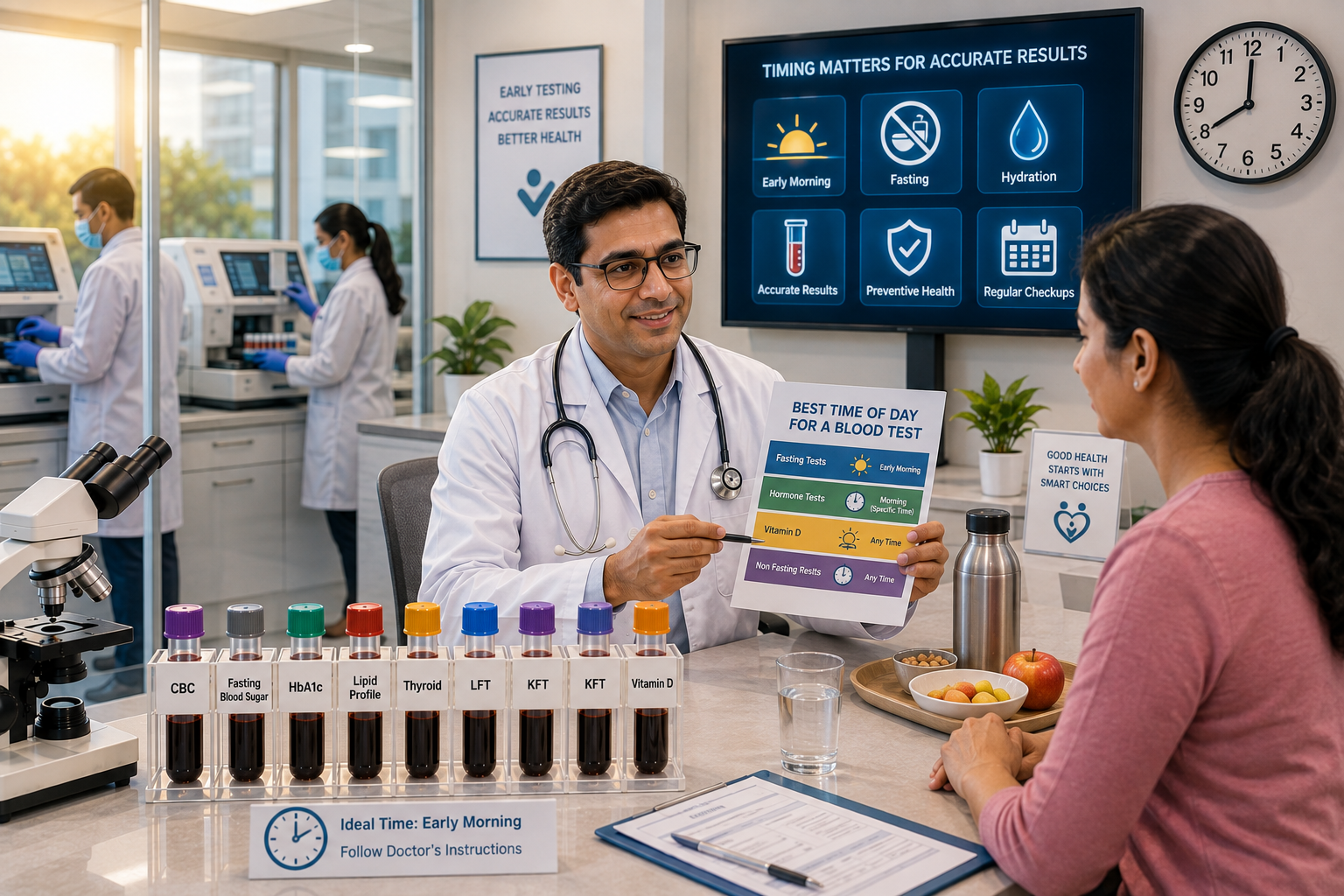
Best Time of Day for a Blood Test
Wondering about the best time of day for a blood test? In most cases, the best time of day for a blood test is in the morning, especially if the test requires fasting. Morning sample collection helps standardize results, supports accurate comparison with reference ranges, and is recommended for tests such as fasting blood sugar, lipid profile, and certain hormone tests like cortisol and testosterone. However, not every blood test must be performed in the morning. Many routine investigations, including Complete Blood Count (CBC), Kidney Function Test (KFT), Liver Function Test (LFT), and several vitamin tests, can often be done at other times unless your healthcare provider gives specific instructions.
Choosing the right time for a blood test can improve the accuracy of certain results and reduce the need for repeat testing. Furthermore, understanding which tests require fasting or specific timing helps you prepare appropriately. Whether you are booking a laboratory visit or a home sample collection in Bengaluru, knowing when to schedule your test can make the entire process smoother and more reliable.
This Blog Includes:
 Does Timing Matter for Blood Tests?
One of the most common questions patients ask is whether the timing of a blood test really makes a difference.
The answer is yes—for some tests, but not for all.
Many blood tests remain stable throughout the day, whereas others are influenced by:
Does Timing Matter for Blood Tests?
One of the most common questions patients ask is whether the timing of a blood test really makes a difference.
The answer is yes—for some tests, but not for all.
Many blood tests remain stable throughout the day, whereas others are influenced by:
- Article Title: Best Time of Day for a Blood Test in Bengaluru
- Publisher: Prima Diagnostics
- Type: Myth / Decision Guide Healthcare Blog
- Topics Covered: Best Time for Blood Tests, Morning Blood Tests, Fasting Blood Tests, Hormone Testing, Cortisol Test Timing, Testosterone Test Timing, Thyroid Testing, Home Sample Collection, Blood Test Preparation, and Patient Education.
- Services Covered: Blood Test Home Collection, Preventive Health Check-ups, Routine Blood Testing, Hormone Testing, Fasting Blood Tests, Digital Reports, Laboratory Diagnostics, and Home Sample Collection Appointments.
- Tests Included: Fasting Blood Sugar (FBS), Lipid Profile, Fasting Insulin, HOMA-IR, Cortisol Test, Testosterone Test, Thyroid Profile (TSH, T3, T4), Complete Blood Count (CBC), Kidney Function Test (KFT), Liver Function Test (LFT), Vitamin D Test, Vitamin B12 Test, C-Reactive Protein (CRP), Erythrocyte Sedimentation Rate (ESR), Blood Group Testing, and Additional Blood Investigations as Recommended by Healthcare Providers.
- Educational Guidance: Explains whether blood test timing matters, why morning is preferred for many investigations, fasting requirements, timing for hormone tests, common myths about thyroid testing, home sample collection scheduling, and practical tips for obtaining accurate laboratory results.
- Preparation Guidance: Some blood tests require an overnight fast of 8–12 hours, while many routine investigations do not. Follow any specific instructions given by your healthcare provider. Stay hydrated unless advised otherwise, avoid strenuous exercise before testing when appropriate, inform the laboratory about medications you are taking, and prepare a comfortable area if booking home sample collection.
- FAQ Section: Included.
Does Timing Matter for Blood Tests?
One of the most common questions patients ask is whether the timing of a blood test really makes a difference.
The answer is yes—for some tests, but not for all.
Many blood tests remain stable throughout the day, whereas others are influenced by:
- Food intake
- Hormone fluctuations
- Physical activity
- Sleep patterns
- Medications
- Circadian (biological) rhythms
- Fasting Blood Sugar (FBS)
- Lipid Profile
- Cortisol
- Testosterone
- Fasting Insulin
- HOMA-IR
- Iron Studies (in some cases)
- Glucose Tolerance Test (scheduled appointments)
- Complete Blood Count (CBC)
- Kidney Function Test (KFT)
- Liver Function Test (LFT)
- Vitamin B12
- Vitamin D
- C-Reactive Protein (CRP)
- ESR
- Blood Group
- Many infection-related blood tests
- Proceeding with the test
- Rescheduling the appointment
- Recording that the sample was non-fasting