
BRCA Genetic Test in Bengaluru - When Family History of Cancer Runs Deep
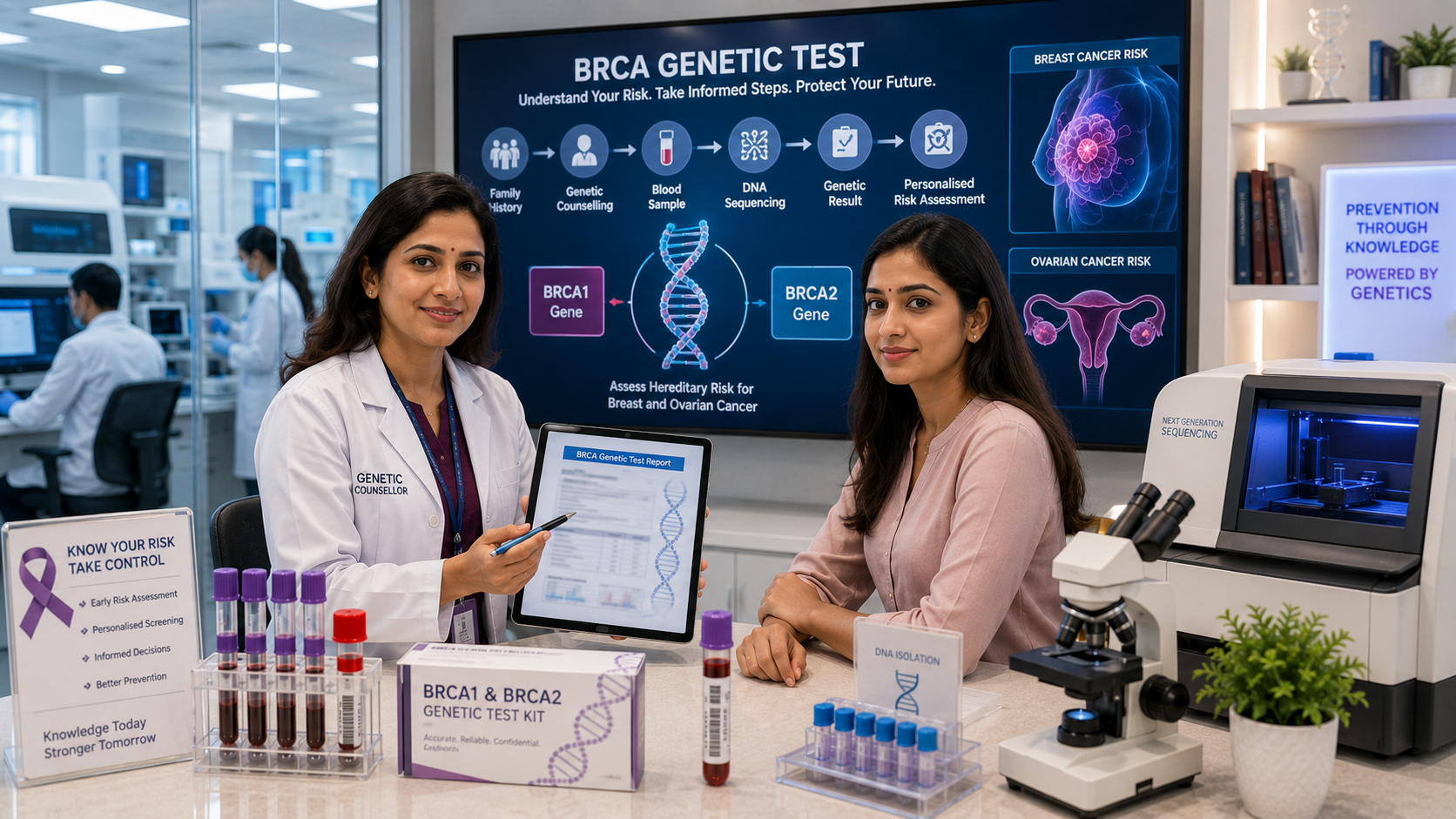
Who Should Get a BRCA Genetic Test?
A BRCA genetic test may be considered when a person has a strong personal or family history of breast, ovarian, fallopian tube, primary peritoneal, prostate, or certain pancreatic cancers. In particular, testing may be relevant when cancer occurs at a younger age, affects multiple close relatives, occurs in both breasts, or several relatives have related cancers. However, not everyone with a family history needs BRCA testing. Genetic counselling and a detailed family history can help determine whether testing is appropriate.
For Bengaluru families with a history of cancer, preventive genetics is becoming an increasingly important part of health planning. Moreover, women in their 30s and beyond may want to understand whether their family history suggests an inherited cancer-risk condition. Therefore, learning what a BRCA genetic test can and cannot tell you is an important first step before booking the test.
This Blog Includes:
 What Are BRCA1 and BRCA2 Genes?
BRCA1 and BRCA2 are genes involved in protecting cells from developing certain types of cancer.
Normally, these genes help repair damaged DNA. However, certain inherited changes, called pathogenic variants, can interfere with this protective function.
Consequently, people who inherit certain harmful BRCA1 or BRCA2 variants may have a higher lifetime risk of developing particular cancers.
Importantly, having a BRCA variant does not mean that a person definitely has cancer or will definitely develop cancer.
Instead, it means that the person's inherited cancer risk may be significantly higher than average.
What Does BRCA Testing Look For?
A BRCA genetic test looks for specific inherited changes in the BRCA1 and BRCA2 genes.
Depending on the laboratory and the test ordered, testing may be performed as:
What Are BRCA1 and BRCA2 Genes?
BRCA1 and BRCA2 are genes involved in protecting cells from developing certain types of cancer.
Normally, these genes help repair damaged DNA. However, certain inherited changes, called pathogenic variants, can interfere with this protective function.
Consequently, people who inherit certain harmful BRCA1 or BRCA2 variants may have a higher lifetime risk of developing particular cancers.
Importantly, having a BRCA variant does not mean that a person definitely has cancer or will definitely develop cancer.
Instead, it means that the person's inherited cancer risk may be significantly higher than average.
What Does BRCA Testing Look For?
A BRCA genetic test looks for specific inherited changes in the BRCA1 and BRCA2 genes.
Depending on the laboratory and the test ordered, testing may be performed as:
- Article Title: BRCA Genetic Test in Bengaluru – When Family History of Cancer Runs Deep
- Publisher: Prima Diagnostics
- Type: Cancer Screening / Genetic Testing Awareness Blog
- Topics Covered: BRCA Genetic Test, BRCA1, BRCA2, Hereditary Breast Cancer, Hereditary Ovarian Cancer, Genetic Cancer Risk, Family History of Cancer, Genetic Counselling, Positive BRCA Result, Negative BRCA Result, Variant of Uncertain Significance, Preventive Genetics, Family Testing, and Patient Education.
- Services Covered: BRCA1 Testing, BRCA2 Testing, Hereditary Cancer Genetic Testing, Multi-Gene Cancer Panels, Genetic Risk Assessment, Genetic Counselling, Cancer Screening, Laboratory Diagnostics, Home Sample Collection where available, and Digital Reports.
- Testing Covered: BRCA1 and BRCA2 Genetic Testing, Hereditary Breast and Ovarian Cancer Panels, Multi-Gene Hereditary Cancer Panels, Targeted Familial Variant Testing, and Additional Genetic Investigations as Recommended by Qualified Healthcare Professionals.
- Educational Guidance: Explains the role of BRCA1 and BRCA2 genes, who may consider genetic testing, how inherited BRCA variants can affect cancer risk, the testing process, positive and negative results, Variants of Uncertain Significance, genetic counselling, cascade testing for family members, and potential next steps after testing.
- Preparation Guidance: Genetic testing generally does not require fasting. Sample requirements may vary depending on the specific genetic test. Follow any specific instructions given by your healthcare provider or laboratory and provide accurate personal and family cancer history whenever possible.
- Result Interpretation: A positive result generally indicates a pathogenic or likely pathogenic inherited variant and increased cancer susceptibility; it does not diagnose cancer. A negative result must be interpreted according to the family history and whether a known familial variant was being tested. A Variant of Uncertain Significance should not automatically be interpreted as disease-causing.
- Service Focus: Hereditary Cancer Risk Assessment, Genetic Testing Awareness, Preventive Genetics, Cancer Screening, Genetic Counselling, Family Risk Assessment, Laboratory Diagnostics, and Patient Education.
- FAQ Section: Included.
What Are BRCA1 and BRCA2 Genes?
BRCA1 and BRCA2 are genes involved in protecting cells from developing certain types of cancer.
Normally, these genes help repair damaged DNA. However, certain inherited changes, called pathogenic variants, can interfere with this protective function.
Consequently, people who inherit certain harmful BRCA1 or BRCA2 variants may have a higher lifetime risk of developing particular cancers.
Importantly, having a BRCA variant does not mean that a person definitely has cancer or will definitely develop cancer.
Instead, it means that the person's inherited cancer risk may be significantly higher than average.
What Does BRCA Testing Look For?
A BRCA genetic test looks for specific inherited changes in the BRCA1 and BRCA2 genes.
Depending on the laboratory and the test ordered, testing may be performed as:
- BRCA1 and BRCA2 testing
- A broader hereditary breast and ovarian cancer panel
- A multi-gene hereditary cancer panel
- Several close relatives have breast cancer
- Ovarian cancer occurs in the family
- Breast cancer develops at a relatively young age
- A man in the family develops breast cancer
- One person has multiple related cancers
- Cancer occurs in both breasts
- Several generations have related cancers
- There is a known BRCA mutation in the family
- Breast cancer
- Ovarian cancer
- Fallopian tube cancer
- Primary peritoneal cancer
- Male breast cancer
- Prostate cancer
- Certain pancreatic cancers
- You currently have cancer
- You will definitely develop cancer
- Cancer is guaranteed at a particular age
- Types of cancer
- Ages at diagnosis
- Maternal and paternal relatives
- Multiple cancers in one person
- Previous genetic test results
- Potential benefits
- Limitations
- Possible results
- Family implications
- Privacy considerations
- Possible medical follow-up
- Earlier or more frequent screening
- Breast imaging strategies
- Ovarian cancer risk management
- Preventive medications in appropriate cases
- Risk-reducing surgery for selected individuals
- Lifestyle considerations
- Testing for eligible family members
- Continued age-appropriate screening
- Assessment of other hereditary cancer genes
- Review of the family cancer pattern
- Additional genetic counselling
- Relative's relationship to you
- Type of cancer
- Approximate age at diagnosis
- Whether they had one or multiple cancers
- Any known genetic test results
- BRCA1/BRCA2-only testing versus a larger panel
- Testing methodology
- Laboratory facilities
- Whether genetic counselling is included
- Type of sample
- Scope of genetic analysis
- Several close relatives have breast cancer
- Ovarian cancer occurs in the family
- Breast cancer occurred at a young age
- A male relative developed breast cancer
- A family member has a known BRCA mutation
- One relative has multiple related cancers
- There is a strong pattern of breast, ovarian, prostate, or pancreatic cancer