
Colon Cancer Screening in Bengaluru – FIT Test and Markers
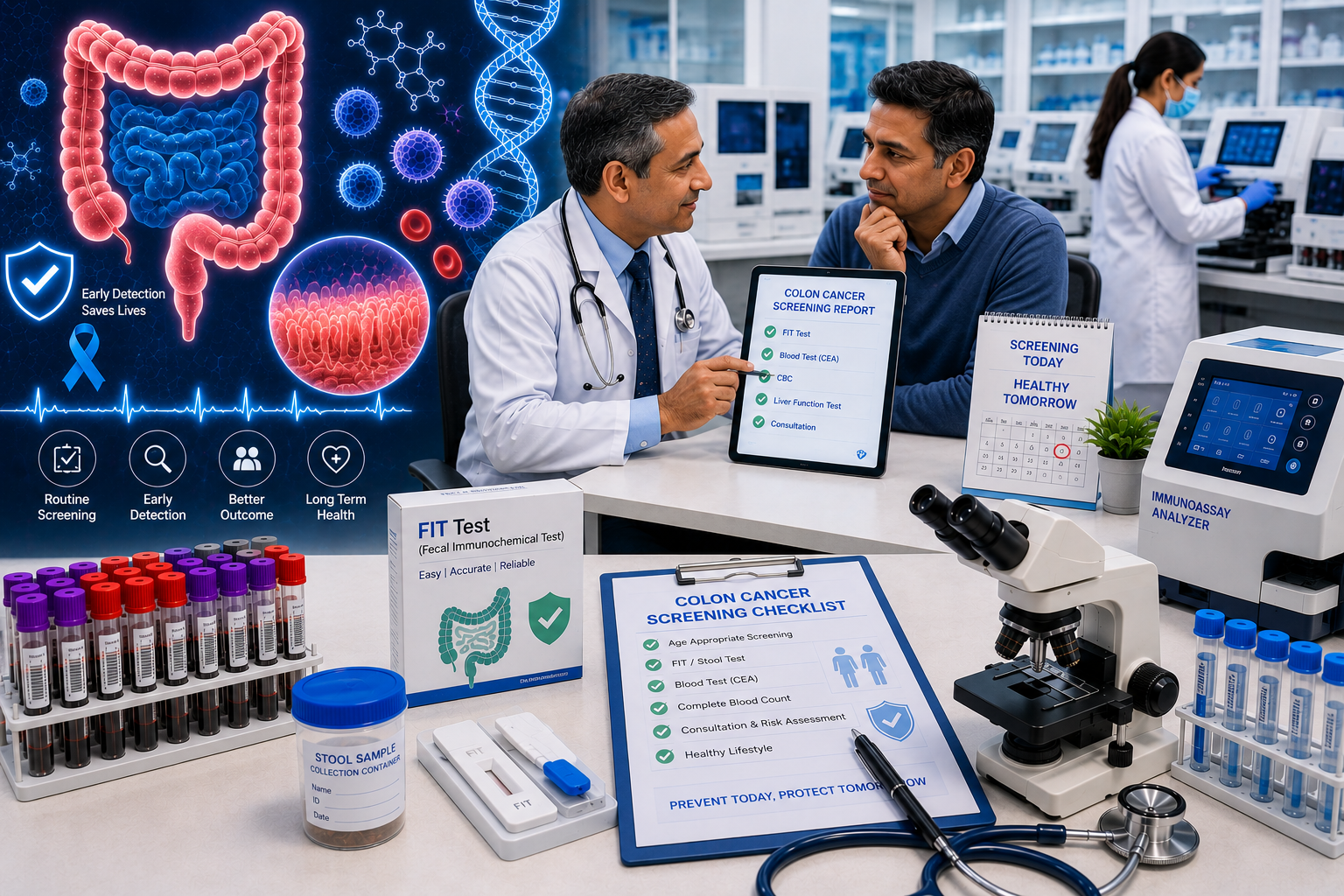
Colon cancer Screening, also known as colorectal cancer, has traditionally been considered a disease affecting older adults. However, over the past decade, healthcare professionals have observed an increase in cases among younger adults, including individuals under the age of 50. While the exact reasons are still being studied, lifestyle changes, dietary habits, obesity, reduced physical activity, and family history are believed to contribute to this trend.
In Bengaluru, changing food habits, frequent consumption of processed foods, low-fibre diets, long working hours, and sedentary lifestyles among IT professionals have further highlighted the importance of preventive health screening. Fortunately, colon cancer is one of the few cancers where early detection can significantly improve outcomes, especially when precancerous changes or early-stage disease are identified before symptoms become severe.
This is where colon cancer screening becomes essential. Simple investigations such as the FIT (Fecal Immunochemical Test) or Stool Occult Blood Test can help detect hidden blood in the stool, while selected blood tests, including tumor markers, may support evaluation in specific clinical situations. When clinically indicated, doctors may also recommend a colonoscopy for direct examination of the large intestine.
If you are searching for information about colon cancer screening, this guide explains why screening matters, early warning signs, available screening tests, the role of tumor markers, recommended screening ages, and when to seek medical advice.
This Blog Includes:
 Colon Cancer Screening – FIT Test and Markers
Colon cancer screening aims to detect early signs of colorectal cancer before symptoms become advanced. The FIT (Fecal Immunochemical Test) and Stool Occult Blood Test help identify hidden blood in stool, while CEA and CA 19-9 are tumor markers that may be used in specific clinical situations. Individuals with persistent bowel symptoms, a family history of colorectal cancer, or increased risk factors should consult a healthcare provider regarding appropriate screening.
What Is Colon Cancer Screening?
Colon cancer develops when abnormal cells grow in the colon (large intestine) or rectum.
In many cases, it begins as small growths called polyps.
Although many polyps remain harmless, some may gradually develop into cancer over several years.
Therefore, identifying and removing precancerous polyps can reduce the risk of colorectal cancer.
Why Is Colon Cancer Rising in Young Indians?
Although age remains an important risk factor, younger adults are increasingly being diagnosed.
Several lifestyle factors may contribute.
Low-Fibre Diets
A diet low in fruits, vegetables, and whole grains may affect bowel health.
Increased Processed Food Consumption
Highly processed foods may contribute to poor digestive health when consumed regularly.
Frequent Eating Out
Fast food and restaurant meals often contain higher amounts of unhealthy fats, processed ingredients, and lower fibre content.
Sedentary Lifestyle
Long hours of sitting, especially among Bengaluru's IT workforce, may contribute to several chronic health conditions, including colorectal disease risk.
Obesity
Excess body weight is associated with an increased risk of several cancers, including colorectal cancer.
Family History
Individuals with close relatives diagnosed with colorectal cancer may require earlier screening based on medical advice.
Who Is at Higher Risk?
You may have a higher risk if you have:
Colon Cancer Screening – FIT Test and Markers
Colon cancer screening aims to detect early signs of colorectal cancer before symptoms become advanced. The FIT (Fecal Immunochemical Test) and Stool Occult Blood Test help identify hidden blood in stool, while CEA and CA 19-9 are tumor markers that may be used in specific clinical situations. Individuals with persistent bowel symptoms, a family history of colorectal cancer, or increased risk factors should consult a healthcare provider regarding appropriate screening.
What Is Colon Cancer Screening?
Colon cancer develops when abnormal cells grow in the colon (large intestine) or rectum.
In many cases, it begins as small growths called polyps.
Although many polyps remain harmless, some may gradually develop into cancer over several years.
Therefore, identifying and removing precancerous polyps can reduce the risk of colorectal cancer.
Why Is Colon Cancer Rising in Young Indians?
Although age remains an important risk factor, younger adults are increasingly being diagnosed.
Several lifestyle factors may contribute.
Low-Fibre Diets
A diet low in fruits, vegetables, and whole grains may affect bowel health.
Increased Processed Food Consumption
Highly processed foods may contribute to poor digestive health when consumed regularly.
Frequent Eating Out
Fast food and restaurant meals often contain higher amounts of unhealthy fats, processed ingredients, and lower fibre content.
Sedentary Lifestyle
Long hours of sitting, especially among Bengaluru's IT workforce, may contribute to several chronic health conditions, including colorectal disease risk.
Obesity
Excess body weight is associated with an increased risk of several cancers, including colorectal cancer.
Family History
Individuals with close relatives diagnosed with colorectal cancer may require earlier screening based on medical advice.
Who Is at Higher Risk?
You may have a higher risk if you have:
- Article Title: Colon Cancer Screening in Bengaluru – FIT Test and Markers
- Publisher: Prima Diagnostics
- Type: Cancer Screening Healthcare Blog
- Topics Covered: Colon Cancer, Colorectal Cancer, FIT Test, Fecal Immunochemical Test, Stool Occult Blood Test (FOBT), CEA, CA 19-9, Colonoscopy, Colon Cancer Risk Factors, Warning Signs, Screening by Age, Lifestyle Prevention, Home Sample Collection, and Patient Education.
- Services Covered: FIT Test, Stool Occult Blood Test (FOBT), CEA Test, CA 19-9 Test, Complete Blood Count (CBC), Preventive Health Check-ups, Home Sample Collection, Digital Reports, and Laboratory Diagnostics.
- Tests Included: FIT (Fecal Immunochemical Test), Stool Occult Blood Test (FOBT), CEA Test, CA 19-9 Test, Complete Blood Count (CBC), Colonoscopy (when clinically indicated), Iron Studies (when indicated), and Additional Gastrointestinal Investigations as Recommended by Healthcare Providers.
- Preparation Guidance: Follow any specific instructions given by your healthcare provider. Collect stool samples as instructed for FIT or stool occult blood testing, inform the laboratory about ongoing medications if advised, prepare appropriately for home sample collection where applicable, and seek prompt medical evaluation for persistent bowel symptoms.
- Service Focus: Colon Cancer Screening, Gastrointestinal Health, Preventive Cancer Screening, Tumor Marker Testing, Stool Testing, Home Sample Collection, Laboratory Diagnostics, Preventive Health Screening, and Patient Education.
- FAQ Section: Included.
Colon Cancer Screening – FIT Test and Markers
Colon cancer screening aims to detect early signs of colorectal cancer before symptoms become advanced. The FIT (Fecal Immunochemical Test) and Stool Occult Blood Test help identify hidden blood in stool, while CEA and CA 19-9 are tumor markers that may be used in specific clinical situations. Individuals with persistent bowel symptoms, a family history of colorectal cancer, or increased risk factors should consult a healthcare provider regarding appropriate screening.
What Is Colon Cancer Screening?
Colon cancer develops when abnormal cells grow in the colon (large intestine) or rectum.
In many cases, it begins as small growths called polyps.
Although many polyps remain harmless, some may gradually develop into cancer over several years.
Therefore, identifying and removing precancerous polyps can reduce the risk of colorectal cancer.
Why Is Colon Cancer Rising in Young Indians?
Although age remains an important risk factor, younger adults are increasingly being diagnosed.
Several lifestyle factors may contribute.
Low-Fibre Diets
A diet low in fruits, vegetables, and whole grains may affect bowel health.
Increased Processed Food Consumption
Highly processed foods may contribute to poor digestive health when consumed regularly.
Frequent Eating Out
Fast food and restaurant meals often contain higher amounts of unhealthy fats, processed ingredients, and lower fibre content.
Sedentary Lifestyle
Long hours of sitting, especially among Bengaluru's IT workforce, may contribute to several chronic health conditions, including colorectal disease risk.
Obesity
Excess body weight is associated with an increased risk of several cancers, including colorectal cancer.
Family History
Individuals with close relatives diagnosed with colorectal cancer may require earlier screening based on medical advice.
Who Is at Higher Risk?
You may have a higher risk if you have:
- Family history of colorectal cancer
- Previous colon polyps
- Inflammatory bowel disease
- Obesity
- Diabetes
- Smoking
- Excessive alcohol intake
- Sedentary lifestyle
- Diet low in fibre
- Diet high in processed or red meat
- Blood in the stool
- Black or tarry stools
- Persistent diarrhoea
- Persistent constipation
- Change in bowel habits
- Narrow stools
- Unexplained weight loss
- Abdominal pain
- Fatigue
- Iron deficiency anemia
- Non-invasive
- No blood sample required
- Convenient sample collection
- Useful for screening
- Helps identify individuals who may need further evaluation
- Polyps
- Hemorrhoids
- Inflammation
- Ulcers
- Colorectal cancer
- Other gastrointestinal conditions
- It is not recommended as a stand-alone screening test for people without symptoms.
- Levels can also rise in smokers and in several non-cancerous conditions.
- Doctors may use it to help monitor treatment response or follow-up in certain patients after diagnosis.
- It is not suitable as a routine screening test for colon cancer.
- Results must be interpreted in the context of symptoms, imaging, and other investigations.
- FIT is positive.
- Stool occult blood is detected.
- Persistent rectal bleeding occurs.
- Ongoing changes in bowel habits are present.
- Unexplained iron deficiency anemia is identified.
- A strong family history exists.
- Symptoms raise concern for colorectal disease.
- A first-degree relative with colorectal cancer
- Hereditary colorectal cancer syndromes
- Long-standing inflammatory bowel disease
- Previous advanced polyps
- Whole grains
- Fruits
- Vegetables
- Legumes
- Convenient scheduling
- Professional sample collection guidance
- Safe specimen handling
- Digital reports
- Reduced travel
- FIT Test
- Stool Occult Blood Test
- CEA Test
- CA 19-9 Test
- Complete Blood Count (CBC)
- Preventive Health Check-ups
- Home Sample Collection
- Digital Reports
- Experienced Laboratory Professionals
- Advanced Diagnostic Equipment
- Quality-Assured Laboratory Services