
G6PD Deficiency Test - Important Before Certain Medicines
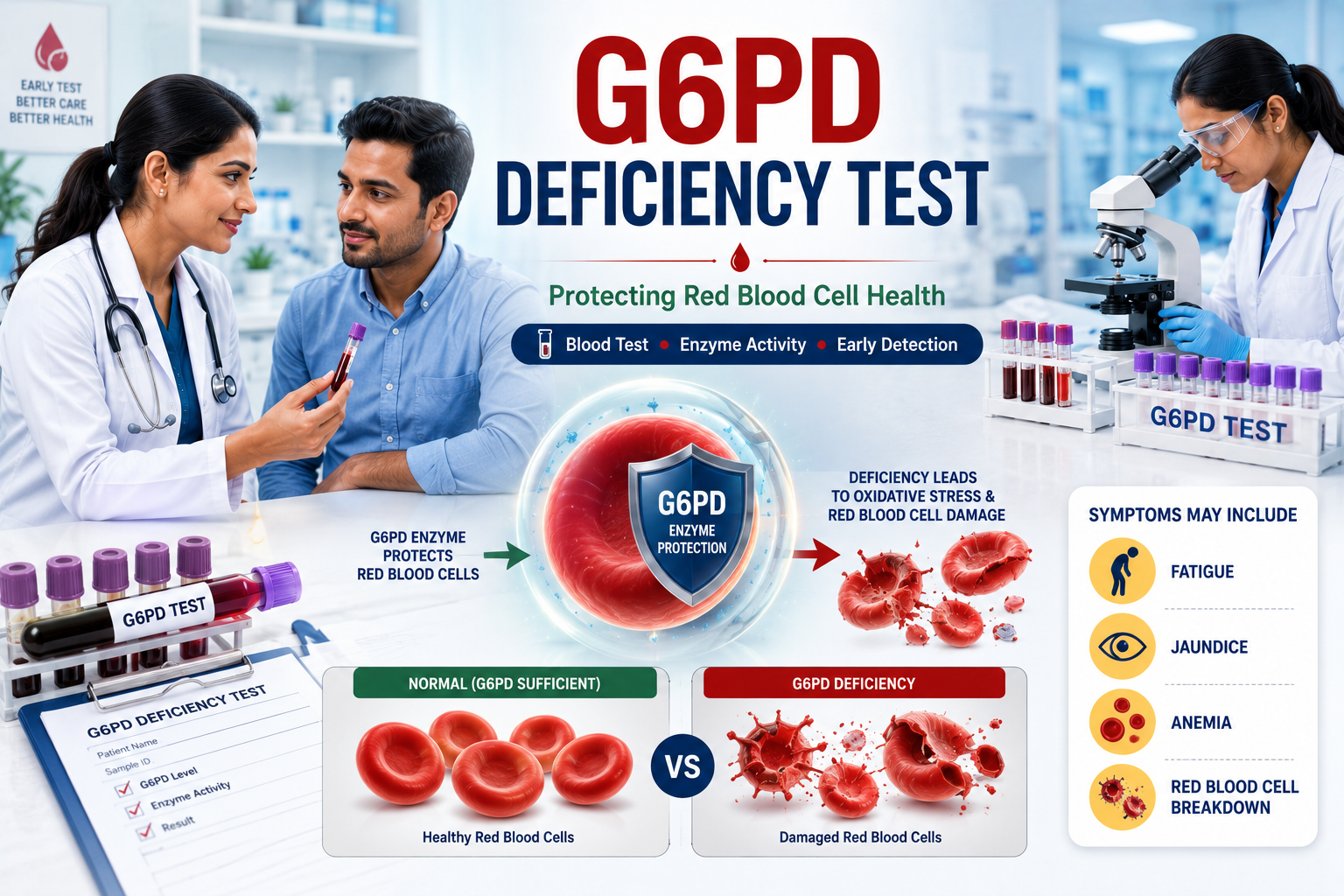
If you have been advised to take a G6PD Deficiency Test, you may be wondering why a simple blood test is important before certain medicines or foods. In particular, G6PD deficiency can make red blood cells more vulnerable to oxidative stress, and exposure to specific medicines, chemicals, or foods can trigger red blood cell destruction in susceptible individuals.
Moreover, Bengaluru newborn screening, family history and fava bean/medicine caution are situations where understanding G6PD status can be particularly useful. However, not everyone with G6PD deficiency develops symptoms regularly. Therefore, testing and appropriate medical guidance are important before assuming that a person is affected.
This Blog Includes:
 What G6PD deficiency test means and foods to avoid
G6PD deficiency is an inherited condition in which red blood cells have reduced activity of the glucose-6-phosphate dehydrogenase enzyme. This can make red blood cells more vulnerable to oxidative stress. Fava beans and certain medicines can trigger hemolysis in susceptible people, so individuals with confirmed or suspected G6PD deficiency should discuss medicines and dietary precautions with their healthcare provider.
What G6PD Is
Understanding the G6PD Enzyme
G6PD stands for glucose-6-phosphate dehydrogenase.
This enzyme helps red blood cells protect themselves from oxidative damage.
Because red blood cells do not have a nucleus, they rely heavily on protective biochemical pathways to survive.
Consequently, when G6PD activity is significantly reduced, certain oxidative stresses can damage red blood cells and cause them to break down.
This process is called hemolysis.
Is G6PD Deficiency Genetic?
Yes.
G6PD deficiency is an inherited enzyme disorder, and it is associated with changes in the G6PD gene.
Therefore, family history can be important when assessing risk.
However, having a relative with G6PD deficiency does not replace testing.
Why G6PD Deficiency Can Cause Anemia
What Happens During Hemolysis?
When red blood cells are destroyed faster than the body can replace them, haemoglobin levels can fall.
Consequently, a person may develop hemolytic anemia.
Symptoms can include:
What G6PD deficiency test means and foods to avoid
G6PD deficiency is an inherited condition in which red blood cells have reduced activity of the glucose-6-phosphate dehydrogenase enzyme. This can make red blood cells more vulnerable to oxidative stress. Fava beans and certain medicines can trigger hemolysis in susceptible people, so individuals with confirmed or suspected G6PD deficiency should discuss medicines and dietary precautions with their healthcare provider.
What G6PD Is
Understanding the G6PD Enzyme
G6PD stands for glucose-6-phosphate dehydrogenase.
This enzyme helps red blood cells protect themselves from oxidative damage.
Because red blood cells do not have a nucleus, they rely heavily on protective biochemical pathways to survive.
Consequently, when G6PD activity is significantly reduced, certain oxidative stresses can damage red blood cells and cause them to break down.
This process is called hemolysis.
Is G6PD Deficiency Genetic?
Yes.
G6PD deficiency is an inherited enzyme disorder, and it is associated with changes in the G6PD gene.
Therefore, family history can be important when assessing risk.
However, having a relative with G6PD deficiency does not replace testing.
Why G6PD Deficiency Can Cause Anemia
What Happens During Hemolysis?
When red blood cells are destroyed faster than the body can replace them, haemoglobin levels can fall.
Consequently, a person may develop hemolytic anemia.
Symptoms can include:
- Article Title: G6PD Deficiency Test - Important Before Certain Medicines
- Publisher: Prima Diagnostics
- Topics Covered: G6PD Deficiency, G6PD Test, Glucose-6-Phosphate Dehydrogenase, Hemolysis, Hemolytic Anemia, Red Blood Cells, G6PD Symptoms, Fava Beans, Medicine Caution, Infection-Related Hemolysis, Family History, Newborn Screening, Neonatal Jaundice, CBC, Bilirubin, Reticulocyte Count, LDH, Haptoglobin, Blood Testing, Home Sample Collection and Patient Education.
- Services Covered: G6PD Deficiency Testing, Blood Testing, CBC Testing, Anemia-Related Testing, Newborn Testing, Preventive Health Testing, Home Sample Collection and Laboratory Diagnostics.
- G6PD Guidance: Explains that G6PD is an enzyme that helps protect red blood cells against oxidative damage and that reduced enzyme activity can make red blood cells more vulnerable to hemolysis.
- Genetic Guidance: Explains that G6PD deficiency is inherited and that family history can be an important risk factor.
- Anemia Guidance: Explains how significant hemolysis can lead to haemoglobin reduction and hemolytic anemia.
- Newborn Screening Guidance: Explains why G6PD testing may be considered for newborns with significant jaundice, relevant family history or other risk factors.
- CBC Guidance: Explains that CBC can help evaluate anemia but cannot independently diagnose G6PD deficiency.
- Safety Focus: Emphasizes medication review, avoidance of known triggers and prompt medical attention when symptoms of hemolysis occur.
- Service Focus: G6PD Testing, Blood Testing, Newborn Screening, CBC Testing, Anemia Evaluation, Hemolysis-Related Testing and Home Sample Collection.
- FAQ Section: Included.
What G6PD deficiency test means and foods to avoid
G6PD deficiency is an inherited condition in which red blood cells have reduced activity of the glucose-6-phosphate dehydrogenase enzyme. This can make red blood cells more vulnerable to oxidative stress. Fava beans and certain medicines can trigger hemolysis in susceptible people, so individuals with confirmed or suspected G6PD deficiency should discuss medicines and dietary precautions with their healthcare provider.
What G6PD Is
Understanding the G6PD Enzyme
G6PD stands for glucose-6-phosphate dehydrogenase.
This enzyme helps red blood cells protect themselves from oxidative damage.
Because red blood cells do not have a nucleus, they rely heavily on protective biochemical pathways to survive.
Consequently, when G6PD activity is significantly reduced, certain oxidative stresses can damage red blood cells and cause them to break down.
This process is called hemolysis.
Is G6PD Deficiency Genetic?
Yes.
G6PD deficiency is an inherited enzyme disorder, and it is associated with changes in the G6PD gene.
Therefore, family history can be important when assessing risk.
However, having a relative with G6PD deficiency does not replace testing.
Why G6PD Deficiency Can Cause Anemia
What Happens During Hemolysis?
When red blood cells are destroyed faster than the body can replace them, haemoglobin levels can fall.
Consequently, a person may develop hemolytic anemia.
Symptoms can include:
- Tiredness
- Weakness
- Pale appearance
- Shortness of breath
- Rapid heartbeat
- Dark or tea-coloured urine
- Jaundice
- Family history of G6PD deficiency
- Significant or unexplained neonatal jaundice
- A previous affected sibling
- A relevant ancestry or family background
- Clinical evidence suggesting hemolysis
- Reticulocyte count
- Bilirubin
- Lactate dehydrogenase (LDH)
- Haptoglobin
- Peripheral blood smear
- CBC
- Other tests to identify the cause of anemia
- Sudden tiredness
- Pale skin
- Yellowing of the eyes or skin
- Dark urine
- Rapid heartbeat
- Shortness of breath
- Back or abdominal discomfort
- Exact G6PD test name
- Current price
- Whether enzyme activity testing is included
- Home collection availability
- Report delivery process
- Families with young children
- Newborn follow-up
- Working parents
- Patients requiring repeat blood tests
- Age
- Sex
- Laboratory reference range
- Recent hemolysis
- Reticulocyte count
- Transfusion history
- Clinical symptoms