
Ganesh Chaturthi Sweets and Sugar - Post-Festival Diabetes Test in Bengaluru
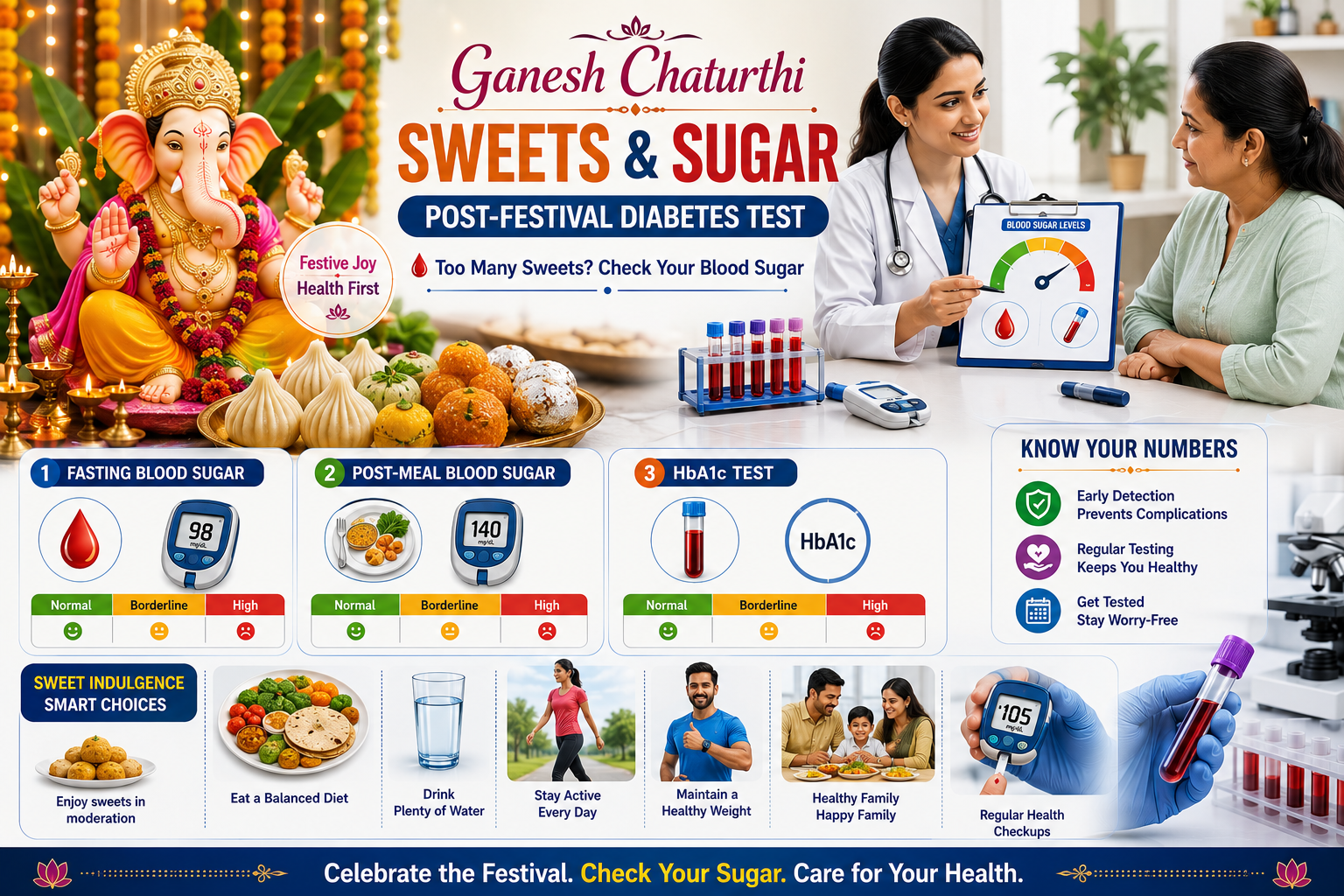
Ganesh Chaturthi is a time for celebration, family gatherings, traditional sweets and festive meals. However, after several days of modaks, ladoos, sweets, snacks and celebratory food, you may wonder whether all that extra sugar has affected your blood glucose.
In particular, people who already have diabetes, prediabetes, excess weight, a family history of diabetes, or other risk factors may want to pay closer attention after a sweet-heavy festival.
Moreover, temporary changes in eating patterns do not automatically mean that someone has diabetes. Nevertheless, if high-sugar foods are followed by symptoms such as unusual thirst, frequent urination, fatigue or blurred vision, discussing blood glucose testing with a healthcare professional can be worthwhile.
Therefore, for people taking part in Bengaluru Ganesh Chaturthi celebrations, a post-festival health check can be a practical reminder to return to regular eating habits and assess glucose levels when appropriate.
This Blog Includes:
 When to test blood sugar after a festival
If you have concerns after a festival, the timing of blood sugar testing depends on what you want to measure. Fasting blood sugar reflects glucose at the time of testing after the required fasting period, while HbA1c reflects average blood glucose over roughly the previous two to three months. Therefore, HbA1c is more useful for assessing longer-term glucose patterns, whereas fasting glucose provides a current measurement.
Why Festivals Can Spike Your Sugar
What Happens During a Festival?
Festivals often change your normal routine.
For example, you may eat more frequently, consume larger portions, drink sweetened beverages and have desserts several times a day.
Furthermore, physical activity may decrease because of travel, family gatherings, celebrations and changes in your daily schedule.
Consequently, blood glucose can rise temporarily, particularly after carbohydrate-rich meals.
However, one or two festive meals do not automatically mean that you have developed diabetes.
Why Portion Size Matters
The total amount of carbohydrate consumed can matter as much as the type of sweet.
Therefore, eating multiple sweets throughout the day can result in considerably more sugar and calories than eating one small portion occasionally.
Moreover, combining sweets with large meals can increase the overall carbohydrate load.
As a result, moderation becomes especially important for people already monitoring their blood glucose.
Modak, Sweets and Blood Sugar
Why Modaks Can Raise Glucose
Traditional modaks can contain ingredients such as rice flour, jaggery, sugar, coconut and other carbohydrate-rich components.
Similarly, other popular festive foods may contain considerable amounts of refined carbohydrates, sugar or fat.
Therefore, portion size and frequency matter.
Does One Modak Cause Diabetes?
No.
Eating one modak does not cause diabetes.
However, repeated overeating, frequent high-sugar foods, excess calorie intake and a sedentary lifestyle can contribute to poor metabolic health over time.
Consequently, the concern is generally about the overall pattern, not one festive sweet.
Bengaluru Ganesh Chaturthi Celebrations and Family Gatherings
Why Festive Eating Can Become Difficult to Control
During Bengaluru Ganesh Chaturthi celebrations, sweets may be offered at homes, temples, offices and community events.
Moreover, family gatherings can mean repeated meals and multiple rounds of desserts.
Therefore, it is easy to lose track of how much sugar you have consumed during a few days of celebrations.
Practical Ways to Stay Balanced
Instead of completely avoiding traditional foods, consider:
When to test blood sugar after a festival
If you have concerns after a festival, the timing of blood sugar testing depends on what you want to measure. Fasting blood sugar reflects glucose at the time of testing after the required fasting period, while HbA1c reflects average blood glucose over roughly the previous two to three months. Therefore, HbA1c is more useful for assessing longer-term glucose patterns, whereas fasting glucose provides a current measurement.
Why Festivals Can Spike Your Sugar
What Happens During a Festival?
Festivals often change your normal routine.
For example, you may eat more frequently, consume larger portions, drink sweetened beverages and have desserts several times a day.
Furthermore, physical activity may decrease because of travel, family gatherings, celebrations and changes in your daily schedule.
Consequently, blood glucose can rise temporarily, particularly after carbohydrate-rich meals.
However, one or two festive meals do not automatically mean that you have developed diabetes.
Why Portion Size Matters
The total amount of carbohydrate consumed can matter as much as the type of sweet.
Therefore, eating multiple sweets throughout the day can result in considerably more sugar and calories than eating one small portion occasionally.
Moreover, combining sweets with large meals can increase the overall carbohydrate load.
As a result, moderation becomes especially important for people already monitoring their blood glucose.
Modak, Sweets and Blood Sugar
Why Modaks Can Raise Glucose
Traditional modaks can contain ingredients such as rice flour, jaggery, sugar, coconut and other carbohydrate-rich components.
Similarly, other popular festive foods may contain considerable amounts of refined carbohydrates, sugar or fat.
Therefore, portion size and frequency matter.
Does One Modak Cause Diabetes?
No.
Eating one modak does not cause diabetes.
However, repeated overeating, frequent high-sugar foods, excess calorie intake and a sedentary lifestyle can contribute to poor metabolic health over time.
Consequently, the concern is generally about the overall pattern, not one festive sweet.
Bengaluru Ganesh Chaturthi Celebrations and Family Gatherings
Why Festive Eating Can Become Difficult to Control
During Bengaluru Ganesh Chaturthi celebrations, sweets may be offered at homes, temples, offices and community events.
Moreover, family gatherings can mean repeated meals and multiple rounds of desserts.
Therefore, it is easy to lose track of how much sugar you have consumed during a few days of celebrations.
Practical Ways to Stay Balanced
Instead of completely avoiding traditional foods, consider:
- Article Title: Ganesh Chaturthi Sweets and Sugar - Post-Festival Diabetes Test in Bengaluru
- Publisher: Prima Diagnostics
- Type: Seasonal / Diabetes Awareness Healthcare Blog
- Topics Covered: Ganesh Chaturthi, Festival Diabetes Test, Blood Sugar Testing, Fasting Blood Sugar, HbA1c, Blood Glucose, Diabetes, Prediabetes, Festival Sweets, Modak, Ladoos, Sweet-Heavy Festivals, Family Gatherings, Bengaluru Ganesh Chaturthi Celebrations, Diabetes Symptoms, Post-Festival Health Testing and Home Sample Collection.
- Services Covered: Fasting Blood Sugar Testing, HbA1c Testing, Diabetes Testing, Lipid Profile Testing, Preventive Health Testing, Health Packages, Home Sample Collection and Laboratory Diagnostics.
- Festival Guidance: Explains how increased consumption of sweets, carbohydrate-rich foods, larger portions and changes in routine during festivals can temporarily affect blood glucose.
- Modak and Sweets Guidance: Explains that modaks and other traditional sweets contain carbohydrates that can raise blood glucose after eating while clarifying that occasional sweet consumption does not automatically cause diabetes.
- Fasting Sugar Guidance: Explains that fasting blood sugar measures glucose after the required fasting period and provides a current snapshot of blood glucose.
- HbA1c Guidance: Explains that HbA1c reflects average blood glucose over approximately the previous two to three months and therefore does not simply measure the effect of recent festival meals.
- Test Selection Guidance: Explains that the appropriate blood sugar test depends on the reason for testing, symptoms, medical history and healthcare-provider recommendations.
- Diabetes Guidance: Addresses additional caution for people with diabetes or prediabetes during festivals and emphasizes following prescribed treatment and medical advice.
- Symptom Guidance: Covers increased thirst, frequent urination, unusual fatigue, blurred vision, unexplained weight changes and other symptoms that may warrant blood glucose evaluation.
- Lifestyle Guidance: Covers portion control, balanced meals, hydration, walking, physical activity and returning to regular routines after festival celebrations.
- Post-Festival Guidance: Explains that temporary glucose elevations after carbohydrate-heavy meals can occur and that persistent abnormal results require appropriate clinical evaluation.
- Special Offer Guidance: Explains how to evaluate a Festival Diabetes Test or post-festival health offer by checking the current price, included investigations, eligibility and offer validity.
- Home Collection Guidance: Explains how home sample collection may provide convenience for eligible blood tests and locations, particularly for families, older adults, working professionals and diabetes-monitoring patients.
- Preparation Guidance: Patients should follow any specific fasting and preparation instructions given by their healthcare provider or laboratory.
- Service Focus: Diabetes Screening, Fasting Blood Sugar, HbA1c Testing, Preventive Health Screening, Blood Testing, Health Packages and Home Sample Collection.
- FAQ Section: Included.
When to test blood sugar after a festival
If you have concerns after a festival, the timing of blood sugar testing depends on what you want to measure. Fasting blood sugar reflects glucose at the time of testing after the required fasting period, while HbA1c reflects average blood glucose over roughly the previous two to three months. Therefore, HbA1c is more useful for assessing longer-term glucose patterns, whereas fasting glucose provides a current measurement.
Why Festivals Can Spike Your Sugar
What Happens During a Festival?
Festivals often change your normal routine.
For example, you may eat more frequently, consume larger portions, drink sweetened beverages and have desserts several times a day.
Furthermore, physical activity may decrease because of travel, family gatherings, celebrations and changes in your daily schedule.
Consequently, blood glucose can rise temporarily, particularly after carbohydrate-rich meals.
However, one or two festive meals do not automatically mean that you have developed diabetes.
Why Portion Size Matters
The total amount of carbohydrate consumed can matter as much as the type of sweet.
Therefore, eating multiple sweets throughout the day can result in considerably more sugar and calories than eating one small portion occasionally.
Moreover, combining sweets with large meals can increase the overall carbohydrate load.
As a result, moderation becomes especially important for people already monitoring their blood glucose.
Modak, Sweets and Blood Sugar
Why Modaks Can Raise Glucose
Traditional modaks can contain ingredients such as rice flour, jaggery, sugar, coconut and other carbohydrate-rich components.
Similarly, other popular festive foods may contain considerable amounts of refined carbohydrates, sugar or fat.
Therefore, portion size and frequency matter.
Does One Modak Cause Diabetes?
No.
Eating one modak does not cause diabetes.
However, repeated overeating, frequent high-sugar foods, excess calorie intake and a sedentary lifestyle can contribute to poor metabolic health over time.
Consequently, the concern is generally about the overall pattern, not one festive sweet.
Bengaluru Ganesh Chaturthi Celebrations and Family Gatherings
Why Festive Eating Can Become Difficult to Control
During Bengaluru Ganesh Chaturthi celebrations, sweets may be offered at homes, temples, offices and community events.
Moreover, family gatherings can mean repeated meals and multiple rounds of desserts.
Therefore, it is easy to lose track of how much sugar you have consumed during a few days of celebrations.
Practical Ways to Stay Balanced
Instead of completely avoiding traditional foods, consider:
- Smaller portions of sweets
- Fewer repeat servings
- More vegetables and protein with meals
- Adequate water
- Regular walking
- Returning to your usual meal schedule after celebrations
- Increased thirst
- Frequent urination
- Unusual fatigue
- Blurred vision
- Unexplained weight changes
- Increased hunger
- Family history of diabetes
- Overweight or obesity
- Previous borderline glucose results
- High blood pressure
- Sedentary lifestyle
- Previous gestational diabetes
- Other metabolic risk factors
- Fasting Blood Sugar
- HbA1c
- Lipid Profile
- CBC
- Other preventive health investigations
- Families
- Older adults
- Working professionals
- People monitoring diabetes
- People who prefer morning fasting collection