
Glucometer vs Lab Sugar Test – Which One Should You Trust?
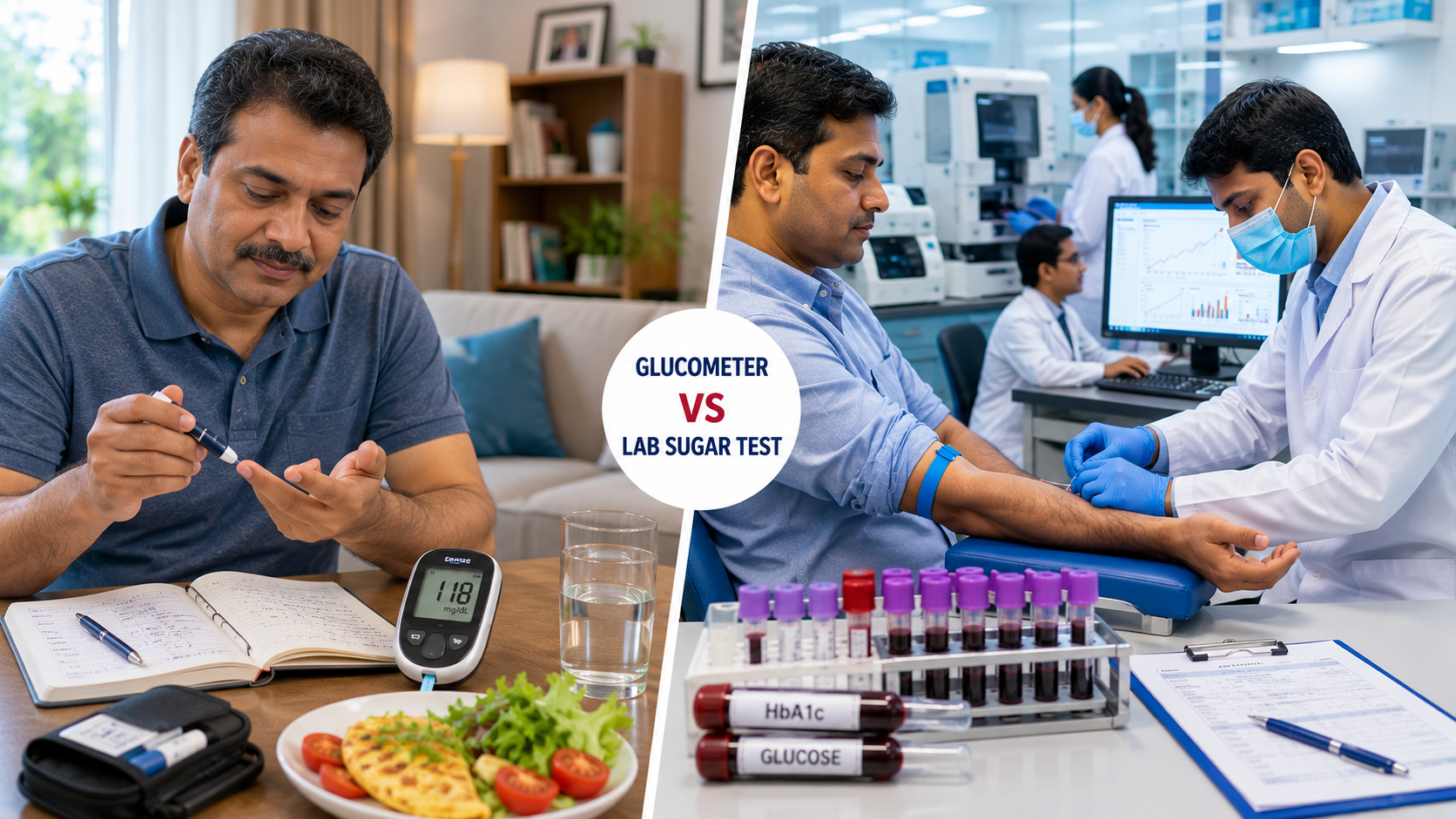
If you're wondering about glucometer vs lab sugar test, you're not alone. Checking your blood sugar is one of the most important parts of managing diabetes and preventing long-term complications. However, many people are unsure whether a home glucometer reading is as reliable as a laboratory blood sugar test. If the numbers differ, which result should you trust? Understanding the difference between a glucometer and a lab sugar test can help you monitor your blood sugar more confidently and make informed decisions about your diabetes care.
The answer is that both tests are valuable, but they serve different purposes. A glucometer is designed for quick day-to-day monitoring, while a laboratory blood sugar test provides highly accurate measurements used for diagnosis and medical decision-making. Therefore, understanding the strengths and limitations of each method can help you manage your diabetes more effectively.
Whether you are a diabetic patient, have prediabetes, or simply monitor your blood sugar at home, this guide explains the differences between a glucometer and laboratory testing, when each should be used, and why they work best together.
This Blog Includes:
 Glucometer vs Lab Sugar Test Accuracy
A glucometer measures blood sugar using a small drop of capillary blood from your fingertip and is ideal for daily diabetes monitoring. In contrast, a laboratory blood sugar test measures glucose in a controlled laboratory using venous blood and standardized equipment, making it more accurate for diagnosis and treatment decisions. While glucometers are excellent for routine home monitoring, laboratory tests and HbA1c remain the gold standard for diagnosing and monitoring diabetes over time.
Why Blood Sugar Testing Matters
Blood sugar levels change throughout the day depending on food, physical activity, stress, illness, medications, and sleep.
Therefore, regular monitoring helps:
Glucometer vs Lab Sugar Test Accuracy
A glucometer measures blood sugar using a small drop of capillary blood from your fingertip and is ideal for daily diabetes monitoring. In contrast, a laboratory blood sugar test measures glucose in a controlled laboratory using venous blood and standardized equipment, making it more accurate for diagnosis and treatment decisions. While glucometers are excellent for routine home monitoring, laboratory tests and HbA1c remain the gold standard for diagnosing and monitoring diabetes over time.
Why Blood Sugar Testing Matters
Blood sugar levels change throughout the day depending on food, physical activity, stress, illness, medications, and sleep.
Therefore, regular monitoring helps:
- Article Title: Glucometer vs Lab Sugar Test – Which One Should You Trust?
- Publisher: Prima Diagnostics
- Type: Myth / Decision Guide Healthcare Blog
- Primary Keyword: glucometer vs lab sugar test
- Topics Covered: Glucometer, Laboratory Blood Sugar Test, HbA1c, Fasting Blood Sugar, Postprandial Blood Sugar, Diabetes Monitoring, Home Blood Sugar Monitoring, Accuracy Comparison, and Patient Education.
- Services Covered: Blood Sugar Tests, HbA1c Test, Diabetes Monitoring Package, Home Sample Collection, and Digital Reports.
- Tests Included: Fasting Blood Sugar (FBS), Postprandial Blood Sugar (PPBS), Random Blood Sugar (RBS), HbA1c, and Oral Glucose Tolerance Test (OGTT).
- Preparation Guidance: Follow fasting instructions for FBS if advised. HbA1c does not require fasting. Follow your healthcare provider's recommendations before testing.
- Service Focus: Diabetes Diagnosis, Diabetes Monitoring, Blood Sugar Testing, Laboratory Diagnostics, Preventive Healthcare, and Patient Education.
- FAQ Section: Included.
Glucometer vs Lab Sugar Test Accuracy
A glucometer measures blood sugar using a small drop of capillary blood from your fingertip and is ideal for daily diabetes monitoring. In contrast, a laboratory blood sugar test measures glucose in a controlled laboratory using venous blood and standardized equipment, making it more accurate for diagnosis and treatment decisions. While glucometers are excellent for routine home monitoring, laboratory tests and HbA1c remain the gold standard for diagnosing and monitoring diabetes over time.
Why Blood Sugar Testing Matters
Blood sugar levels change throughout the day depending on food, physical activity, stress, illness, medications, and sleep.
Therefore, regular monitoring helps:
- Detect high or low blood sugar early
- Monitor diabetes treatment
- Guide dietary changes
- Reduce the risk of complications
- Support better long-term diabetes control
- Incorrect testing technique
- Expired test strips
- Dirty hands
- Temperature and humidity
- Poor strip storage
- Device calibration differences
- Standardized sample collection
- Automated analyzers
- Quality-controlled reagents
- Regular equipment calibration
- Professional laboratory staff
- Finger-prick blood versus venous blood
- Testing time differences
- Food consumed before testing
- Hand contamination
- Meter accuracy limits
- Environmental conditions
- Individual biological variation
- Wash and dry your hands before testing.
- Use fresh test strips.
- Store strips correctly.
- Check strip expiry dates.
- Follow the manufacturer's instructions.
- Replace batteries when needed.
- Compare your glucometer with a laboratory result periodically.
- Monitor daily glucose
- Detect sudden changes
- Guide meals and exercise
- Prevent hypoglycemia
- Diagnose diabetes
- Evaluate treatment effectiveness
- Monitor long-term control
- Detect complications
- Review HbA1c
- HbA1c Testing
- Fasting Blood Sugar (FBS)
- Postprandial Blood Sugar (PPBS)
- Random Blood Sugar (RBS)
- Oral Glucose Tolerance Test (OGTT)
- Diabetes Monitoring Packages
- NABL-quality laboratory testing
- Home Sample Collection
- Fast Digital Reports
- Experienced Laboratory Professionals