
Heavy Bleeding During Periods? Tests for Anemia, Thyroid and Fibroids
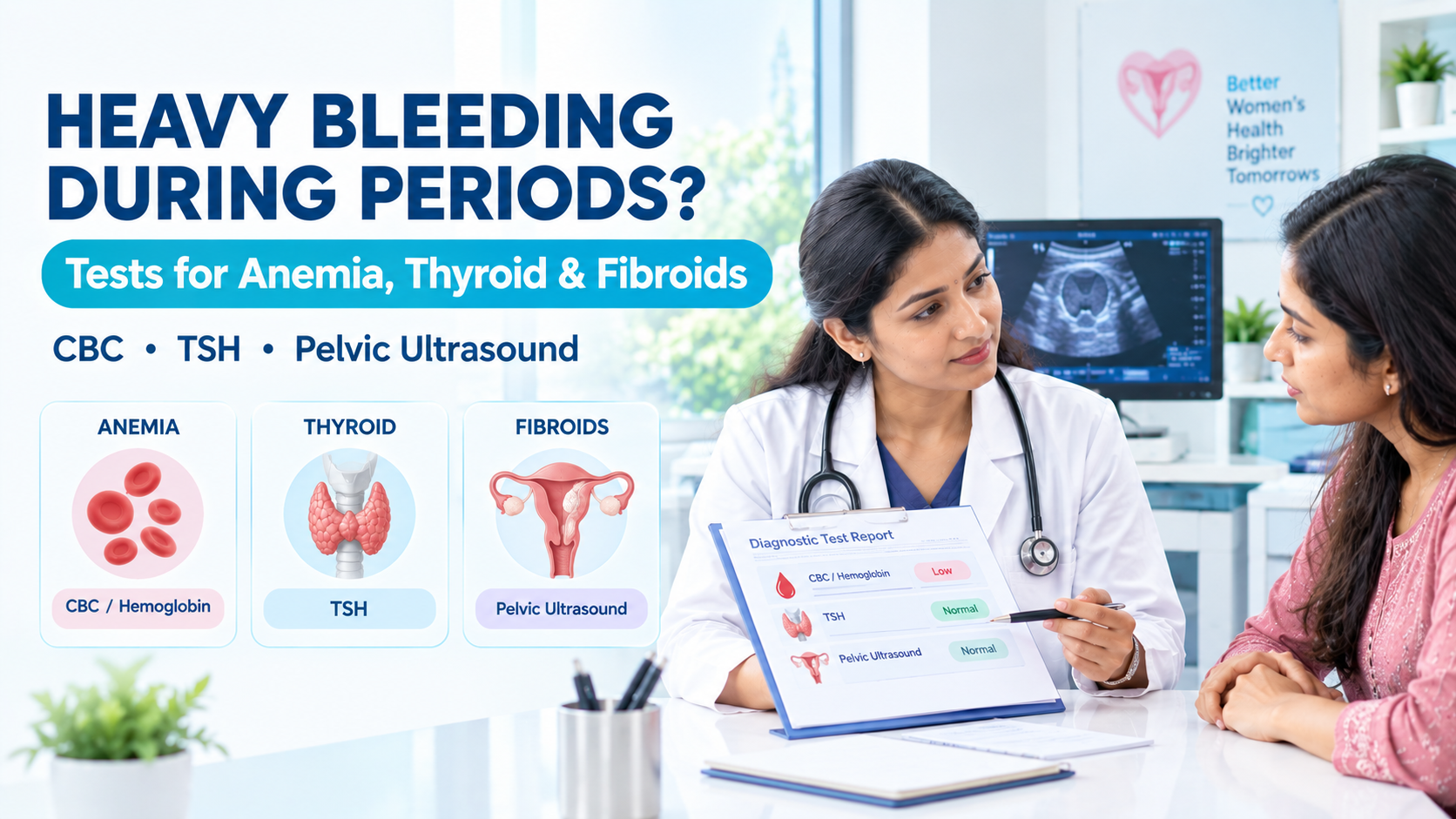
Heavy Bleeding During Periods can be more than an inconvenience. In fact, very heavy or unusually long periods may sometimes be linked to iron deficiency, anemia, thyroid problems, fibroids, hormonal changes, or bleeding disorders.
Therefore, if your periods have suddenly become heavier, last much longer than usual, or interfere with your daily routine, it is worth discussing the symptoms with a healthcare professional.
Importantly, there is no single test that explains every case. Instead, doctors may recommend a combination of blood tests and pelvic imaging depending on your age, symptoms, menstrual pattern, and medical history.
This Blog Includes:
 Which Tests Are Done for Heavy Bleeding During Periods?
The tests commonly considered for heavy bleeding during periods include:
Which Tests Are Done for Heavy Bleeding During Periods?
The tests commonly considered for heavy bleeding during periods include:
- Article Title: Heavy Bleeding During Periods? Tests for Anemia, Thyroid and Fibroids
- Publisher: Prima Diagnostics
- Target Keyword: Heavy Bleeding During Periods
- Search Intent: Women experiencing very heavy, prolonged, or unusually frequent menstrual bleeding
- Tests Covered: CBC, Ferritin, TSH, Prolactin, Clotting Tests, Pelvic Ultrasound
- Conditions Discussed: Anemia, iron deficiency, thyroid problems, fibroids, hormonal causes, and bleeding disorders
- Preparation Guidance: Follow the specific instructions provided for the tests ordered
- Local SEO Focus: Bengaluru, Prima Diagnostics, confidential home collection, female phlebotomist on request
- FAQ Section: Included
Which Tests Are Done for Heavy Bleeding During Periods?
The tests commonly considered for heavy bleeding during periods include:
- CBC: Checks haemoglobin and blood-cell counts for anemia.
- Ferritin: Helps assess stored iron.
- TSH: Checks thyroid function.
- Prolactin: May be recommended when hormonal or menstrual irregularities are present.
- Clotting tests: May be considered when a bleeding disorder is suspected.
- Pelvic ultrasound: Helps evaluate the uterus and ovaries, including possible fibroids and other structural causes.
- Bleeding that requires changing a pad or tampon very frequently
- Passing large blood clots repeatedly
- Periods that continue for more than a week
- Bleeding that soaks through clothing or bedding
- Needing to use multiple menstrual products together
- Period-related bleeding that significantly disrupts work, sleep, travel, or normal activities
- Tiredness
- Weakness
- Dizziness
- Headaches
- Shortness of breath during activity
- Pale skin
- Reduced concentration
- Fast or noticeable heartbeat
- Fainting or near-fainting
- Severe dizziness or weakness
- Shortness of breath
- Chest discomfort
- A very fast heartbeat
- Severe pelvic or abdominal pain
- Possible pregnancy
- Sudden severe bleeding