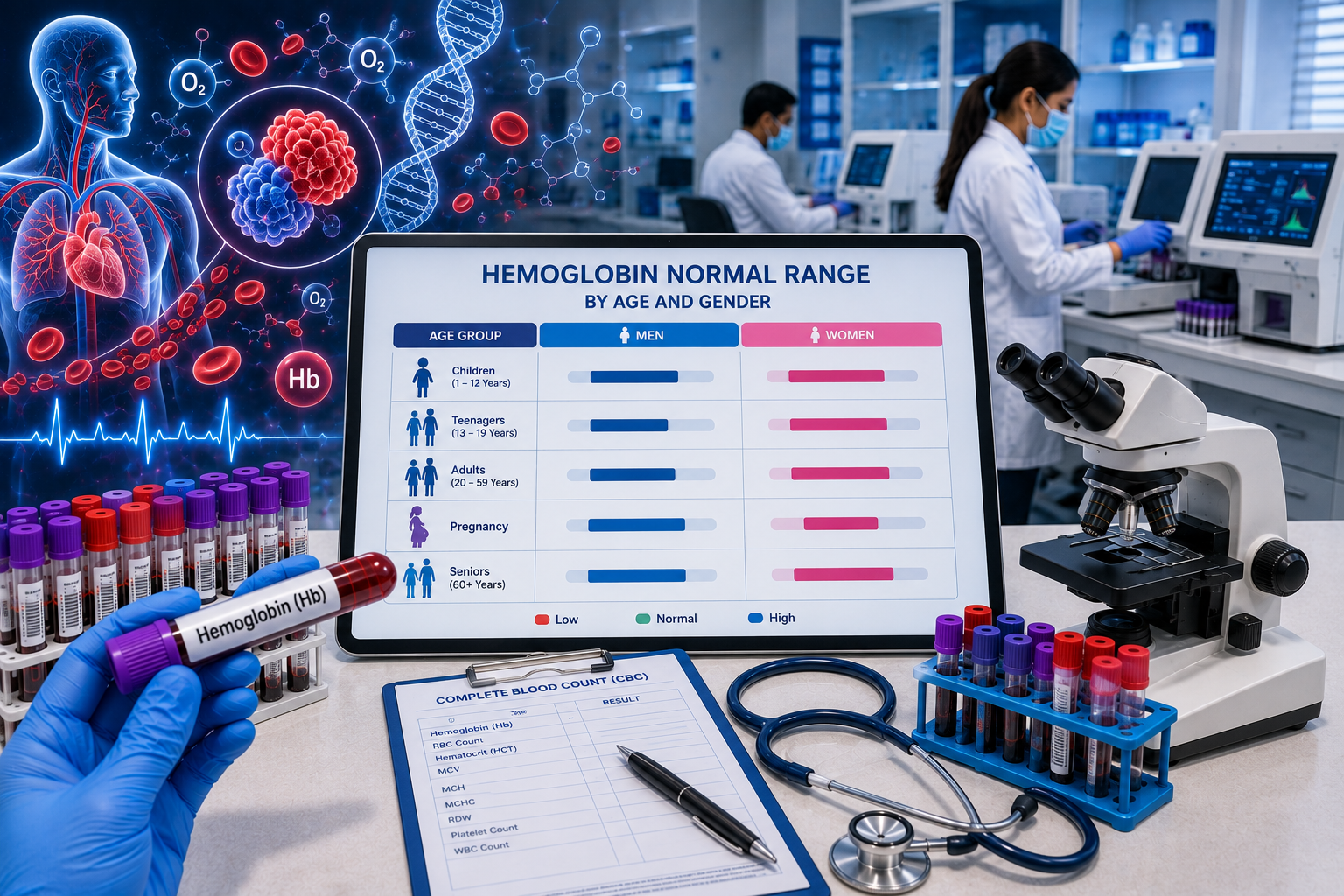
Haemoglobin is one of the most important measurements in a
Complete Blood Count (CBC) because it reflects your body's ability to carry oxygen to every organ and tissue. When
haemoglobin normal range levels fall below then, your body may not receive enough oxygen, leading to symptoms such as fatigue, weakness, dizziness, and shortness of breath.
In India, anemia continues to be a major public health concern. In fact,
many women, children, and even healthy-looking adults have low haemoglobin without realizing it. As a result, routine blood testing plays an essential role in early detection and treatment.
If you are searching for a
haemoglobin normal range chart, this guide explains normal haemoglobin values by age and gender, anemia severity, pregnancy ranges, causes of low haemoglobin, foods that support healthy iron levels, and the laboratory tests that help identify the underlying cause.
Whether you're experiencing tiredness, planning a pregnancy, managing a chronic illness, or simply monitoring your health, understanding your haemoglobin level can help you take timely action.
This Blog Includes:
- Article Title: Haemoglobin Normal Range Chart by Age and Gender (Anemia Levels)
- Publisher: Prima Diagnostics
- Topics Covered: Haemoglobin, Red Blood Cells, Haemoglobin Normal Range, Anemia Levels, Pregnancy Haemoglobin, Iron Deficiency, Ferritin, Iron Studies, Vitamin B12, Folate, Iron-Rich Foods, Complete Blood Count (CBC), Symptoms of Low Haemoglobin, and Patient Education.
- Services Covered: Haemoglobin Test, Complete Blood Count (CBC), Serum Ferritin Test, Iron Studies, Vitamin B12 Test, Folate Test, Preventive Health Check-ups, Home Sample Collection, Digital Reports, and Laboratory Diagnostics.
- Tests Included: Haemoglobin Test, Complete Blood Count (CBC), Serum Ferritin, Serum Iron, Total Iron Binding Capacity (TIBC), Transferrin Saturation, Vitamin B12 Test, Folate Test, Peripheral Blood Smear, and Additional Blood Investigations as Recommended by Healthcare Providers.
- Normal Range Guidance: Haemoglobin Normal Values by Age, Gender, Pregnancy Status, General Anemia Severity Classification, Symptoms of Low Haemoglobin, and Clinical Interpretation Guidance.
- Preparation Guidance: No special preparation is generally required for haemoglobin testing unless advised by your healthcare provider. Follow test-specific instructions for additional investigations such as iron studies or ferritin where applicable.
- Service Focus: Anemia Screening, Preventive Health Screening, Blood Testing, Iron Deficiency Evaluation, Pregnancy Monitoring, Nutritional Assessment, Home Sample Collection, Laboratory Diagnostics, and Patient Education.
- FAQ Section: Included.
 Haemoglobin Normal Range Chart by Age and Gender
The
haemoglobin normal range chart varies by age, gender, and pregnancy status. In general, adult men have higher haemoglobin levels than adult women, while children have age-specific reference ranges. Haemoglobin levels below the normal range may indicate anemia, and further tests such as
CBC, ferritin, iron studies, and vitamin B12 may help determine the underlying cause.
What Is Haemoglobin?
Haemoglobin is a protein found inside
red blood cells (RBCs).
Its primary function is to carry oxygen from the lungs to every part of the body and transport carbon dioxide back to the lungs for removal.
Without adequate haemoglobin, your organs and tissues receive less oxygen, which may affect your energy levels and overall health.
Why Is Haemoglobin So Important?
Healthy haemoglobin levels support:
- Oxygen transport
- Energy production
- Brain function
- Muscle performance
- Heart health
- Healthy pregnancy
- Child growth and development
Therefore, maintaining normal haemoglobin levels is essential throughout life.
How Is Haemoglobin Measured?
Haemoglobin is measured as part of a
Complete Blood Count (CBC) using a blood sample.
The result is reported in
grams per decilitre (g/dL).
Because CBC is one of the most commonly ordered blood tests, haemoglobin is routinely checked during health check-ups, pregnancy, illness evaluations, and pre-operative assessments.
Haemoglobin Normal Range Chart by Age and Gender
Although reference ranges may vary slightly between laboratories, the following values are generally accepted.
| Group |
Normal Haemoglobin Range (g/dL) |
| Newborns |
14–24 |
| Infants (1–12 months) |
10.5–13.5 |
| Children (1–5 years) |
11.0–13.5 |
| Children (6–12 years) |
11.5–15.5 |
| Teen Boys |
12.5–16.5 |
| Teen Girls |
12.0–16.0 |
| Adult Men |
13.5–17.5 |
| Adult Women |
12.0–15.5 |
| Older Adults |
May vary slightly depending on overall health |
These values should always be interpreted alongside the laboratory reference range and your clinical condition.
Why Do Men and Women Have Different Haemoglobin Normal Range Levels?
Adult men generally have higher haemoglobin levels because of hormonal differences and greater muscle mass.
Women, on the other hand, may have slightly lower levels due to:
- Menstrual blood loss
- Pregnancy
- Increased iron requirements
Why Do Children's Values Change with Age?
Children's bodies grow rapidly.
As growth, nutrition, and oxygen requirements change, haemoglobin reference ranges also change throughout childhood.
Understanding Anemia Levels
Anemia refers to a lower-than-normal haemoglobin level.
However, not all anemia is equally severe.
Doctors often classify anemia into different grades.
| Severity |
General Haemoglobin Level* |
| Mild Anemia |
Slightly below normal |
| Moderate Anemia |
Significantly below normal |
| Severe Anemia |
Markedly low and may require urgent evaluation |
*The exact cut-offs vary by age, gender, pregnancy status, and clinical guidelines.
The severity of symptoms does not always match the haemoglobin value, which is why medical evaluation is important.
Common Symptoms of Low Haemoglobin
Low haemoglobin may cause:
- Persistent tiredness
- Weakness
- Pale skin
- Dizziness
- Headache
- Breathlessness
- Rapid heartbeat
- Poor concentration
- Cold hands and feet
Some individuals, especially those with slowly developing anemia, may have very few symptoms despite low haemoglobin levels.
Haemoglobin During Pregnancy
Pregnancy increases the body's demand for iron and nutrients because blood volume expands to support the developing baby.
Consequently, mild reductions in haemoglobin are relatively common during pregnancy.
Regular monitoring helps identify women who may require dietary changes, iron supplementation, or further medical evaluation.
Routine prenatal blood testing often includes:
- CBC
- Haemoglobin
- Ferritin (when indicated)
- Iron studies
- Blood Group
- Additional pregnancy-related investigations
Why Are Many Indian Women Anemic?
Anemia remains highly prevalent among Indian women due to several contributing factors.
Common reasons include:
- Low dietary iron intake
- Heavy menstrual bleeding
- Frequent pregnancies
- Poor absorption of nutrients
- Vitamin B12 deficiency
- Folate deficiency
- Chronic medical conditions
Additionally, vegetarian diets, if not carefully planned, may provide less readily absorbed iron compared with diets containing animal-based sources.
For working women in Bengaluru, busy schedules, skipped meals, processed foods, and prolonged work hours may further contribute to nutritional deficiencies.
What Causes Low Haemoglobin?
Low haemoglobin is a finding—not a disease itself.
Possible causes include:
Iron Deficiency
The most common cause worldwide.
Vitamin B12 Deficiency
Can reduce healthy red blood cell production.
Folate Deficiency
Important for red blood cell formation.
Blood Loss
Examples include:
- Heavy periods
- Gastrointestinal bleeding
- Surgery
- Injury
Chronic Diseases
Kidney disease, inflammatory conditions, and certain chronic illnesses may contribute.
Bone Marrow Disorders
Less common but important causes requiring specialist evaluation.
Tests That Help Find the Cause
If haemoglobin is low, doctors may recommend additional laboratory investigations.
Complete Blood Count (CBC)
Provides information about red blood cells, white blood cells, and platelets.
Serum Ferritin
Measures the body's iron stores.
Iron Studies
May include:
- Serum Iron
- Total Iron Binding Capacity (TIBC)
- Transferrin Saturation
Vitamin B12 Test
Helps detect vitamin deficiency.
Folate Test
Useful in selected patients.
Peripheral Blood Smear
Examines the appearance of blood cells under a microscope.
The choice of tests depends on your symptoms and medical history.
Iron-Rich Foods That Support Healthy Haemoglobin
Diet plays an important role in maintaining healthy haemoglobin levels.
Iron-rich foods include:
Animal Sources
- Lean meat
- Fish
- Chicken
- Eggs
Vegetarian Sources
- Spinach
- Lentils
- Chickpeas
- Beans
- Soy products
- Pumpkin seeds
- Sesame seeds
- Jaggery (in moderation)
Vitamin C-rich foods such as oranges, guava, lemon, and amla may improve iron absorption when consumed with meals.
When Should You Get Your Haemoglobin Checked?
A blood test is recommended if you experience:
- Persistent tiredness
- Weakness
- Frequent dizziness
- Pale skin
- Heavy menstrual bleeding
- Pregnancy
- Poor nutrition
- Chronic illness
- Family history of blood disorders
Routine health check-ups can also identify anemia before symptoms become severe.
When Should You Worry About Low Haemoglobin?
You should seek medical evaluation if:
- Symptoms interfere with daily activities.
- Haemoglobin continues to decrease.
- Experiencing chest pain or severe breathlessness.
- You faint or feel extremely weak.
- Noticeing blood loss.
- You are pregnant, and your doctor advises further evaluation.
Prompt diagnosis helps identify the underlying cause and supports appropriate treatment.
Why Choose Prima Diagnostics?
Prima Diagnostics offers comprehensive anemia evaluation through:
- Complete Blood Count (CBC)
- Haemoglobin Testing
- Ferritin Test
- Iron Studies
- Vitamin B12 Test
- Folate Testing
- Home Sample Collection
- Preventive Health Check-ups
- Digital Reports
- Experienced Laboratory Professionals
- Advanced Diagnostic Equipment
Whether you need routine health screening or further evaluation for anemia, Prima Diagnostics provides reliable laboratory services across Bengaluru.
Frequently Asked Questions
What is the haemoglobin normal range for women?
Adult women generally have a normal haemoglobin range of approximately
12.0–15.5 g/dL, although reference ranges may vary slightly between laboratories.
Can low haemoglobin always mean iron deficiency?
No. Iron deficiency is common, but low haemoglobin can also result from vitamin deficiencies, chronic diseases, blood loss, or other medical conditions.
Which blood test confirms iron deficiency?
Doctors often recommend
serum ferritin along with iron studies and CBC to evaluate iron deficiency.
Can vegetarians have low haemoglobin?
Yes. Without adequate dietary planning, vegetarian diets may provide less absorbable iron, increasing the risk of iron deficiency.
How often should haemoglobin be checked?
Testing frequency depends on your health condition, pregnancy status, symptoms, and your healthcare provider's recommendations.
Where can I get haemoglobin testing in Bengaluru?
Prima Diagnostics offers CBC, haemoglobin testing, ferritin, iron studies, home sample collection, and preventive health check-ups across Bengaluru.
Conclusion
Understanding the
haemoglobin normal range chart is an important step toward maintaining good health. Since haemoglobin is responsible for carrying oxygen throughout the body, even a mild reduction can affect your energy levels, concentration, and overall well-being. Regular monitoring is particularly important for women, children, pregnant individuals, vegetarians, and anyone experiencing symptoms such as fatigue or weakness.
If your haemoglobin level is low, further investigations such as
CBC, ferritin, iron studies, vitamin B12, and folate tests can help identify the underlying cause. Combined with a balanced diet, timely medical advice, and appropriate follow-up, early detection of anemia can support better long-term health. Prima Diagnostics offers reliable haemoglobin testing, comprehensive anemia evaluation, home sample collection, and digital reports across Bengaluru to help you take charge of your health.