
Homocysteine Test - The Hidden Heart and Stroke Risk Marker
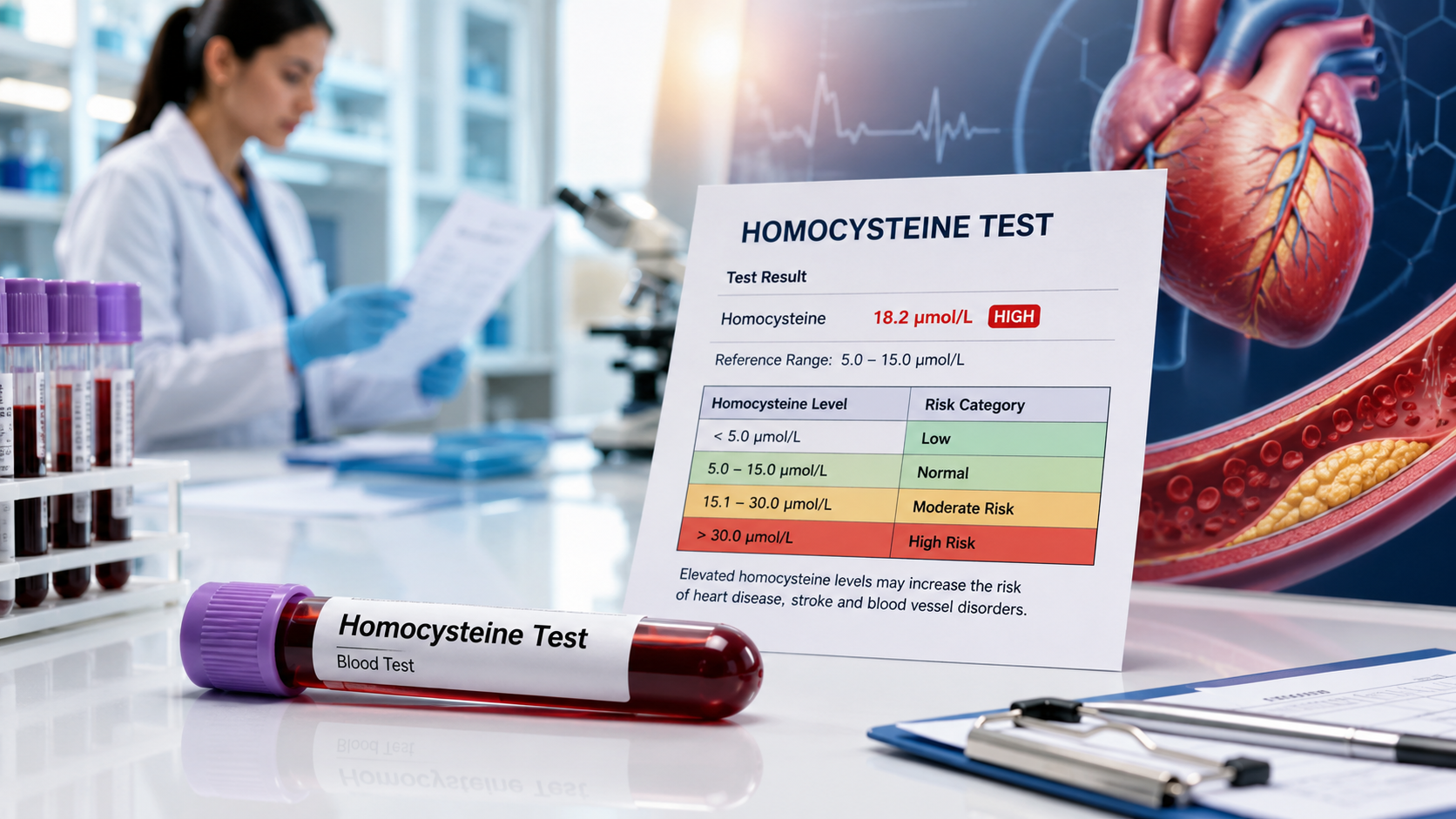
The homocysteine test measures the amount of homocysteine in your blood. High homocysteine levels can be associated with an increased risk of cardiovascular disease, stroke and blood-vessel problems, particularly when combined with other risk factors or vitamin B12 and folate deficiency. However, a high result does not by itself mean that a person will have a heart attack or stroke.
For people in Bengaluru, this test can sometimes be relevant when evaluating nutritional deficiencies, unexplained neurological symptoms, certain cardiovascular risk profiles, or a family history of early heart disease. Moreover, people following vegetarian or vegan diets may need particular attention to vitamin B12 intake because inadequate B12 can contribute to elevated homocysteine.
Therefore, understanding what the homocysteine test measures, when it may be useful and how the result is interpreted can help you make a more informed healthcare decision.
This Blog Includes:
 What Is Homocysteine Test?
Understanding This Amino Acid
Homocysteine is an amino acid produced naturally when the body processes methionine, another amino acid obtained from food.
Normally, the body converts homocysteine into other substances through metabolic pathways that depend partly on vitamins such as:
What Is Homocysteine Test?
Understanding This Amino Acid
Homocysteine is an amino acid produced naturally when the body processes methionine, another amino acid obtained from food.
Normally, the body converts homocysteine into other substances through metabolic pathways that depend partly on vitamins such as:
- Article Title: Homocysteine Test - The Hidden Heart and Stroke Risk Marker
- Publisher: Prima Diagnostics
- Type: Test Explainer Healthcare Blog
- Topics Covered: Homocysteine, High Homocysteine, Cardiovascular Risk, Stroke Risk, Vitamin B12 Deficiency, Folate Deficiency, Vitamin B6, Vegetarian Nutrition, Young Heart Disease, Family History of Heart Disease, Kidney Function, Lipid Profile, Heart Health, and Patient Education.
- Services Covered: Homocysteine Blood Test, Vitamin B12 Test, Folate Testing, CBC, Kidney Function Test, Lipid Profile, Heart Health Screening, Preventive Health Testing, Home Sample Collection, Digital Reports, and Laboratory Diagnostics.
- Test Covered: Homocysteine Blood Test for measuring the concentration of homocysteine in the blood.
- Normal Range Guidance: Explains that a commonly used adult homocysteine reference range is approximately 5–15 µmol/L, while emphasizing that laboratory-specific reference ranges may vary and should be used for interpretation.
- Interpretation Guidance: Explains that elevated homocysteine is associated with cardiovascular and cerebrovascular risk but does not independently diagnose heart disease or predict a heart attack or stroke.
- Nutritional Guidance: Explains the relationship between homocysteine and vitamin B12, folate and vitamin B6, including the potential relevance of B12 deficiency among people with low dietary intake of animal-derived foods.
- Risk Assessment Guidance: Homocysteine should be considered alongside established cardiovascular risk factors such as blood pressure, cholesterol, diabetes, smoking, physical activity, body weight and family history.
- Related Tests: Vitamin B12, Folate, CBC, Kidney Function Test, Lipid Profile, ECG and other cardiac investigations as recommended by healthcare providers.
- Preparation Guidance: Follow any specific instructions given by your healthcare provider and the laboratory. Preparation requirements may vary depending on the test and accompanying investigations.
- FAQ Section: Included.
What Is Homocysteine Test?
Understanding This Amino Acid
Homocysteine is an amino acid produced naturally when the body processes methionine, another amino acid obtained from food.
Normally, the body converts homocysteine into other substances through metabolic pathways that depend partly on vitamins such as:
- Vitamin B12
- Folate (vitamin B9)
- Vitamin B6
- Damage or dysfunction of the blood-vessel lining
- Increased cardiovascular risk
- Stroke risk
- Certain clotting-related concerns
- Vitamin B12 or folate deficiency
- High LDL cholesterol
- Diabetes
- High blood pressure
- Smoking
- Obesity
- Family history of premature heart disease
- Green leafy vegetables
- Beans and lentils
- Citrus fruits
- Nuts
- Fortified foods
- Suspected vitamin B12 deficiency
- Suspected folate deficiency
- Certain neurological symptoms
- Unexplained elevated cardiovascular risk
- Selected patients with premature cardiovascular disease
- Certain family or medical histories
- Evaluation of abnormal vitamin-related laboratory findings
- Cholesterol abnormalities
- Diabetes
- Blood pressure
- Smoking
- Family history
- Lifestyle factors
- Certain inherited conditions
- Nutritional deficiencies
- Green leafy vegetables
- Legumes
- Whole grains
- Nuts and seeds
- Fruits
- Fortified foods
- B12-containing foods where appropriate
- Blood pressure
- LDL cholesterol
- Blood sugar
- Physical activity
- Smoking
- Body weight
- Sleep
- Overall diet