
How to Read Your Blood Test Report - A Simple Guide for Beginners
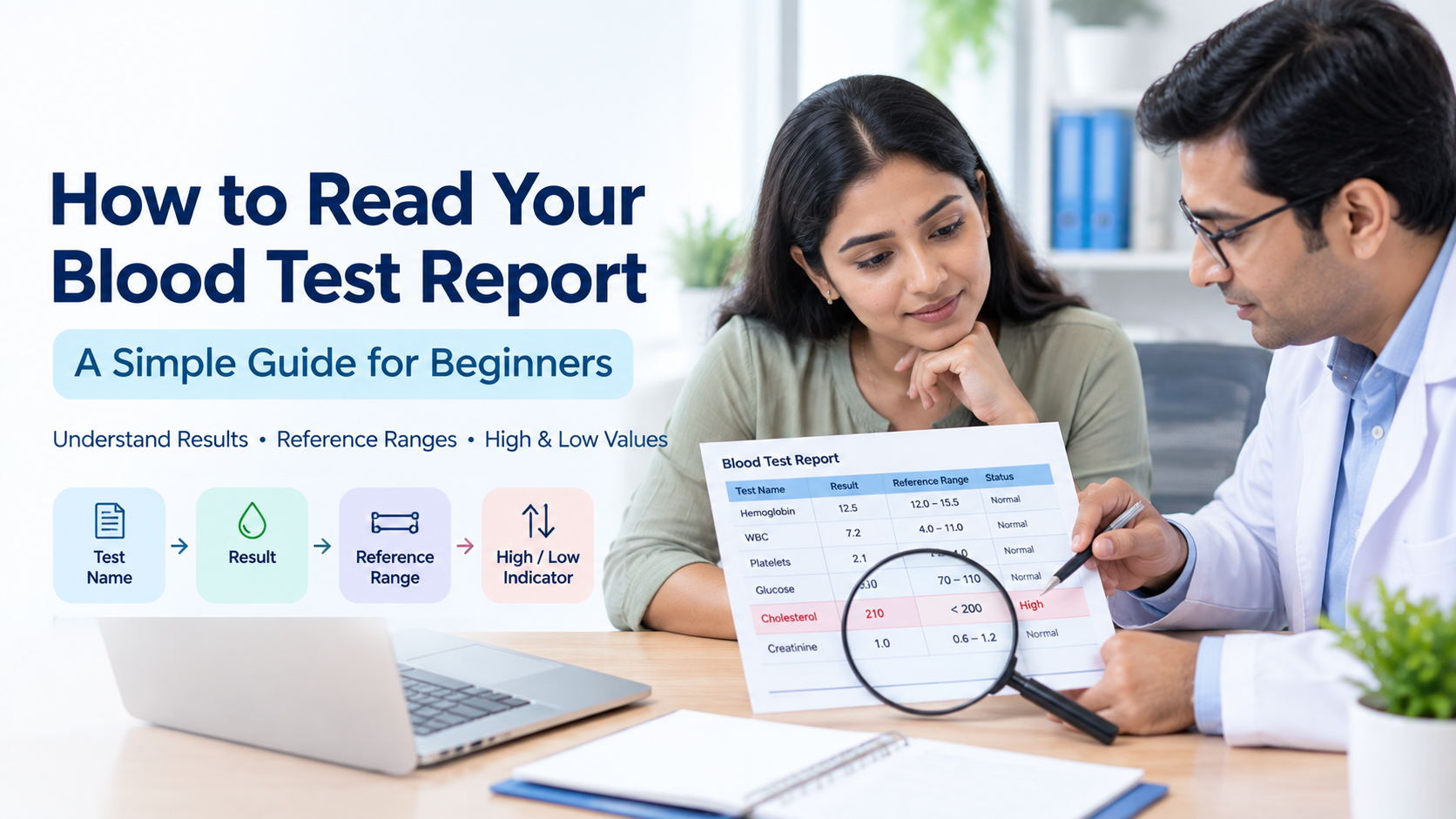
Getting a blood test report can feel confusing, especially when it contains dozens of numbers, abbreviations, reference ranges, and H or L flags. However, you do not need to be a medical expert to understand the basic structure of your report.
Instead, you can start by looking at a few important sections. First, identify the test name. Next, check your result and compare it with the laboratory's reference range. Then, look at any H, L, or other flags. Finally, consider the result along with your symptoms, medical history, and your doctor's advice.
Moreover, one number outside the reference range does not automatically mean that something is wrong. Therefore, it is important to understand the report in context rather than focusing on a single value.
This Blog Includes:
 How Do I Read My Blood Test Report?
To read your blood test report:
How Do I Read My Blood Test Report?
To read your blood test report:
- Article Title: How to Read Your Blood Test Report - A Simple Guide for Beginners
- Publisher: Prima Diagnostics
- Topics Covered: Blood Test Report, Reference Ranges, H and L Flags, Common Blood Tests, Abnormal Results and Report Interpretation
- Services Covered: Blood Testing, Diagnostic Testing, Digital Reports, Health Check-ups and Home Sample Collection
- Tests Included: CBC, Haemoglobin, WBC Count, Platelet Count, Blood Glucose, HbA1c, Creatinine, ALT, TSH and Lipid Profile
- Report Guidance: Test name, result, unit, reference range and abnormal-value flags
- Preparation Guidance: Follow the specific preparation instructions provided for the individual test and healthcare provider
- Local SEO Focus: Bengaluru Blood Testing, Prima Diagnostics Reports and WhatsApp Support
- FAQ Section: Included
How Do I Read My Blood Test Report?
To read your blood test report:
- Find the test name and understand what is being measured.
- Look at your result and note the unit.
- Check the reference range provided by the laboratory.
- Look for H or L flags that indicate a result is above or below that laboratory's range.
- Compare the result with previous reports, if available.
- Consider symptoms, medications, age, and health history because these can affect interpretation.
- Ask your doctor or diagnostic laboratory for clarification if a result is unclear.
- Test Name
- Your Result
- Unit of Measurement
- Reference Range
- H = High compared with the laboratory's reference range.
- L = Low compared with the laboratory's reference range.
- Blood Glucose
- HbA1c
- Liver Function Tests
- Kidney Function Tests
- TSH
- Vitamin B12
- Vitamin D
- How do I read my blood test report?
- What does H mean on a blood test report?
- What does L mean on a blood test report?
- Why are reference ranges different between laboratories?
- Can Prima Diagnostics explain my blood test report?
- Can I get blood tests with home sample collection in Bengaluru?
- Should I worry if one blood test value is slightly high or low?