
How to Read Your Urine Routine Report - What Each Line Means
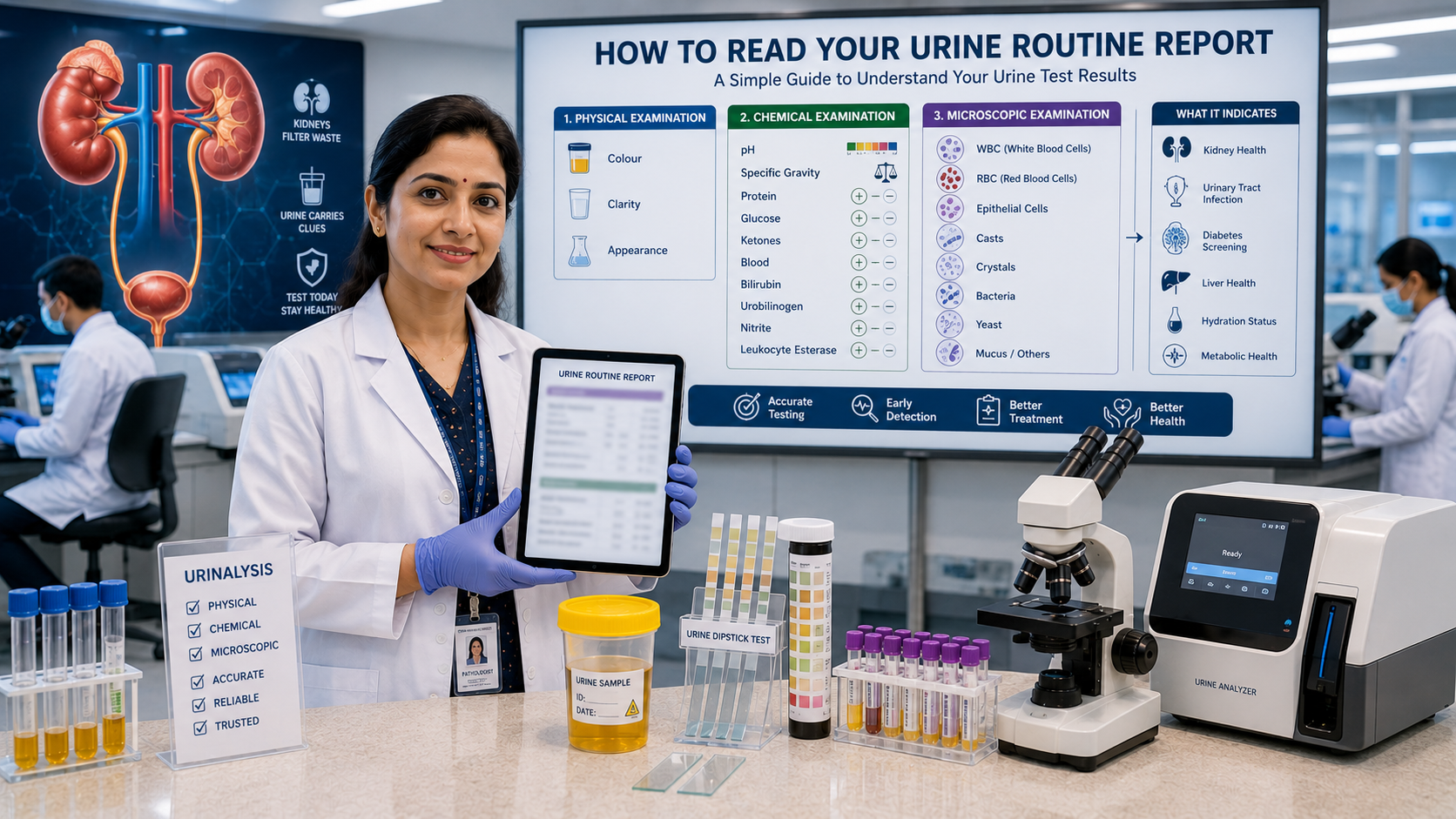
How to Read a Urine Routine Report
To read a urine routine report, first look at the physical appearance, followed by chemical findings such as protein, glucose, ketones, blood, pH and specific gravity, and then microscopic findings such as pus cells, red blood cells, epithelial cells, crystals and bacteria. However, a single abnormal value does not automatically mean you have an infection or kidney disease. Instead, the results should be interpreted together with symptoms, medical history and, when necessary, additional testing.
A urine routine examination (urinalysis) is one of the most commonly performed laboratory tests. Moreover, it is useful for evaluating urinary symptoms, detecting some metabolic abnormalities and providing clues about kidney and urinary-tract health.
For Bengaluru UTI patients, diabetics, and people monitoring kidney health, understanding the basic sections of a urine report can make the results less confusing. Nevertheless, your healthcare provider should interpret abnormal findings, particularly when several parameters are outside the expected range.
This Blog Includes:
 What a Urine Routine Report Shows
A urine routine report generally contains three broad areas:
What a Urine Routine Report Shows
A urine routine report generally contains three broad areas:
- Article Title: How to Read Your Urine Routine Report – What Each Line Means
- Publisher: Prima Diagnostics
- Type: Report Guide Healthcare Blog
- Topics Covered: Urine Routine Examination, Urinalysis, Urine Report Interpretation, Protein in Urine, Glucose in Urine, Ketones, Pus Cells, RBCs, Blood in Urine, Crystals, Urine pH, Specific Gravity, Epithelial Cells, Casts, Bacteria, UTI, Kidney Health, Diabetes-Related Kidney Monitoring, and Patient Education.
- Services Covered: Urine Routine Examination, Urine Microscopy, Urine Culture when clinically indicated, Urine Albumin-to-Creatinine Ratio, Kidney Function Test, Creatinine, eGFR, Urea, Electrolyte Testing, Blood Sugar Testing, HbA1c, Home Sample Collection, Digital Reports, and Laboratory Diagnostics.
- Tests Included: Urine Routine Examination, Urine Microscopy, Urine Culture when recommended, Urine Albumin-to-Creatinine Ratio (UACR), Serum Creatinine, eGFR, Urea, Electrolytes, Fasting Blood Sugar, HbA1c, and Additional Urine or Kidney Investigations as Recommended by Healthcare Providers.
- Report Parameters Covered: Colour, Appearance, Specific Gravity, pH, Protein, Glucose, Ketones, Blood, Bilirubin, Urobilinogen, Pus Cells, RBCs, Epithelial Cells, Crystals, Casts, Bacteria, and Other Microscopic Findings.
- Educational Guidance: Explains how to interpret the major sections of a urine routine report, what abnormal findings may indicate, why isolated abnormalities do not always indicate disease, and when additional testing or medical evaluation may be appropriate.
- Preparation Guidance: Follow the laboratory's urine collection instructions, use the appropriate sterile container, collect the recommended urine portion, avoid contamination, and submit the sample within the recommended timeframe. Inform the laboratory if menstruation or another factor could affect sample interpretation.
- Service Focus: Urinary Health Assessment, UTI Evaluation, Kidney Health Monitoring, Diabetes-Related Kidney Screening, Urinalysis, Laboratory Diagnostics, Home Sample Collection, Digital Reporting, and Patient Education.
- FAQ Section: Included.
What a Urine Routine Report Shows
A urine routine report generally contains three broad areas:
- Physical Examination
- Colour
- Appearance
- Specific gravity
- Chemical Examination
- Protein
- Glucose
- Ketones
- Blood
- Bilirubin
- Urobilinogen
- pH
- Microscopic Examination
- Pus cells
- RBCs
- Epithelial cells
- Crystals
- Casts
- Bacteria
- Yeast, when detected
- Dehydration
- Certain foods
- Medicines
- Vitamins
- Blood
- Liver or urinary conditions
- Fluid intake
- Dehydration
- Kidney concentrating ability
- Glucose in urine
- Certain substances or medicines
- Fever
- Strenuous exercise
- Dehydration
- Acute illness
- Fasting Blood Sugar
- Postprandial Blood Sugar
- HbA1c
- Prolonged fasting
- Vomiting
- Very low-carbohydrate diets
- Dehydration
- Uncontrolled diabetes
- Burning while urinating
- Frequent urination
- Urgency
- Lower abdominal discomfort
- Foul-smelling urine
- Pus cells
- Symptoms
- Sample quality
- Urine culture, when required
- Urinary infection
- Kidney stones
- Menstrual contamination
- Urinary-tract irritation
- Certain kidney conditions
- Other urinary-tract problems
- Kidney function tests
- Imaging
- Urine studies
- Metabolic assessment
- Slight changes in urine concentration
- Small numbers of epithelial cells
- Temporary changes after dehydration or exercise
- Persistent protein
- Significant glucose or ketones
- Increased pus cells with urinary symptoms
- Repeated blood in urine
- Significant bacteria with symptoms
- Abnormal casts
- Persistent unexplained abnormalities
- Serum Creatinine
- eGFR
- Urea
- Electrolytes
- Urine Albumin-to-Creatinine Ratio
- Burning urination
- Fever with urinary symptoms
- Blood in urine
- Persistent protein in urine
- Recurrent UTIs
- Swelling of the legs or face
- Reduced urine output
- Persistent abnormal urine findings
- Diabetes with evidence of kidney involvement
- Follow the laboratory's collection instructions.
- Use the appropriate sterile container.
- Clean the genital area as instructed.
- Collect the recommended urine portion, often a midstream sample.
- Avoid touching the inside of the container.
- Submit the sample within the recommended timeframe.