
Leg Swelling or Puffy Face? 4 Tests for Kidney and Heart
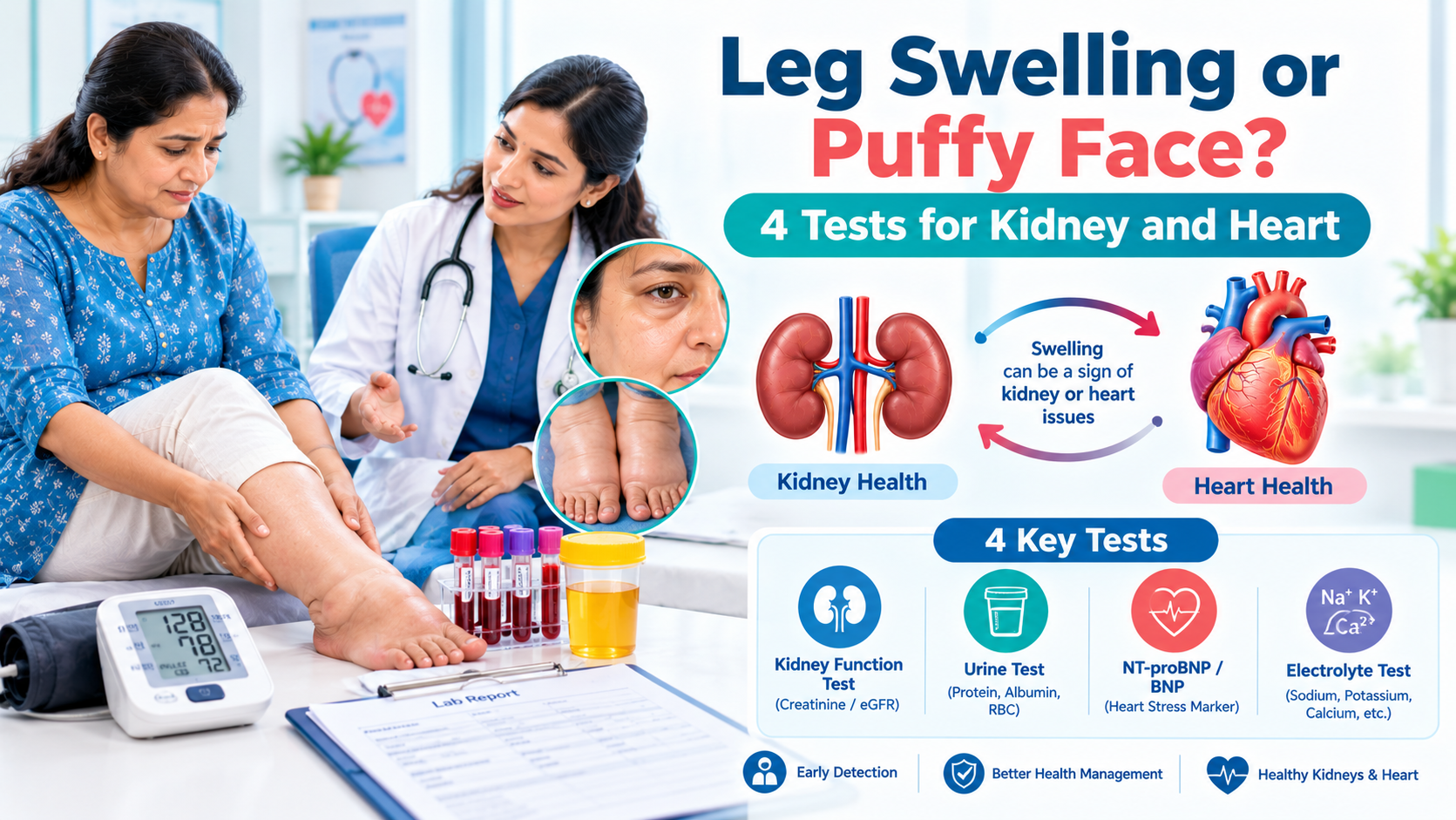
Waking up with a puffy face or noticing swollen feet and ankles after a long day can be unsettling. Sometimes, however, the cause is simple, such as sitting for too long, standing for several hours, eating salty food, or not moving enough. Nevertheless, persistent or unexplained swelling can sometimes be linked to the kidneys, heart, thyroid, veins, or other health conditions. Therefore, if leg swelling or puffy face keeps returning, especially along with breathlessness, changes in urine, tiredness, or rapid weight gain, it is worth discussing with a healthcare provider.
Importantly, swelling alone cannot identify the cause. Instead, doctors may use blood tests, urine testing, thyroid testing, and heart investigations to find out what is happening.
This Blog Includes:
 Which Test Is Done for Leg Swelling?
There is no single test that explains every case of leg swelling. However, doctors may commonly consider Kidney Function Tests (KFT), urine protein testing, thyroid testing, and 2D Echo, depending on the symptoms and examination.
These tests look at different possible causes. Consequently, the combination selected depends on whether kidney, heart, thyroid, or another problem is suspected.
What Causes Leg Swelling or a Puffy Face?
Swelling, medically called oedema, occurs when excess fluid collects in body tissues.
However, the reason can vary considerably.
Common Causes of Swelling
Which Test Is Done for Leg Swelling?
There is no single test that explains every case of leg swelling. However, doctors may commonly consider Kidney Function Tests (KFT), urine protein testing, thyroid testing, and 2D Echo, depending on the symptoms and examination.
These tests look at different possible causes. Consequently, the combination selected depends on whether kidney, heart, thyroid, or another problem is suspected.
What Causes Leg Swelling or a Puffy Face?
Swelling, medically called oedema, occurs when excess fluid collects in body tissues.
However, the reason can vary considerably.
Common Causes of Swelling
- Article Title: Leg Swelling or Puffy Face? 4 Tests for Kidney and Heart
- Publisher: Prima Diagnostics
- Topics Covered: Leg Swelling or Puffy Face, Puffy Face, Swollen Feet, Swollen Ankles, Oedema, Kidney Health, Heart Health, Thyroid Disorders, Fluid Retention, Prolonged Sitting, Desk Jobs, Pregnancy-Related Swelling, and Warning Signs.
- Services Covered: Kidney Function Testing, Urine Protein Testing, Thyroid Testing, 2D Echo, Routine Blood Testing, Preventive Health Check-ups, Home Sample Collection, Digital Reports, and Laboratory Diagnostics.
- Tests Included: Kidney Function Test (KFT), Serum Creatinine, Urea, Urine Protein/Albumin Testing, Thyroid Function Tests, 2D Echo, ECG, and Additional Investigations as Recommended by Healthcare Providers.
- Preparation Guidance: Preparation requirements depend on the individual investigation. Follow any specific instructions given by your healthcare provider or diagnostic laboratory. Fasting may be required for certain additional blood tests but is not universally required for KFT or urine testing.
- Service Focus: Swelling Evaluation, Kidney Health Assessment, Heart Health Assessment, Thyroid Screening, Preventive Health Screening, Home Sample Collection, Laboratory Diagnostics, Cardiac Diagnostics, and Patient Education.
- Location Focus: Bengaluru
- FAQ Section: Included.
Which Test Is Done for Leg Swelling?
There is no single test that explains every case of leg swelling. However, doctors may commonly consider Kidney Function Tests (KFT), urine protein testing, thyroid testing, and 2D Echo, depending on the symptoms and examination.
These tests look at different possible causes. Consequently, the combination selected depends on whether kidney, heart, thyroid, or another problem is suspected.
What Causes Leg Swelling or a Puffy Face?
Swelling, medically called oedema, occurs when excess fluid collects in body tissues.
However, the reason can vary considerably.
Common Causes of Swelling
- Sitting or standing for long periods
- High salt intake
- Certain medications
- Venous circulation problems
- Kidney-related conditions
- Heart-related conditions
- Thyroid disorders
- Pregnancy
- Liver-related conditions
- Allergic reactions or inflammation
- Kidney Function Test (KFT)
- Serum creatinine
- Urea
- Estimated kidney function
- Electrolytes, depending on the panel
- Urine Protein Testing
- Unusual tiredness
- Feeling unusually cold
- Weight changes
- Dry skin
- Constipation
- Changes in heart rate
- Foamy or unusually frothy urine
- Reduced urine output
- Blood in urine
- High blood pressure
- Persistent facial puffiness
- Swelling around the eyes
- Unexplained fatigue
- Breathlessness
- Reduced exercise tolerance
- Difficulty breathing when lying down
- Rapid weight gain from fluid retention
- Persistent ankle or leg swelling
- Unusual tiredness
- Swollen ankles
- Foamy urine
- Reduced urine output
- Breathlessness
- Significant fatigue
- Sudden weight gain
- Sudden or severe breathlessness
- Chest pain
- Fainting
- Severe weakness
- Coughing up blood
- Sudden swelling of one leg with pain or redness
- Rapidly worsening swelling