
Monsoon Water Contamination in Bengaluru - Typhoid and Hepatitis A Risk
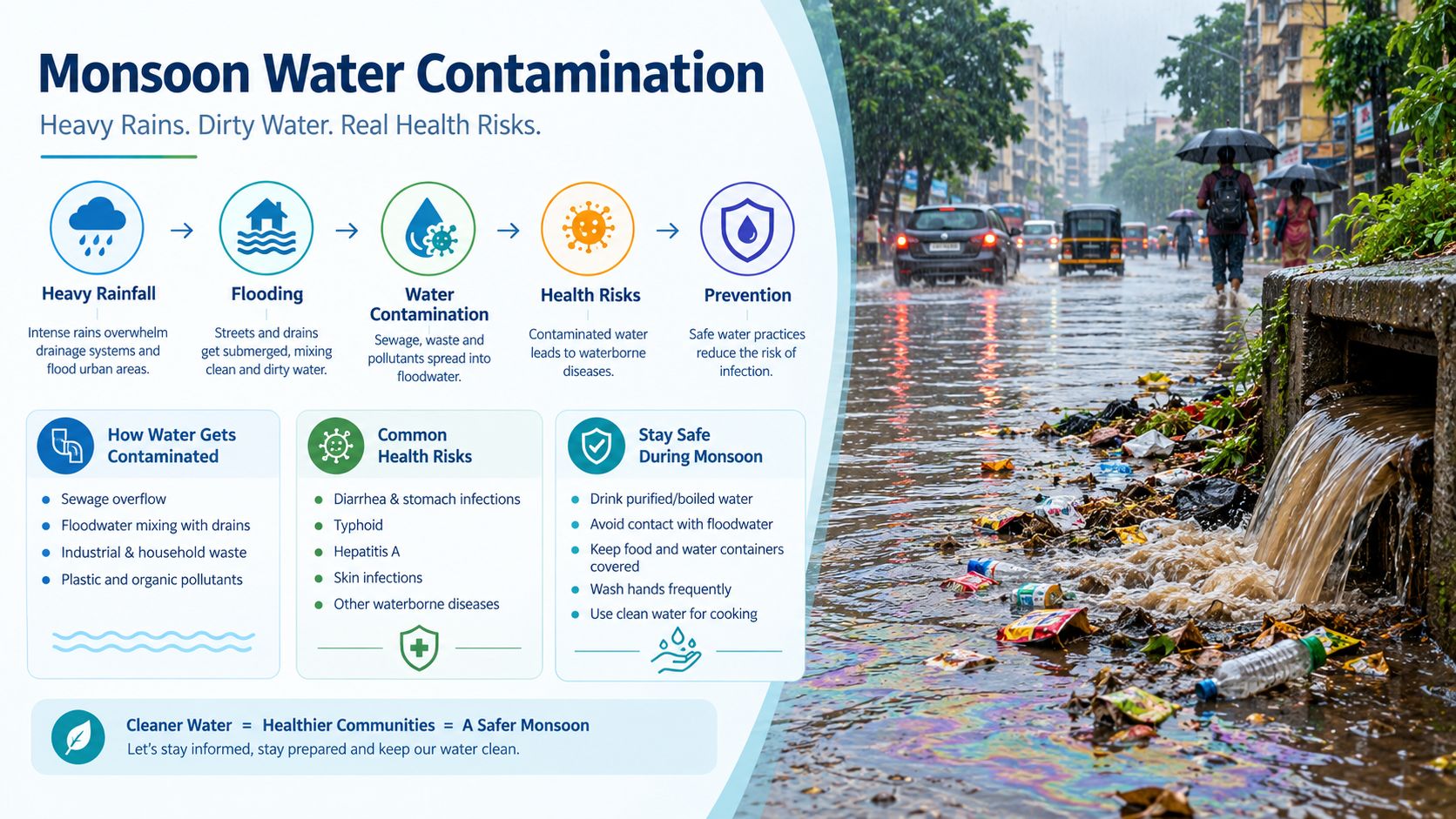
During the monsoon, monsoon water contamination can become an important public-health concern in Bengaluru. Heavy rainfall can overwhelm drainage systems, flooding can affect water sources, and damaged or poorly maintained pipelines can increase the possibility of contamination.
Moreover, many Bengaluru households, apartments and businesses depend on tanker water, borewells or mixed water sources. Consequently, when water storage, supply lines or surrounding drainage systems are compromised, the risk of exposure to waterborne infections may increase.
However, contaminated water does not always look, smell or taste different. Therefore, knowing the symptoms, understanding when testing may be useful and following practical prevention measures can help you respond early.
This Blog Includes:
 Waterborne illness signs in Bengaluru monsoon
Common signs of waterborne illness during the Bengaluru monsoon can include fever, weakness, headache, abdominal discomfort, vomiting, diarrhoea, loss of appetite and jaundice. Typhoid and Hepatitis A are among the infections that can spread through contaminated food or water. However, symptoms overlap with many other illnesses, so testing and medical evaluation may be necessary.
Why Monsoon Water Contamination in Bengaluru is Risky
How Heavy Rain Can Affect Water Safety
During periods of intense rainfall, stormwater can enter areas that normally remain separated from sewage and drinking-water systems.
Consequently, if sewage lines overflow or drainage systems become overwhelmed, contaminated water may reach vulnerable water sources.
Furthermore, construction activity, damaged pipelines, overflowing drains and poor storage practices can add to the risk.
Therefore, monsoon water safety depends not only on the original water source but also on how water is transported, stored and handled.
Monsoon Sewage Mixing: Why It Matters
How Contamination Can Happen
When rainwater and sewage come into contact, disease-causing microorganisms can potentially spread through contaminated water.
For example, bacteria and viruses from human waste can enter water supplies and subsequently contaminate food or drinking water.
Moreover, contamination can occur indirectly when contaminated water is used to wash vegetables, prepare food or clean utensils.
As a result, waterborne infections can spread even when people are not directly drinking visibly contaminated water.
Tanker Water and Monsoon Water Contamination
Is Bengaluru Tanker Water Always Unsafe?
No.
Tanker water is not automatically contaminated. However, its safety depends on the source, transportation, storage and handling.
For example, contamination can potentially occur when:
Waterborne illness signs in Bengaluru monsoon
Common signs of waterborne illness during the Bengaluru monsoon can include fever, weakness, headache, abdominal discomfort, vomiting, diarrhoea, loss of appetite and jaundice. Typhoid and Hepatitis A are among the infections that can spread through contaminated food or water. However, symptoms overlap with many other illnesses, so testing and medical evaluation may be necessary.
Why Monsoon Water Contamination in Bengaluru is Risky
How Heavy Rain Can Affect Water Safety
During periods of intense rainfall, stormwater can enter areas that normally remain separated from sewage and drinking-water systems.
Consequently, if sewage lines overflow or drainage systems become overwhelmed, contaminated water may reach vulnerable water sources.
Furthermore, construction activity, damaged pipelines, overflowing drains and poor storage practices can add to the risk.
Therefore, monsoon water safety depends not only on the original water source but also on how water is transported, stored and handled.
Monsoon Sewage Mixing: Why It Matters
How Contamination Can Happen
When rainwater and sewage come into contact, disease-causing microorganisms can potentially spread through contaminated water.
For example, bacteria and viruses from human waste can enter water supplies and subsequently contaminate food or drinking water.
Moreover, contamination can occur indirectly when contaminated water is used to wash vegetables, prepare food or clean utensils.
As a result, waterborne infections can spread even when people are not directly drinking visibly contaminated water.
Tanker Water and Monsoon Water Contamination
Is Bengaluru Tanker Water Always Unsafe?
No.
Tanker water is not automatically contaminated. However, its safety depends on the source, transportation, storage and handling.
For example, contamination can potentially occur when:
- Article Title: Monsoon Water Contamination in Bengaluru - Typhoid and Hepatitis A Risk
- Publisher: Prima Diagnostics
- Topics Covered: Monsoon Water Contamination, Bengaluru Water Safety, Tanker Water, Borewell Water, Sewage Contamination, Typhoid, Hepatitis A, Waterborne Illnesses, Monsoon Fever, Fever Symptoms, Diarrhoea, Vomiting, Jaundice, Safe Drinking Water, Food Hygiene, Prevention, Diagnostic Testing and Home Sample Collection.
- Water Contamination Guidance: Explains how heavy rainfall, drainage overflow, sewage contamination, damaged pipelines, unsafe storage and poorly maintained water infrastructure can increase the risk of water contamination.
- Tanker Water Guidance: Explains that tanker water is not automatically unsafe but that contamination can occur depending on the water source, transportation, storage and handling.
- Borewell Water Guidance: Explains that borewell water quality can be affected by local groundwater conditions, sanitation, drainage and potential contamination from surrounding areas.
- Prevention Guidance: Covers safe drinking water, water treatment, overhead tank maintenance, handwashing, food hygiene, safe washing of fruits and vegetables, and caution with uncertain water or ice sources.
- FAQ Section: Included.
Waterborne illness signs in Bengaluru monsoon
Common signs of waterborne illness during the Bengaluru monsoon can include fever, weakness, headache, abdominal discomfort, vomiting, diarrhoea, loss of appetite and jaundice. Typhoid and Hepatitis A are among the infections that can spread through contaminated food or water. However, symptoms overlap with many other illnesses, so testing and medical evaluation may be necessary.
Why Monsoon Water Contamination in Bengaluru is Risky
How Heavy Rain Can Affect Water Safety
During periods of intense rainfall, stormwater can enter areas that normally remain separated from sewage and drinking-water systems.
Consequently, if sewage lines overflow or drainage systems become overwhelmed, contaminated water may reach vulnerable water sources.
Furthermore, construction activity, damaged pipelines, overflowing drains and poor storage practices can add to the risk.
Therefore, monsoon water safety depends not only on the original water source but also on how water is transported, stored and handled.
Monsoon Sewage Mixing: Why It Matters
How Contamination Can Happen
When rainwater and sewage come into contact, disease-causing microorganisms can potentially spread through contaminated water.
For example, bacteria and viruses from human waste can enter water supplies and subsequently contaminate food or drinking water.
Moreover, contamination can occur indirectly when contaminated water is used to wash vegetables, prepare food or clean utensils.
As a result, waterborne infections can spread even when people are not directly drinking visibly contaminated water.
Tanker Water and Monsoon Water Contamination
Is Bengaluru Tanker Water Always Unsafe?
No.
Tanker water is not automatically contaminated. However, its safety depends on the source, transportation, storage and handling.
For example, contamination can potentially occur when:
- The source water is not adequately treated
- Tankers are poorly maintained
- Storage tanks are not cleaned regularly
- Water is transferred through contaminated pipes
- Drinking water is stored improperly
- Persistent fever
- Headache
- Weakness
- Abdominal discomfort
- Loss of appetite
- Constipation or diarrhoea
- Fever
- Tiredness
- Nausea
- Loss of appetite
- Abdominal discomfort
- Dark urine
- Pale stools
- Yellowing of the skin or eyes
- Diarrhoea
- Vomiting
- Abdominal pain
- Loss of appetite
- Nausea
- Before eating
- Before preparing food
- After using the toilet
- After handling potentially contaminated materials
- Families
- Older adults
- People with fever or weakness
- Working professionals
- People avoiding unnecessary travel during heavy rain