
MRI Scan Cost in Bengaluru - Brain, Spine and Knee Prices
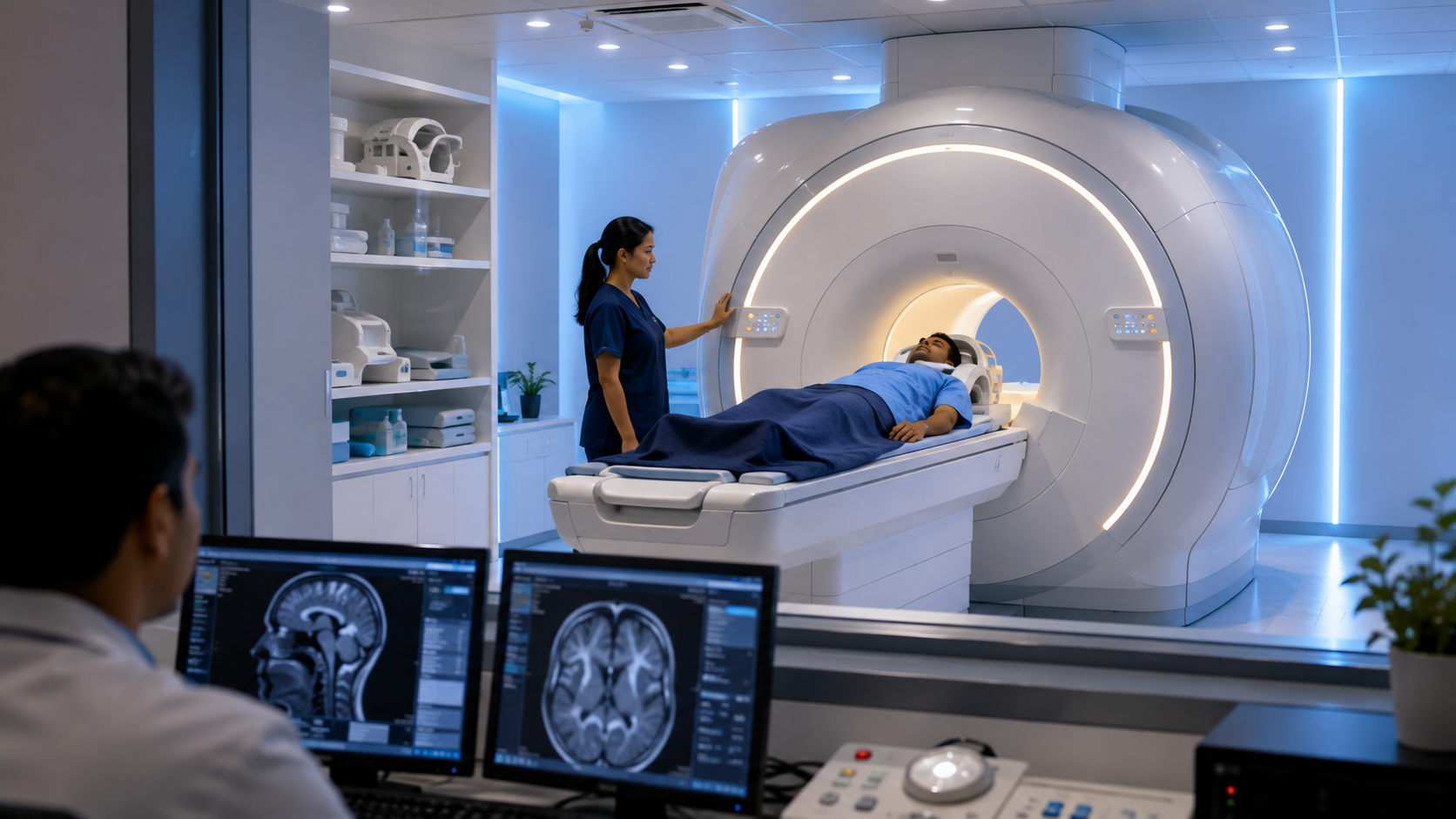
If your doctor has recommended an MRI, one of the first questions you may have is: “How much does an MRI scan cost in Bengaluru?” However, the answer depends on several factors, including the body part being scanned, whether contrast is required, the MRI protocol used, and the diagnostic centre.
For Bengaluru patients dealing with back pain, IT desk-related injuries, joint problems or accident follow-ups, understanding these differences can make it easier to compare MRI options and plan the investigation.
Moreover, MRI is not simply a more expensive version of an X-ray. Instead, it uses a magnetic field and radio waves to create detailed images of soft tissues, joints, nerves, and other structures.
This Blog Includes:
 MRI Scan Cost in Bengaluru by Body Part
MRI scan cost in Bengaluru varies by the body part examined and the type of scan required. Brain, spine and knee MRI scans can have different prices, while contrast-enhanced MRI, specialized protocols and multiple-region scans may cost more. Therefore, patients should confirm the exact scan name, whether contrast is included and the current price before booking.
Because prices can change, it is best to check the current tariff with the diagnostic centre when scheduling your scan.
What an MRI Is
How Does an MRI Scan Work?
MRI stands for Magnetic Resonance Imaging.
Unlike an X-ray, MRI does not use ionizing radiation. Instead, it uses a powerful magnetic field and radio waves to produce detailed images.
Consequently, MRI can be particularly useful for examining:
MRI Scan Cost in Bengaluru by Body Part
MRI scan cost in Bengaluru varies by the body part examined and the type of scan required. Brain, spine and knee MRI scans can have different prices, while contrast-enhanced MRI, specialized protocols and multiple-region scans may cost more. Therefore, patients should confirm the exact scan name, whether contrast is included and the current price before booking.
Because prices can change, it is best to check the current tariff with the diagnostic centre when scheduling your scan.
What an MRI Is
How Does an MRI Scan Work?
MRI stands for Magnetic Resonance Imaging.
Unlike an X-ray, MRI does not use ionizing radiation. Instead, it uses a powerful magnetic field and radio waves to produce detailed images.
Consequently, MRI can be particularly useful for examining:
- Article Title: MRI Scan Cost in Bengaluru - Brain, Spine and Knee Prices
- Publisher: Prima Diagnostics
- Type: Test Cost Guide / Diagnostic Imaging Healthcare Blog
- Search Intent: Buying Decision
- Topics Covered: MRI Scan, MRI Cost in Bengaluru, MRI Brain, MRI Spine, MRI Knee, MRI Pricing, MRI With Contrast, MRI Without Contrast, MRI vs CT, MRI vs X-ray, Back Pain Imaging, IT Desk Injuries, Accident Follow-Ups, Diagnostic Imaging, Patient Preparation and Patient Education.
- Services Covered: MRI Brain, MRI Spine, MRI Knee, MRI With Contrast when clinically indicated, Diagnostic Imaging, Digital Reports, Radiology Reporting and Patient Support.
- Body Parts Covered: Brain, Cervical Spine, Thoracic Spine, Lumbar Spine, Whole Spine when prescribed, Knee and other body regions based on clinical requirements.
- Cost Guidance: Explains that MRI pricing varies according to body part, imaging protocol, contrast requirement, scan complexity, and diagnostic centre.
- Brain MRI Guidance: Explains common clinical situations in which Brain MRI may be recommended and emphasizes that the exact protocol depends on the doctor's clinical question.
- Spine MRI Guidance: Covers Cervical, Thoracic and Lumbar Spine MRI and explains its role in evaluating discs, nerves, spinal structures and soft tissues when clinically indicated.
- Knee MRI Guidance: Explains how Knee MRI can provide detailed information about ligaments, menisci, cartilage, tendons and other joint structures.
- Contrast Guidance: Explains the difference between MRI with and without contrast and clarifies that not every MRI requires contrast.
- Imaging Comparison: Compares MRI with CT and X-ray while explaining that the appropriate investigation depends on the clinical situation rather than price alone.
- Preparation Guidance: Preparation requirements depend on the specific MRI examination. Many routine MRI scans do not require fasting, while certain examinations may have additional instructions. Follow any specific instructions provided by the healthcare provider or imaging centre.
- Safety Guidance: Patients should inform the imaging team about pacemakers, implanted devices, metal implants, certain clips, cochlear implants, and possible metallic foreign bodies before an MRI.
- FAQ Section: Included.
MRI Scan Cost in Bengaluru by Body Part
MRI scan cost in Bengaluru varies by the body part examined and the type of scan required. Brain, spine and knee MRI scans can have different prices, while contrast-enhanced MRI, specialized protocols and multiple-region scans may cost more. Therefore, patients should confirm the exact scan name, whether contrast is included and the current price before booking.
Because prices can change, it is best to check the current tariff with the diagnostic centre when scheduling your scan.
What an MRI Is
How Does an MRI Scan Work?
MRI stands for Magnetic Resonance Imaging.
Unlike an X-ray, MRI does not use ionizing radiation. Instead, it uses a powerful magnetic field and radio waves to produce detailed images.
Consequently, MRI can be particularly useful for examining:
- Brain
- Spine
- Knees
- Joints
- Muscles
- Ligaments
- Tendons
- Nerves
- Certain abdominal and pelvic organs
- MRI Brain and MRI Spine
- Persistent or unusual headaches
- Certain neurological symptoms
- Seizures
- Stroke-related evaluation
- Dizziness or balance problems
- Suspected structural abnormalities
- Follow-up of known neurological conditions
- Vertebrae
- Intervertebral discs
- Spinal cord
- Nerve roots
- Surrounding soft tissues
- Cervical spine
- Thoracic spine
- Lumbar spine
- Whole spine
- Ligaments
- Menisci
- Cartilage
- Tendons
- Muscles
- Bone marrow
- Joint structures
- Contrast material
- Additional imaging sequences
- Additional monitoring
- Specific clinical requirements
- Bones
- Fractures
- Certain chest conditions
- Basic joint abnormalities
- Trauma
- Certain emergencies
- Bone injuries
- Lung imaging
- Some abdominal conditions
- Soft tissues
- Brain
- Spine
- Ligaments
- Cartilage
- Nerves
- Clinical examination
- Rest and activity modification
- Physiotherapy
- Medication when appropriate
- Follow-up assessment
- Exact scan protocol
- MRI machine specifications
- Radiologist reporting
- Contrast availability
- Appointment convenience
- Report turnaround time
- Digital report availability
- Location
- Patient preparation requirements
- Exact scan price
- Contrast charges, if applicable
- Any additional charges
- Available appointment slots
- Preparation instructions
- Previous MRI reports
- CT reports
- X-rays
- Blood test reports
- Doctor's prescription
- Pacemaker or implanted cardiac device
- Metal implants
- Certain clips
- Cochlear implants
- Previous metallic foreign-body injuries
- Other implanted medical devices