
Shortness of Breath on Stairs? Tests for Heart, Lungs and Anemia
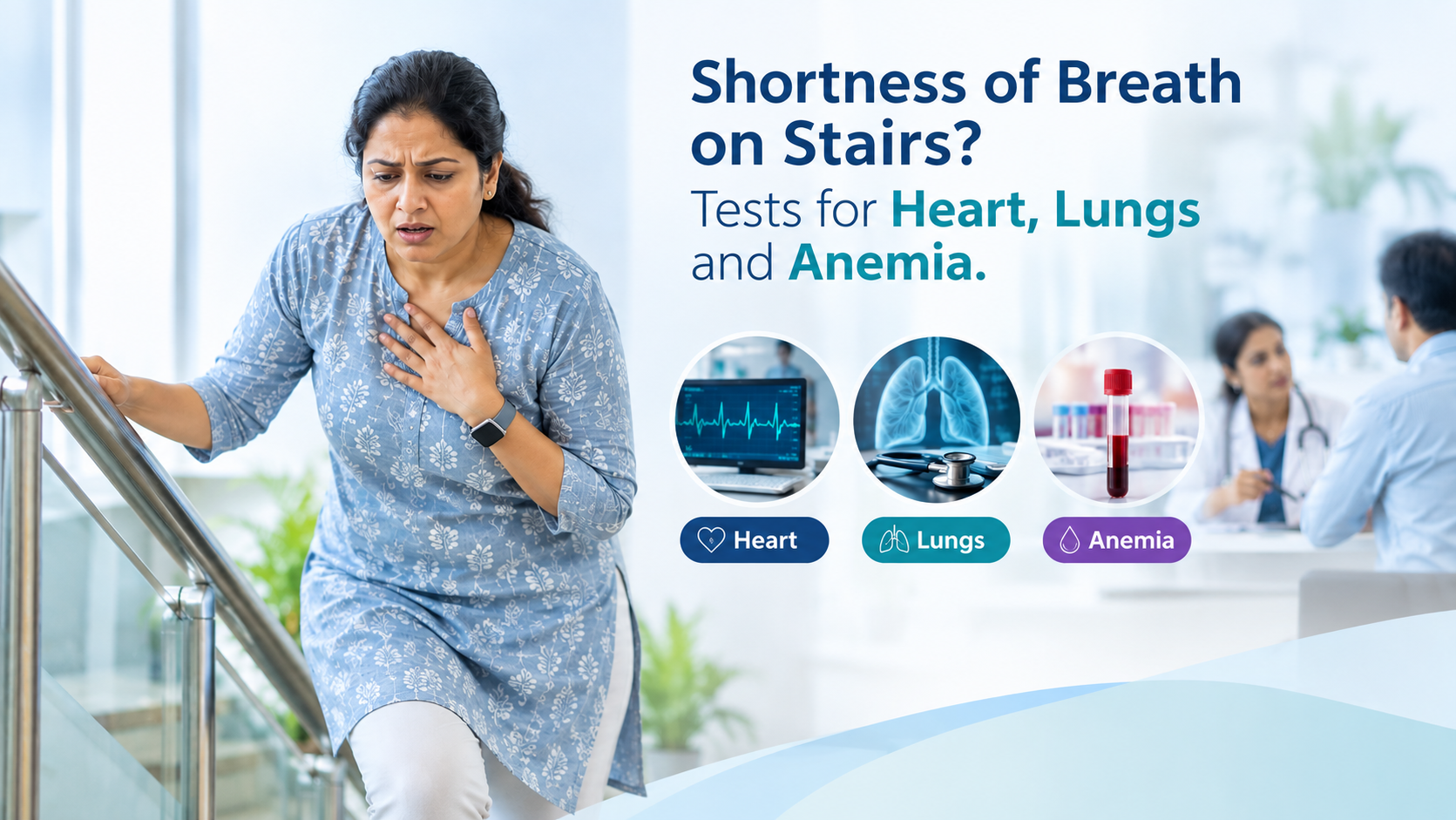
Getting Shortness of Breath on Stairs can feel surprisingly uncomfortable, especially when you are doing an activity that previously felt easy. For example, you may climb two floors, walk quickly, or carry groceries and suddenly feel that you need to stop and catch your breath.
Sometimes, this happens because of low fitness, higher body weight, or simply pushing yourself harder than usual. However, breathlessness can also be linked to anemia, heart conditions, lung problems, thyroid abnormalities, or recovery after an infection.
Therefore, if breathlessness is new, persistent, worsening, or happening during normal daily activities, it is worth discussing it with a doctor.
This Blog Includes:
 What Does Shortness of Breath on Stairs Mean?
Shortness of breath, also called dyspnea, is the uncomfortable feeling that you are not getting enough air or that breathing requires extra effort.
Importantly, the cause is not always obvious from the symptom alone. The heart, lungs, blood, thyroid, and overall physical condition can all influence how easily you breathe.
Moreover, a doctor generally considers your symptoms, medical history, examination, oxygen level, and risk factors before deciding which tests are appropriate. Common initial evaluations for persistent breathlessness can include blood tests, ECG, chest X-ray, and lung-function testing.
Why Do You Get Breathless While Climbing Stairs?
What Does Shortness of Breath on Stairs Mean?
Shortness of breath, also called dyspnea, is the uncomfortable feeling that you are not getting enough air or that breathing requires extra effort.
Importantly, the cause is not always obvious from the symptom alone. The heart, lungs, blood, thyroid, and overall physical condition can all influence how easily you breathe.
Moreover, a doctor generally considers your symptoms, medical history, examination, oxygen level, and risk factors before deciding which tests are appropriate. Common initial evaluations for persistent breathlessness can include blood tests, ECG, chest X-ray, and lung-function testing.
Why Do You Get Breathless While Climbing Stairs?
- Article Title: Shortness of Breath on Stairs? Tests for Heart, Lungs and Anemia
- Target Keyword: Shortness of Breath on Stairs
- Search Intent: Someone who gets breathless doing normal activities
- Topics Covered: Anemia, heart-related causes, lung conditions, weight, thyroid, pollution, post-viral cough
- Tests Covered: CBC, ECG, 2D Echo, Chest X-ray, PFT, TSH
- Emergency Guidance: Warning signs requiring urgent medical attention
- Local SEO Focus: Bengaluru, Bengaluru pollution, post-viral cough, diagnostic testing
- FAQ Section: Common questions about breathlessness and diagnostic tests
What Does Shortness of Breath on Stairs Mean?
Shortness of breath, also called dyspnea, is the uncomfortable feeling that you are not getting enough air or that breathing requires extra effort.
Importantly, the cause is not always obvious from the symptom alone. The heart, lungs, blood, thyroid, and overall physical condition can all influence how easily you breathe.
Moreover, a doctor generally considers your symptoms, medical history, examination, oxygen level, and risk factors before deciding which tests are appropriate. Common initial evaluations for persistent breathlessness can include blood tests, ECG, chest X-ray, and lung-function testing.
Why Do You Get Breathless While Climbing Stairs?
- Anemia and Low Haemoglobin
- Heart-Related Causes
- Lung and Airway Problems
- Higher Body Weight and Low Fitness
- Thyroid Problems
- CBC: Checks haemoglobin and other blood-cell measurements; useful when anemia is suspected.
- ECG: Evaluates heart rhythm and electrical activity.
- 2D Echo: Examines heart structure and pumping function when a cardiac cause is suspected.
- Chest X-ray: Helps evaluate the lungs and chest.
- PFT: Measures lung function and can help identify airflow problems.
- TSH: Evaluates thyroid function when thyroid disease is suspected.
- Chest pain or pressure
- Fainting or near-fainting
- Blue or grey lips
- Severe confusion
- Very rapid or irregular heartbeat
- Severe wheezing or inability to speak comfortably
- Coughing up blood
- A sudden major drop in oxygen saturation
- Rapid worsening of symptoms
- Breathlessness repeatedly occurs while climbing stairs.
- You become breathless during ordinary daily activities.
- Your exercise tolerance has noticeably decreased.
- Breathlessness continues after a respiratory infection.
- having a persistent cough or wheezing.
- You also have unusual fatigue or weakness.
- Having palpitations or chest discomfort.