
Snoring and Daytime Sleepiness? Tests for Sleep Apnea and Thyroid
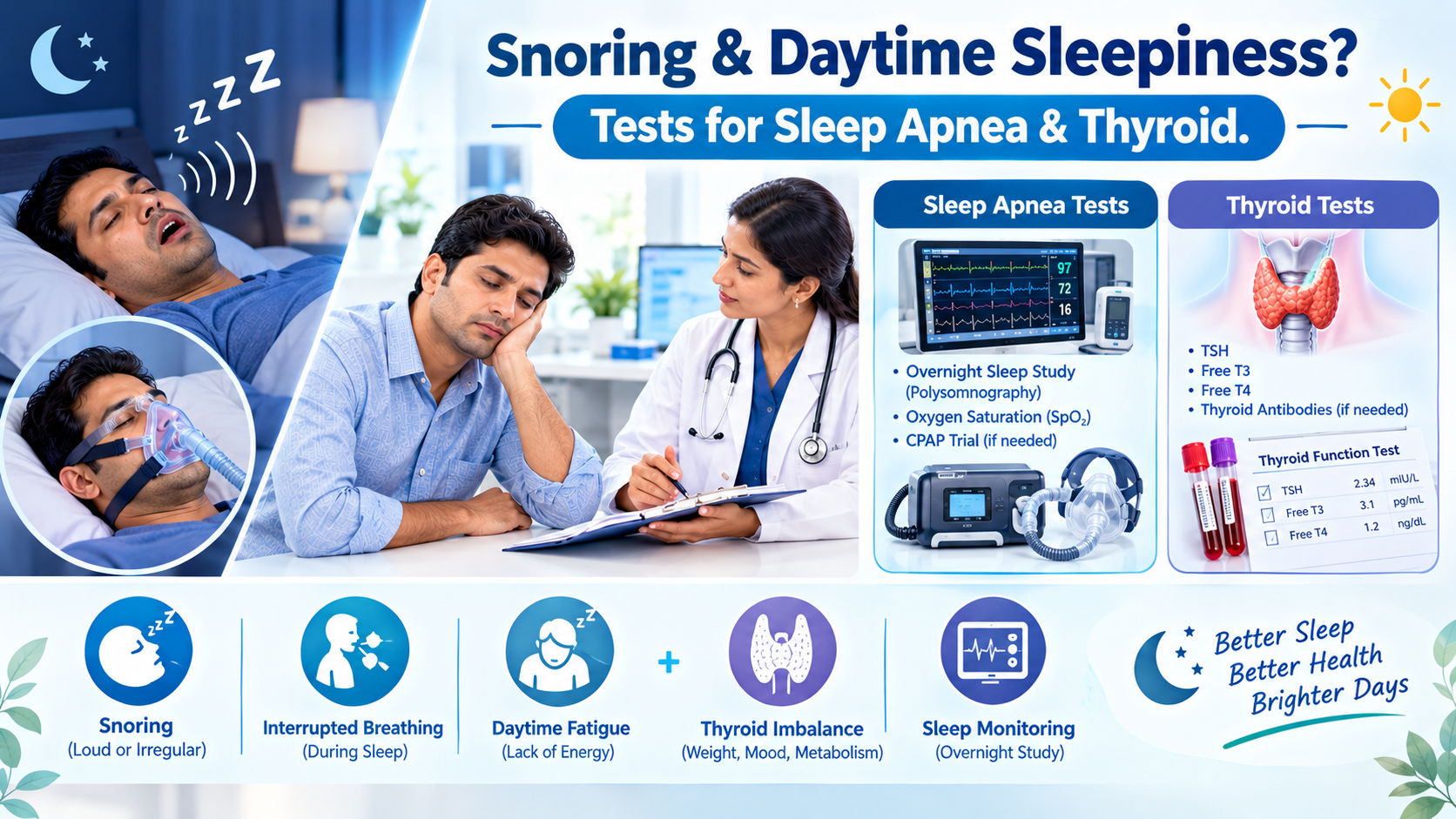
Loud snoring and feeling tired during the day are easy to dismiss. However, when they happen regularly, especially together, they may be signs of an underlying sleep problem. In particular, sleep apnea can cause repeated interruptions in breathing during sleep, which can affect sleep quality and daytime alertness.
Moreover, thyroid problems, anaemia, blood sugar abnormalities and other health conditions can also contribute to tiredness. Therefore, looking at the symptoms together can help a doctor decide which tests are appropriate.
For many Bengaluru IT workers with weight gain, long working hours or irregular sleep schedules, persistent snoring and daytime sleepiness can be worth discussing with a healthcare professional.
This Blog Includes:
 Which Test Is Done for Sleep Apnea?
The main diagnostic test for sleep apnea is a sleep study, also called polysomnography. Depending on the person's symptoms and risk factors, a doctor may recommend an overnight sleep study at a sleep centre or, in selected cases, a home sleep apnea test.
However, blood tests such as TSH, CBC, HbA1c, and lipid profile do not diagnose sleep apnea directly. Instead, they can help check for conditions that may contribute to tiredness or identify associated health risks.
Therefore, if loud snoring is accompanied by daytime sleepiness, breathing pauses during sleep, gasping or morning headaches, a medical evaluation is a sensible starting point.
Snoring vs Sleep Apnea
When Is Snoring Just Snoring?
Snoring occurs when airflow through the nose and throat becomes partially restricted during sleep. It can happen because of nasal congestion, sleeping position, alcohol use, weight gain, or the anatomy of the airway.
Occasional snoring, therefore, does not automatically mean that someone has sleep apnea.
When Should You Think About Sleep Apnea?
The concern becomes greater when snoring is loud and frequent and is accompanied by symptoms such as:
Which Test Is Done for Sleep Apnea?
The main diagnostic test for sleep apnea is a sleep study, also called polysomnography. Depending on the person's symptoms and risk factors, a doctor may recommend an overnight sleep study at a sleep centre or, in selected cases, a home sleep apnea test.
However, blood tests such as TSH, CBC, HbA1c, and lipid profile do not diagnose sleep apnea directly. Instead, they can help check for conditions that may contribute to tiredness or identify associated health risks.
Therefore, if loud snoring is accompanied by daytime sleepiness, breathing pauses during sleep, gasping or morning headaches, a medical evaluation is a sensible starting point.
Snoring vs Sleep Apnea
When Is Snoring Just Snoring?
Snoring occurs when airflow through the nose and throat becomes partially restricted during sleep. It can happen because of nasal congestion, sleeping position, alcohol use, weight gain, or the anatomy of the airway.
Occasional snoring, therefore, does not automatically mean that someone has sleep apnea.
When Should You Think About Sleep Apnea?
The concern becomes greater when snoring is loud and frequent and is accompanied by symptoms such as:
- Article Title: Snoring and Daytime Sleepiness? Tests for Sleep Apnea and Thyroid
- Publisher: Prima Diagnostics
- Topics Covered: Sleep Apnea, Snoring, Daytime Sleepiness, Thyroid Problems, Weight Gain, Sleep Studies and Related Health Risks
- Services Covered: Blood Testing, Thyroid Testing, CBC Testing, HbA1c Testing, Lipid Testing and Diagnostic Guidance
- Tests Included: Sleep Study, TSH, CBC, HbA1c and Lipid Profile
- Risk Factors Covered: Weight Gain, Neck Size, Loud Snoring, Breathing Pauses, Daytime Sleepiness and Irregular Sleep
- Location Focus: Bengaluru, including IT workers and people with irregular or night-shift schedules
- Preparation Guidance: Test-specific preparation, fasting when required and following healthcare provider instructions
- FAQ Section: Included
Which Test Is Done for Sleep Apnea?
The main diagnostic test for sleep apnea is a sleep study, also called polysomnography. Depending on the person's symptoms and risk factors, a doctor may recommend an overnight sleep study at a sleep centre or, in selected cases, a home sleep apnea test.
However, blood tests such as TSH, CBC, HbA1c, and lipid profile do not diagnose sleep apnea directly. Instead, they can help check for conditions that may contribute to tiredness or identify associated health risks.
Therefore, if loud snoring is accompanied by daytime sleepiness, breathing pauses during sleep, gasping or morning headaches, a medical evaluation is a sensible starting point.
Snoring vs Sleep Apnea
When Is Snoring Just Snoring?
Snoring occurs when airflow through the nose and throat becomes partially restricted during sleep. It can happen because of nasal congestion, sleeping position, alcohol use, weight gain, or the anatomy of the airway.
Occasional snoring, therefore, does not automatically mean that someone has sleep apnea.
When Should You Think About Sleep Apnea?
The concern becomes greater when snoring is loud and frequent and is accompanied by symptoms such as:
- Pauses in breathing noticed by a spouse
- Gasping or choking during sleep
- Excessive daytime sleepiness
- Morning headaches
- Dry mouth after waking
- Difficulty concentrating
- Irritability or mood changes
- Waking repeatedly during the night
- Breathing interruptions
- Oxygen levels
- Heart rate
- Breathing effort
- Sleep-related events
- Confirm which tests your doctor has recommended.
- Check whether fasting is required.
- Follow the specific preparation instructions.
- Continue prescribed medicines unless your healthcare provider advises otherwise.
- Keep a note of symptoms such as snoring, daytime sleepiness and morning headaches.
- If possible, ask your spouse or sleeping partner whether they have noticed breathing pauses.