If you are searching for
Tests for Working Women, it is important to remember that staying busy should not mean putting your own health last. In particular, many
Bengaluru women in IT manage long office hours, commuting, family responsibilities, irregular meals, deadlines and household commitments all at once.
Consequently, symptoms such as tiredness, weakness, hair fall, poor concentration, sleep problems or changes in menstrual cycles may sometimes get dismissed as “just work stress.” However, these symptoms can also have nutritional, hormonal, metabolic or other medical causes.
Therefore, appropriate health testing can help working women understand important health parameters and identify areas that may need attention.
This Blog Includes:
- Article Title: Tests for Working Women in Bengaluru - The Essential Panel
- Publisher: Prima Diagnostics
- Topics Covered: Working Women Health, Women's Blood Tests, CBC, Anemia, Iron Deficiency, Ferritin, Iron Studies, Thyroid Testing, PCOS, Vitamin D, Vitamin B12, Blood Sugar, HbA1c, Lipid Profile, Bone Health, Menstrual Health, Women's Hormonal Health, Preventive Health Testing, Home Collection and Workplace Sample Collection.
- Services Covered: CBC Testing, Iron and Ferritin Testing, Thyroid Testing, PCOS-Related Laboratory Testing, Vitamin D Testing, Vitamin B12 Testing, Blood Sugar Testing, HbA1c Testing, Lipid Profile Testing, Preventive Health Packages and Home Sample Collection.
- Home Collection Guidance: Explains how eligible blood tests may be collected at home and that workplace collection may be possible in selected arrangements, subject to service availability and location.
- Buying Guidance: Advises readers to compare test relevance, package inclusions, home or workplace collection availability and current pricing rather than simply choosing the package with the largest number of tests.
- Package Guidance: Describes possible components of a Prima working-women health panel while emphasizing that there is no universal package suitable for every woman.
- Preparation Guidance: Explains that fasting and other preparation requirements depend on the tests ordered and advises patients to follow any specific instructions given by their healthcare provider or laboratory.
- Patient Education Focus: Emphasizes that symptoms such as fatigue, dizziness, hair loss, brain fog and menstrual changes have multiple possible causes and should not automatically be attributed to work stress or one nutritional deficiency.
- Service Focus: Women's Health Testing, Preventive Health Screening, Blood Testing, Nutritional Assessment, Hormonal Evaluation, Health Packages, Home Sample Collection and Laboratory Diagnostics.
- FAQ Section: Included.
 Health tests for working woman
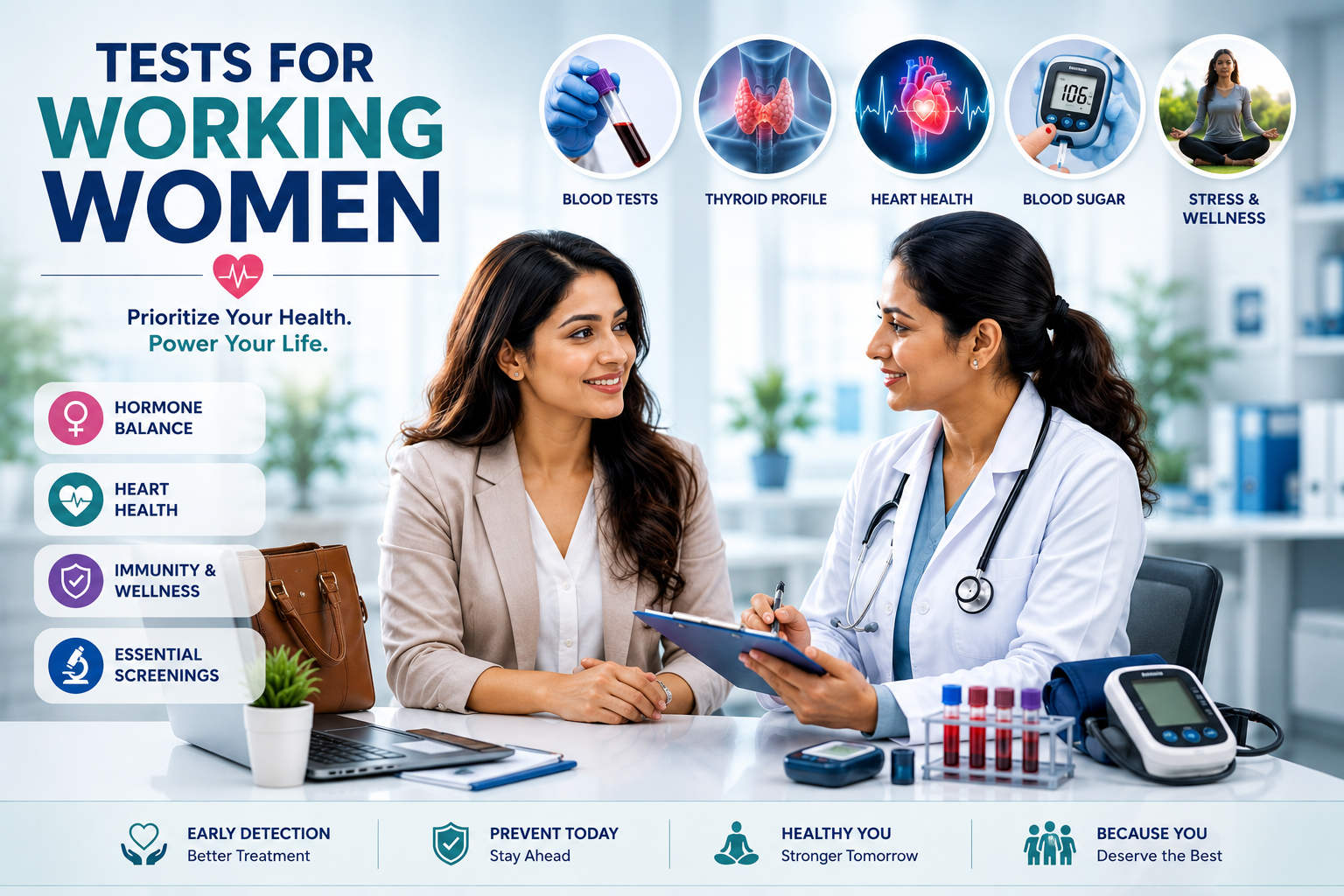
There is no single blood-test panel required for every working woman. However, depending on age, symptoms and risk factors, commonly considered tests can include
CBC, iron studies, thyroid tests, blood glucose or HbA1c, Vitamin D, Vitamin B12, lipid profile and selected reproductive-hormone tests. The right combination should be based on individual health needs and healthcare-provider recommendations.
Why Working Women Skip Their Own Health
Busy Schedules Often Come First
For many working women, health appointments are repeatedly postponed because something else seems more urgent.
First there is work. Then, there may be commuting, family responsibilities, childcare, household tasks or social commitments.
As a result,
self-neglect can happen gradually rather than intentionally.
Moreover, long hours at a desk may mean fewer proper meals, less exercise and inadequate recovery time.
Why This Matters
Small symptoms can persist for months when they are continually attributed to stress.
Therefore, a preventive health check can be a useful opportunity to step back and assess your overall health.
Bengaluru Women in IT and Long Working Hours
Why the IT Lifestyle Can Be Challenging
Bengaluru's IT workforce often operates with extended working hours, deadlines and variable schedules.
Furthermore, some professionals work late into the evening, attend early meetings or regularly eat at irregular times.
Consequently, lifestyle factors can affect sleep, physical activity, nutrition and stress management.
However, working in IT does not automatically mean you have a health problem.
Instead, your
symptoms, medical history, dietary pattern and risk factors should guide your testing decisions.
Anemia and Iron: A Common Concern
Why Iron Testing Matters
Iron deficiency is an important cause of anemia and can contribute to tiredness, weakness and reduced exercise tolerance.
For women of reproductive age, menstrual blood loss can be one factor contributing to iron deficiency.
Therefore, women experiencing persistent fatigue or other compatible symptoms may benefit from discussing anemia and iron testing with their healthcare provider.
Which Tests May Be Useful?
Depending on the clinical situation, testing may include:
- CBC
- Haemoglobin
- Ferritin
- Serum iron
- TIBC or transferrin-related tests
- Other iron studies when appropriate
Consequently, a CBC alone may not always explain why iron stores are low.
Symptoms That May Suggest Anemia
Possible symptoms include:
- Persistent tiredness
- Weakness
- Dizziness
- Reduced exercise tolerance
- Shortness of breath during exertion
- Headache
- Pale appearance
However, these symptoms can have many causes.
Therefore, testing is more useful than assuming that fatigue is automatically due to iron deficiency.
Thyroid and PCOS Testing
Why Thyroid Testing Matters
The thyroid affects metabolism, energy, temperature regulation and several other body functions.
Consequently, thyroid problems can sometimes present with symptoms such as:
- Fatigue
- Weight changes
- Feeling unusually cold
- Changes in menstrual cycles
- Hair changes
- Difficulty concentrating
A healthcare provider may consider
TSH and, when appropriate, Free T4 or other thyroid tests depending on the clinical picture.
PCOS and Women's Hormonal Health
When Should PCOS Be Considered?
Polycystic ovary syndrome (PCOS) is a common hormonal and metabolic condition.
It may be associated with:
- Irregular periods
- Acne
- Excess facial or body hair
- Weight changes
- Difficulty conceiving
- Evidence of androgen excess
However, there is
no single blood test that diagnoses PCOS.
Instead, healthcare professionals consider symptoms, physical findings, medical history and, when appropriate, laboratory tests and ultrasound findings.
Therefore, women with irregular cycles or other concerning symptoms should seek individualized medical evaluation.
Explore our
PCOS Blog for more information.
Vitamin D and Vitamin B12
Why Vitamin D Testing Can Matter
Vitamin D contributes to bone health and normal muscle function.
However, people who spend most of their working day indoors may have limited opportunities for sun exposure.
Therefore, Vitamin D testing may be considered when deficiency is suspected based on symptoms or risk factors.
This can be especially relevant for
Bengaluru women working indoors for long hours.
Why Check Vitamin B12?
Vitamin B12 is important for normal red blood cell formation and nervous-system function.
When B12 is deficient, symptoms can include fatigue, weakness, tingling or difficulty concentrating.
Nevertheless, these symptoms overlap with many other conditions.
Therefore, testing can help determine whether B12 deficiency is actually present.
Blood Sugar and Metabolic Health
Why Should Working Women Check Glucose?
Irregular meals, inactivity, weight changes and family history can all be relevant to metabolic health.
Consequently, a healthcare provider may recommend:
- Fasting blood glucose
- HbA1c
- Other glucose-related testing when clinically indicated
This becomes particularly relevant when there is a personal or family history of diabetes, previous abnormal results or other risk factors.
Cholesterol and Heart Health
Cardiovascular Health Is Not Just an Older-Age Issue
Although heart disease risk generally increases with age, cardiovascular risk factors can develop much earlier.
Therefore, cholesterol and blood-pressure assessment may be relevant depending on your age, family history, lifestyle and other risk factors.
A
lipid profile commonly includes:
- Total cholesterol
- LDL cholesterol
- HDL cholesterol
- Triglycerides
Consequently, a preventive health assessment may include lipid testing when appropriate.
Bone Health Early
Why Women Should Think About Bone Health Before Menopause
Bone health is a long-term process.
Therefore, women should not wait until later life to consider adequate calcium, Vitamin D, physical activity and other bone-health factors.
Certain women may have higher osteoporosis risk because of family history, low body weight, nutritional factors, premature menopause or other medical conditions.
In such situations, a healthcare provider may recommend additional assessment.
Calcium and Vitamin D
Calcium and Vitamin D are important components of bone health.
However, a normal calcium blood test does not automatically mean that bone density is normal.
Therefore, when osteoporosis is suspected, a doctor may consider a
bone mineral density test such as DEXA.
Menstrual Health and Hormonal Symptoms
Don't Ignore Persistent Cycle Changes
Changes in menstrual frequency, flow or duration can have many causes.
For example, possible contributors include:
- Thyroid disorders
- PCOS
- Pregnancy
- Perimenopause
- Weight changes
- Stress
- Nutritional deficiencies
- Other gynecological conditions
Therefore, persistent or unusual changes deserve appropriate medical evaluation.
Prima Working-Women Panel
What Could an Essential Panel Include?
There is no universal package that every working woman requires.
Nevertheless, a practical preventive panel may include selected investigations such as:
| Health area |
Possible tests |
| Blood count |
CBC |
| Iron status |
Ferritin and other iron studies when indicated |
| Thyroid |
TSH ± Free T4 |
| Vitamin health |
Vitamin D, Vitamin B12 |
| Diabetes risk |
Fasting glucose, HbA1c |
| Heart risk |
Lipid profile |
| Kidney health |
Creatinine / KFT when appropriate |
| Liver health |
LFT when appropriate |
| Women's hormonal concerns |
Selected tests based on symptoms |
However, more tests do not automatically mean better healthcare.
Instead, the panel should match your age, symptoms, medical history and preventive-health goals.
Home Collection at Office
Can Working Women Get Samples Collected at Work?
For eligible tests and locations, home collection can provide an alternative to visiting a laboratory.
Moreover, depending on the service and workplace arrangement, organizations or employees may be able to arrange collection at an appropriate office location.
This can be particularly convenient for women managing:
- Long office hours
- Tight meeting schedules
- Commutes
- Family responsibilities
- Limited time for appointments
Therefore,
home or workplace sample collection can make routine blood testing easier to fit into a busy schedule, subject to service availability and site requirements.
How Home Collection Works
Step 1: Choose the Tests
First, select the tests recommended for you.
Step 2: Confirm Collection Availability
Next, check whether home or workplace collection is available for your location and test combination.
Step 3: Select a Suitable Slot
Then, choose an appointment that works with your schedule.
Step 4: Sample Collection
A trained phlebotomist collects the required samples.
Step 5: Report Delivery
Finally, the samples are processed and reports are made available according to the applicable reporting process.
Consequently, routine health monitoring can become much more manageable.
Working Women and Skipped Meals
Why Nutrition Matters
A demanding workday can turn breakfast, lunch and even dinner into rushed meals.
Furthermore, frequent reliance on highly processed foods may reduce the overall nutritional quality of the diet.
Therefore, a health check-up should not be viewed as a substitute for a balanced diet.
Instead, testing can provide information that helps identify whether nutritional or metabolic concerns deserve further attention.
Self-Neglect: Signs You Should Stop Ignoring
Consider discussing your symptoms with a healthcare professional when they are
persistent, unexplained or worsening.
Examples include:
- Ongoing fatigue
- Recurrent dizziness
- Significant hair loss
- Persistent brain fog
- Irregular periods
- Unexplained weight changes
- Frequent muscle weakness
- Tingling or numbness
- Persistent sleep problems
However, no single symptom points to one specific diagnosis.
Therefore, proper evaluation matters.
When Should Working Women Get Health Tests?
Annual Screening Is Not Identical for Everyone
Some people benefit from periodic preventive testing, while others may need targeted investigations based on symptoms or risk factors.
Consequently, the frequency of testing should depend on:
- Age
- Family history
- Existing conditions
- Previous results
- Medications
- Lifestyle
- Symptoms
- Healthcare-provider recommendations
How to Choose the Right Package
Don't Choose Based Only on the Number of Tests
A package containing 50 tests is not automatically better than one containing 20.
Instead, ask:
Are the Tests Relevant?
Choose investigations related to your age, symptoms and risk factors.
Are Nutritional Tests Included?
Check whether Vitamin D, B12 or iron-related tests are part of the package if these are relevant to your healthcare needs.
Are Thyroid Tests Complete?
Check whether the package includes TSH alone or additional thyroid markers.
Is Home Collection Available?
If convenience is important, confirm collection options before booking.
Therefore, comparing relevance is more useful than simply counting tests.
How to Prepare for Your Tests
Preparation varies considerably.
For example, some blood tests may require fasting, whereas others do not.
Therefore:
- Confirm fasting requirements.
- Follow the instructions given by the laboratory.
- Do not stop prescribed medicines without medical advice.
- Tell the healthcare professional about relevant supplements or medicines.
- Follow any specific timing instructions.
- Follow any specific instructions given by your healthcare provider.
Consequently, appropriate preparation can make your results easier to interpret.
Frequently Asked Questions
What health tests should a working woman do?
Depending on individual needs, commonly considered tests include CBC, iron studies, thyroid testing, Vitamin D, Vitamin B12, blood glucose or HbA1c and lipid profile. Additional testing should be based on symptoms and risk factors.
Is iron deficiency common in working women?
Iron deficiency can occur in women for several reasons, including menstrual blood loss and inadequate dietary intake. Persistent fatigue or other symptoms may justify medical evaluation and appropriate testing.
Should every working woman test for PCOS?
No. PCOS evaluation is generally considered when symptoms such as irregular periods, signs of androgen excess or fertility concerns are present. Diagnosis requires a broader clinical assessment.
Should Bengaluru women in IT test Vitamin D?
Not every woman requires routine Vitamin D testing. However, limited sun exposure, symptoms or other risk factors may make testing worth discussing with a healthcare professional.
Can long working hours cause thyroid problems?
Long working hours do not automatically cause thyroid disease. However, thyroid symptoms can overlap with fatigue and other complaints experienced by busy professionals. Testing should be based on clinical assessment.
Do working women need Vitamin B12 testing?
Testing may be useful when symptoms, dietary patterns or other risk factors suggest deficiency.
Can working women get blood tests at home or office?
Eligible blood tests may be available through home sample collection, and some workplace arrangements may be possible depending on service availability and location.
How often should working women get health tests?
There is no universal schedule. Testing frequency depends on age, symptoms, risk factors, previous results and healthcare-provider recommendations.
Conclusion
For many women, especially
Bengaluru women in IT, work can become such a major priority that their own health gets postponed. However, persistent tiredness, anemia-related symptoms, thyroid concerns, menstrual changes, nutritional deficiencies and metabolic risk factors deserve appropriate attention.
Therefore,
Tests for Working Women should focus on relevance rather than quantity.
Depending on your circumstances, an assessment may include
CBC and iron studies, thyroid testing, Vitamin D, Vitamin B12, glucose or HbA1c, lipid profile and selected hormonal investigations.
Moreover, bone health deserves attention early, particularly when risk factors are present. Similarly, symptoms suggestive of PCOS should be evaluated rather than self-diagnosed.
Finally, for busy professionals,
home or workplace sample collection can make preventive testing more convenient where available.