
Thalassemia and Genetic Screening Before Marriage in Bengaluru
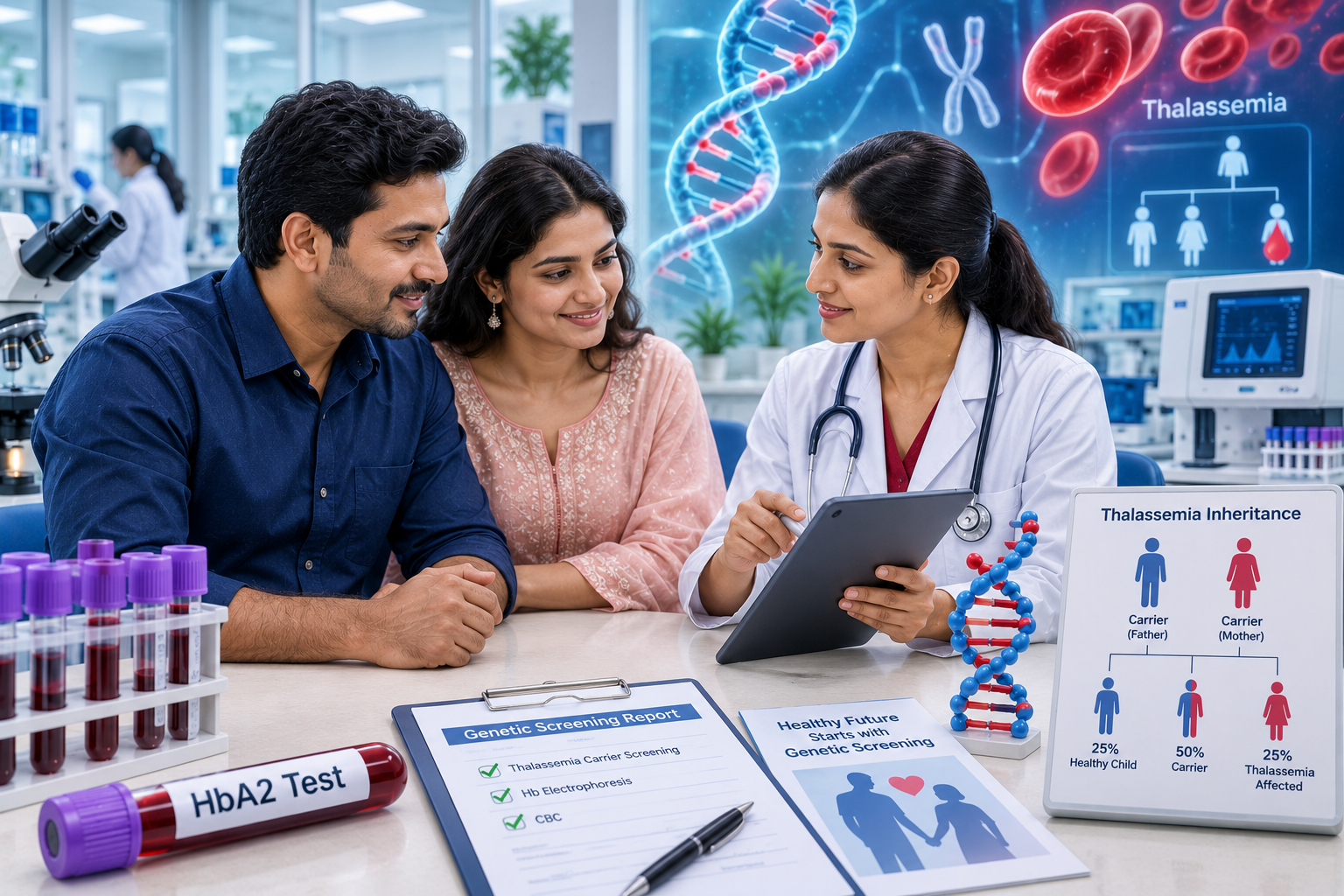
Planning a marriage involves many important decisions, including preparing for a healthy future together. While discussions often focus on careers, finances, and wedding arrangements, many couples overlook one crucial aspect—premarital health screening. Among the most valuable tests recommended before marriage is thalassemia and genetic screening, which helps identify whether either partner carries inherited blood disorders that could affect future children.
If you are searching for information about thalassemia and genetic screening, understanding why carrier screening matters, how thalassemia is inherited, which laboratory tests are recommended, and what happens if both partners are carriers can help you make informed decisions. Furthermore, early awareness allows couples to seek appropriate medical advice, understand reproductive options, and plan their family with confidence.
In Bengaluru, increasing awareness about preventive healthcare, late marriages, planned pregnancies, and family planning has encouraged more couples to include genetic screening as part of their premarital health check-up. Consequently, healthcare providers frequently recommend thalassemia carrier testing alongside blood group testing, infectious disease screening, and other preconception evaluations.
At Prima Diagnostics, we offer comprehensive premarital laboratory investigations, including thalassemia screening, advanced blood tests, and confidential diagnostic services performed using standardized laboratory procedures. Combined with experienced professionals and fast digital reports, these services help couples take proactive steps toward informed family planning.
This guide explains what thalassemia is, why carrier screening before marriage is important, how the condition is inherited, the role of HbA2 and haemoglobin electrophoresis testing, what happens if both partners are carriers, cost considerations, confidential counselling, and frequently asked questions.
This Blog Includes:
 Why Couples Should Do Thalassemia and Genetic Screening
Thalassemia and genetic screening before marriage help identify whether either partner carries inherited blood disorders that could be passed to future children. If both partners are carriers of beta-thalassemia, each pregnancy has a 25% chance of resulting in a child affected by beta-thalassemia major. Early carrier screening allows couples to receive appropriate genetic counselling, understand reproductive options, and make informed family planning decisions.
What Is Thalassemia?
Thalassemia is an inherited blood disorder that affects the body's ability to produce normal haemoglobin.
Haemoglobin is the protein inside red blood cells responsible for carrying oxygen throughout the body.
When haemoglobin production is reduced, anemia may develop.
Types of Thalassemia
The two major forms are:
Alpha Thalassemia
Caused by changes affecting alpha globin genes.
Beta Thalassemia
Caused by changes affecting beta-globin genes.
Beta-thalassemia carrier screening is commonly performed as part of premarital testing.
What Is a Thalassemia Carrier?
A carrier has one altered gene but usually remains healthy or experiences only mild anemia.
Importantly:
Most carriers:
Why Couples Should Do Thalassemia and Genetic Screening
Thalassemia and genetic screening before marriage help identify whether either partner carries inherited blood disorders that could be passed to future children. If both partners are carriers of beta-thalassemia, each pregnancy has a 25% chance of resulting in a child affected by beta-thalassemia major. Early carrier screening allows couples to receive appropriate genetic counselling, understand reproductive options, and make informed family planning decisions.
What Is Thalassemia?
Thalassemia is an inherited blood disorder that affects the body's ability to produce normal haemoglobin.
Haemoglobin is the protein inside red blood cells responsible for carrying oxygen throughout the body.
When haemoglobin production is reduced, anemia may develop.
Types of Thalassemia
The two major forms are:
Alpha Thalassemia
Caused by changes affecting alpha globin genes.
Beta Thalassemia
Caused by changes affecting beta-globin genes.
Beta-thalassemia carrier screening is commonly performed as part of premarital testing.
What Is a Thalassemia Carrier?
A carrier has one altered gene but usually remains healthy or experiences only mild anemia.
Importantly:
Most carriers:
- Article Title: Thalassemia and Genetic Screening Before Marriage in Bengaluru
- Publisher: Prima Diagnostics
- Topics Covered: Thalassemia, Genetic Screening, Premarital Health Check-up, Carrier Screening, Beta Thalassemia, Alpha Thalassemia, HbA2 Test, Haemoglobin Electrophoresis, Genetic Counselling, Family Planning, Preconception Care, and Inherited Blood Disorders
- Services Covered: Thalassemia Carrier Screening, HbA2 Testing, Haemoglobin Electrophoresis, Complete Blood Count (CBC), Blood Group and Rh Typing, HIV Testing, Hepatitis B Testing, Hepatitis C Testing, Premarital Health Check-up, Preconception Screening, Genetic Counselling Referral, Home Sample Collection, and Digital Reports
- Tests Included: Haemoglobin A2 (HbA2) Test, Haemoglobin Electrophoresis, Complete Blood Count (CBC), Blood Group and Rh Typing, Peripheral Blood Smear (when indicated), Iron Studies (when advised), Serum Ferritin, HIV Test, Hepatitis B Surface Antigen (HBsAg), Hepatitis C Antibody Test (Anti-HCV), Thyroid Function Test (TSH), Blood Sugar Test, and Additional Genetic Tests (when recommended)
- Conditions Covered: Beta Thalassemia Trait, Alpha Thalassemia, Beta Thalassemia Major, Inherited Blood Disorders, Genetic Carrier Status, Mild Anemia, Iron Deficiency Anemia (Differential Diagnosis), and Preconception Health
- Service Focus: Premarital Health Screening, Carrier Detection, Family Planning, Genetic Risk Assessment, Preconception Testing, Confidential Laboratory Services, Preventive Healthcare, and Early Identification of Inherited Disorders
- Healthcare Service: Thalassemia Screening, Genetic Carrier Screening, Premarital Health Check-ups, Preconception Testing, Laboratory Diagnostics, Preventive Health Screening, Home Sample Collection, and Wellness Testing
- FAQ Section: Included.
Why Couples Should Do Thalassemia and Genetic Screening
Thalassemia and genetic screening before marriage help identify whether either partner carries inherited blood disorders that could be passed to future children. If both partners are carriers of beta-thalassemia, each pregnancy has a 25% chance of resulting in a child affected by beta-thalassemia major. Early carrier screening allows couples to receive appropriate genetic counselling, understand reproductive options, and make informed family planning decisions.
What Is Thalassemia?
Thalassemia is an inherited blood disorder that affects the body's ability to produce normal haemoglobin.
Haemoglobin is the protein inside red blood cells responsible for carrying oxygen throughout the body.
When haemoglobin production is reduced, anemia may develop.
Types of Thalassemia
The two major forms are:
Alpha Thalassemia
Caused by changes affecting alpha globin genes.
Beta Thalassemia
Caused by changes affecting beta-globin genes.
Beta-thalassemia carrier screening is commonly performed as part of premarital testing.
What Is a Thalassemia Carrier?
A carrier has one altered gene but usually remains healthy or experiences only mild anemia.
Importantly:
Most carriers:
- Feel completely healthy
- Lead normal lives
- May not know they carry the gene
- Children generally do not develop beta-thalassemia major.
- Some children may become carriers.
- 25% chance of an affected child with beta-thalassemia major
- 50% chance of a carrier child
- 25% chance of a child without the altered gene
- Haemoglobin
- Red blood cell count
- MCV
- MCH
- Iron studies
- Genetic testing
- Repeat investigations
- Specialist consultation
- Inheritance patterns
- Pregnancy risks
- Available testing options
- Reproductive choices
- Family planning strategies
- Individual investigations
- Whether testing is part of a premarital package
- Additional genetic investigations
- Laboratory methodology
- Patient privacy is respected.
- Laboratory results remain confidential.
- Reports are shared securely.
- Patients are encouraged to discuss results with qualified healthcare providers.