
World Alzheimer's Day - Memory Loss in Seniors and the Tests That Help (Sept 21)
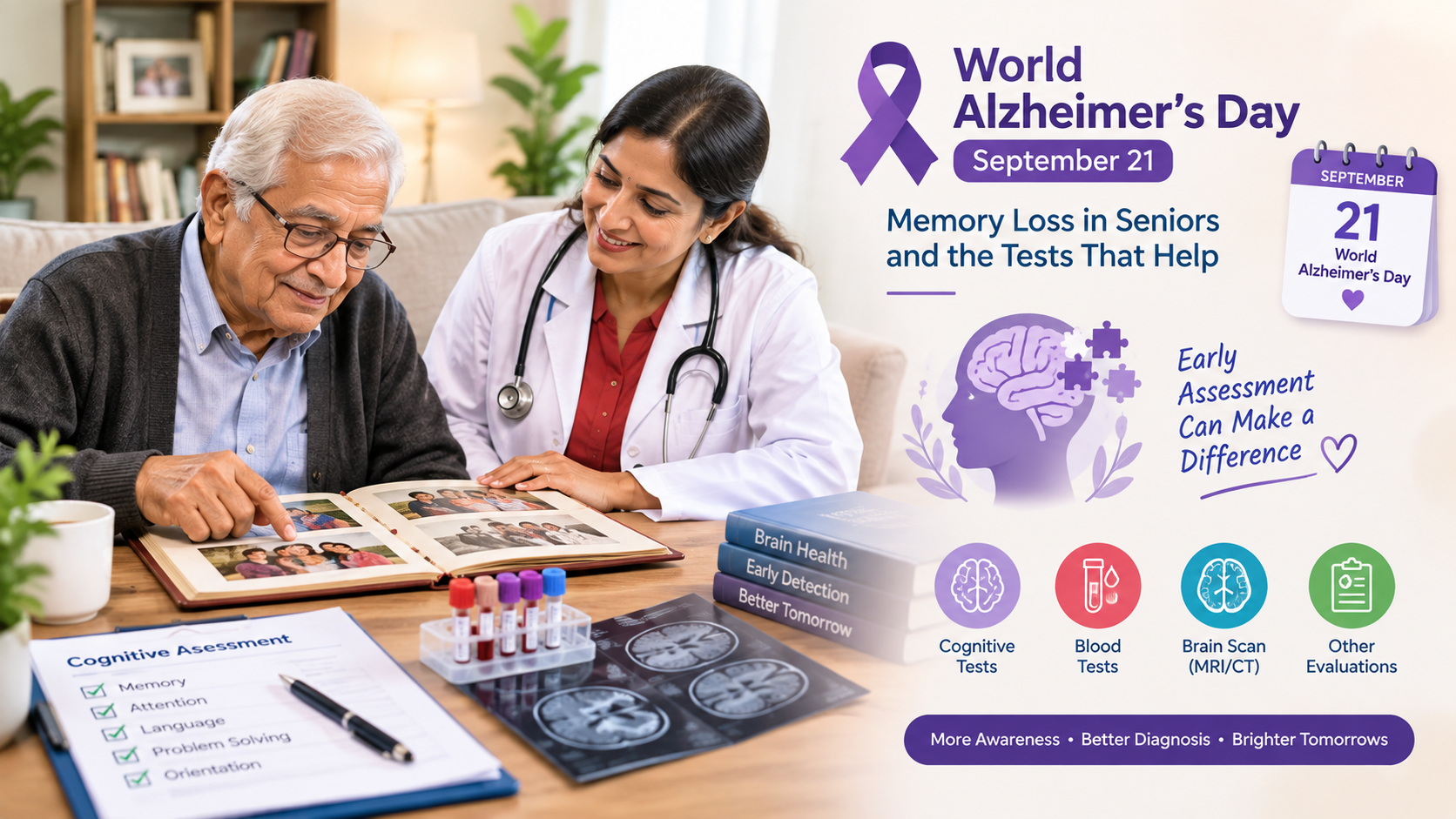
Every year, World Alzheimer’s Day is observed on September 21 to raise awareness about Alzheimer’s disease, dementia, memory changes, and the importance of supporting people living with cognitive difficulties. Moreover, the day encourages families to recognize concerning changes early rather than simply dismissing them as a normal part of ageing. For many families, Memory Loss in Seniors can be difficult to understand. For example, an older parent may repeatedly ask the same question, forget appointments, misplace everyday items, or struggle to find familiar words.
However, not every memory lapse means Alzheimer’s disease.
In fact, some causes of memory problems can be treatable or manageable. Therefore, appropriate medical evaluation and selected blood tests can sometimes help identify conditions that may be contributing to cognitive changes.
This Blog includes:
 Why World Alzheimer’s Day Matters
World Alzheimer’s Day provides an opportunity to talk openly about dementia and cognitive health.
Importantly, memory problems can affect not only the individual but also spouses, children, caregivers, and other family members. Consequently, awareness can help families recognize changes earlier and seek appropriate medical advice.
Furthermore, early evaluation may help identify potentially reversible contributors to memory problems. It can also help healthcare professionals determine whether further neurological or cognitive assessment is appropriate.
Why Families Should Not Ignore Persistent Memory Changes
Occasional forgetfulness can happen at any age. Nevertheless, persistent or progressively worsening memory problems deserve attention.
For example, forgetting where you placed your keys occasionally is different from repeatedly forgetting how to use familiar household items.
Therefore, the pattern, frequency, progression, and impact on everyday life are important.
Normal Forgetfulness vs Warning Signs
Ageing can bring some changes in memory and processing speed. However, certain symptoms are more concerning than ordinary age-related forgetfulness.
Examples of Common Age-Related Forgetfulness
An older adult may occasionally:
Why World Alzheimer’s Day Matters
World Alzheimer’s Day provides an opportunity to talk openly about dementia and cognitive health.
Importantly, memory problems can affect not only the individual but also spouses, children, caregivers, and other family members. Consequently, awareness can help families recognize changes earlier and seek appropriate medical advice.
Furthermore, early evaluation may help identify potentially reversible contributors to memory problems. It can also help healthcare professionals determine whether further neurological or cognitive assessment is appropriate.
Why Families Should Not Ignore Persistent Memory Changes
Occasional forgetfulness can happen at any age. Nevertheless, persistent or progressively worsening memory problems deserve attention.
For example, forgetting where you placed your keys occasionally is different from repeatedly forgetting how to use familiar household items.
Therefore, the pattern, frequency, progression, and impact on everyday life are important.
Normal Forgetfulness vs Warning Signs
Ageing can bring some changes in memory and processing speed. However, certain symptoms are more concerning than ordinary age-related forgetfulness.
Examples of Common Age-Related Forgetfulness
An older adult may occasionally:
- Article Title: World Alzheimer's Day - Memory Loss in Seniors and the Tests That Help (Sept 21)
- Publisher: Prima Diagnostics
- Type: Seasonal Health Awareness / Medical Health Article
- Topics Covered: Memory loss in seniors, Alzheimer’s disease awareness, dementia, reversible causes of memory problems, Vitamin B12 deficiency, thyroid problems, blood sugar, senior health
- Services Covered: Blood tests, preventive health testing, senior health check-ups, home sample collection
- Tests Included: Vitamin B12, Thyroid Function Tests, Blood Glucose, HbA1c, CBC, Vitamin D, Calcium, Kidney Function Tests, Liver Function Tests, and other clinically indicated tests
- Preparation Guidance: Test preparation varies by investigation; patients should follow laboratory and healthcare-provider instructions
- Service Focus: Senior health screening, awareness, and convenient diagnostic testing
- Healthcare Service: Pathology and blood testing with home sample collection
- Seasonal Focus: World Alzheimer’s Day – September 21
- FAQ Section: Included
Why World Alzheimer’s Day Matters
World Alzheimer’s Day provides an opportunity to talk openly about dementia and cognitive health.
Importantly, memory problems can affect not only the individual but also spouses, children, caregivers, and other family members. Consequently, awareness can help families recognize changes earlier and seek appropriate medical advice.
Furthermore, early evaluation may help identify potentially reversible contributors to memory problems. It can also help healthcare professionals determine whether further neurological or cognitive assessment is appropriate.
Why Families Should Not Ignore Persistent Memory Changes
Occasional forgetfulness can happen at any age. Nevertheless, persistent or progressively worsening memory problems deserve attention.
For example, forgetting where you placed your keys occasionally is different from repeatedly forgetting how to use familiar household items.
Therefore, the pattern, frequency, progression, and impact on everyday life are important.
Normal Forgetfulness vs Warning Signs
Ageing can bring some changes in memory and processing speed. However, certain symptoms are more concerning than ordinary age-related forgetfulness.
Examples of Common Age-Related Forgetfulness
An older adult may occasionally:
- Forget a person's name and remember it later
- Misplace keys or glasses
- Need more time to learn something new
- Forget an appointment but remember after being reminded
- Occasionally lose track of a word
- Frequently repeats the same questions
- Gets lost in familiar places
- Has increasing difficulty managing money or bills
- Struggles to follow familiar recipes or routines
- Frequently forgets important appointments
- Has noticeable difficulty finding common words
- Shows significant changes in judgment or behaviour
- Becomes increasingly dependent on others for everyday tasks
- Vitamin D
- Electrolytes
- Kidney function tests
- Liver function tests
- Calcium
- Folate
- Other nutritional or metabolic investigations
- Medical and medication history
- Cognitive assessment
- Neurological examination
- Functional assessment
- Blood tests when appropriate
- Brain imaging when clinically indicated
- Becomes confused about familiar surroundings
- Has repeated episodes of disorientation
- Develops significant personality or behaviour changes
- Struggles with everyday activities
- Experiences progressive memory decline
- Has difficulty communicating compared with their previous baseline
- Blood pressure
- Blood sugar
- Cholesterol
- Kidney function
- Liver function
- Thyroid health
- Vitamin levels
- Bone and nutritional health
- Is memory loss normal in seniors?
- What are reversible causes of memory loss in seniors?
- Can a blood test diagnose Alzheimer's disease?
- Should senior citizens test Vitamin B12?
- Can thyroid problems affect memory?
- What blood tests are useful for memory loss in seniors?
- Can seniors get blood tests at home in Bengaluru?
- When should you see a neurologist for memory loss in seniors?